
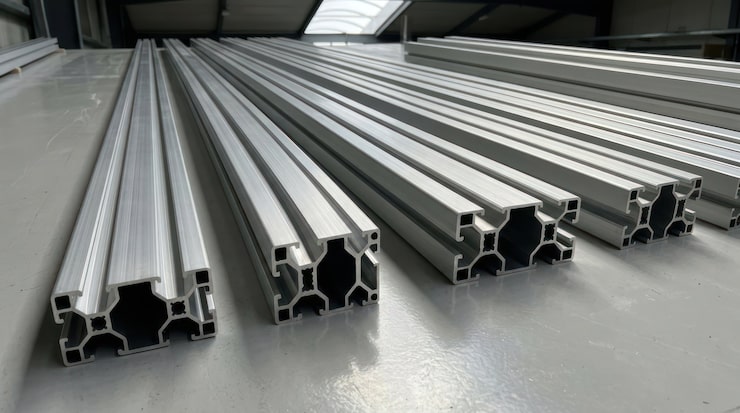
Every product from bicycles to factory machines shares the same tension. It has to be strong enough to do the job, light enough to be practical, and affordable enough to sell. Engineers rarely get all three at once, so they make trade-offs. A good example is aluminum framing material, which is popular because it offers a favorable mix of all three. Understanding how engineers reason about these trade-offs shows why some designs succeed and others get over-built, overpriced, or fail in production.
The Three-Way Tradeoff
Strength, weight, and cost are interrelated. Increases in strength typically lead to increases in weight and cost (more material or higher alloy). Decreases in weight usually lead to increases in cost (more exotic material or more complex manufacturing), and increases in strength typically lead to increases in cost (again, more material or more complex manufacturing). The engineer’s job is not to find the holy grail, that is, an optimum solution, but rather to recognize the design parameters that yield the best design for a given application. It is an optimization problem, not a search for the best possible solution.
Start With Requirements, Not Materials
The best designs start with a clear picture of loads, environment, and lifespan before thinking about materials. The engineers ask:
- What forces will it be subjected to: static, vibration, impact, fatigue?
- What environment will it be subjected to: heat, moisture, chemicals, or outdoor?
- How long is its expected service life; what happens if it fails? How many units will need to be made?
A bracket on a consumer gadget and a support beam on an industrial line have different answers. Defining these requirements before looking at materials avoids the common pitfall of choosing favorite materials and designing around them.
Strength Compared to Weight
Straightforward strength calculations have less importance than the strength-to-weight ratio. Sure, steel is stronger per unit volume, but aluminum weighs only a third of an equivalent steel bar for similar cross-sections (by volume). For a given strength-to-weight ratio, aluminum beams offer more strength per unit weight. In applications where weight was an issue – transportation, mobile equipment, or anything carried by people- the strength-to-weight ratio dominates as the primary selection criterion over other factors such as price. Shape has a bigger effect on strength-to-weight than material choice. Engineers take advantage of that with a hollow section, ribs, and T-slot or I-beam profiles where possible. A well-thought-out profile has vastly improved stiffness (and safety) over a solid section bar of the same weight while using less material. This is why extruded profiles are a popular choice for modular structures; The designer takes advantage and maximizes the section modulus of whatever rectangular cross section can be used due to limited processing capability in the field.
Cost Is More Than the Price Per Kilogram
Material price is only one line. Looked at on a total cost basis, other things contribute significantly and should be taken into account by the engineers, such as:
- Fabrication: machining and fabrication time.
- Assembly: how complicated the assembly is and whether a less skilled workforce can manage it.
- Transport and installation: reduced weight has an advantage
- Maintenance: corrosion protection, repaint cycle,
- Flexibility: ease of designing variants or modifications to the design.
A material that is cheaper could end up costing more if it requires more sophisticated machining or protective coating, or requires larger and more powerful lifting equipment for installation. The choice often comes down to the trade-off between material costs vs. process or assembly costs. Modular designs that use mechanical fasteners instead of welding often end up being a better total cost option when process cost dominates.
Using Safety Factors Wisely
Engineers do not design their equipment to the limit of expected loads and material strengths. They apply a safety factor which determines the amount of stress, force, or deflection the completed project should safely withstand without risk or failure. A too small factor could cause problems, while too large a factor increases costs unnecessarily. There are modern techniques to help narrow in on the right factor, though: finite element analysis, which allows the engineer to see how a design will perform under stress, taking material out from less stressed areas (stress concentrations), and verifying with test samples of the finished product.
Iteration and Trade-Off Thinking
A final design is rarely determined from the first set of choices the designers make. They follow up with different options based on where a particular set of design choices fall short and go through more steps to find what works. Some of these options are compared using decision matrices where different factors are weighted up or down based on how important they are for the particular project or application, which is considered to bring it all together for their final offering. Sometimes the end result is somewhere in between- high-strength steel in critical areas and something lighter made of aluminum alloys elsewhere for cost and weight savings. The best engineers think of design as an iterative process, using a decision matrix to help finalize the offering.
Sustainability Is Now Part of the Equation
Recyclability and energy footprints are becoming important factors in material choice. Materials such as aluminum, which is more easily recycled or has less overall weight, reduce the transportation energy footprint over the machine’s lifetime. These factors are now starting to influence designers’ choices as a cost advantage over competing materials. This has advantages for sustainability but also typically leads to lower cost in material selection and reduced fabrication cost on the equipment as well.
Build Smarter With the Right Framing Solutions
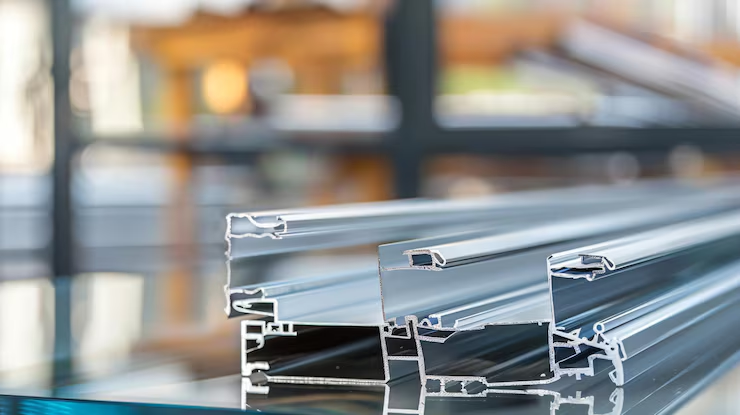
Whether planning a workstation, machine guard, enclosure, or other piece of equipment, modular framing makes sense right from the beginning. Let MiniTec Solutions’ engineers help you find the right material, profiles, and accessories tailored to your application and your budget, and ensure your projects stay on schedule with available cutting and quick turnaround options. Contact us today for a free quote! What is the right framing choice to help you get on schedule with your next project or make a change order to help lower your costs?
Frequently Asked Questions
1. What is the significance of the strength-to-weight ratio in design?
The strength-to-weight ratio indicates how much load a material or structure can withstand relative to its mass. A higher ratio means that it is possible to create lighter and more maneuverable objects that require less power for propulsion or rotation. It also enhances operational efficiency by reducing the overall weight.
2. Can one argue that the least expensive materials are the most efficient ones?
One cannot assume that the cheapest materials are more efficient in design. Although they have a lower purchase cost, they may require more machining, maintenance, and special coating to avert corrosion, which increases their maintenance cost. The materials’ weight, especially when compared with their strength-to-weight ratio, should also be considered.
3. How do one and two decide how much safety one should allow?
In the calculation of the safety factor, engineers use specified criteria, which require them to consider possible causes and effects, the material’s properties, and its potential impact on the manufactured item. Simulation and prototype testing can be used to fine-tune it to avert shortcomings in the design process.