
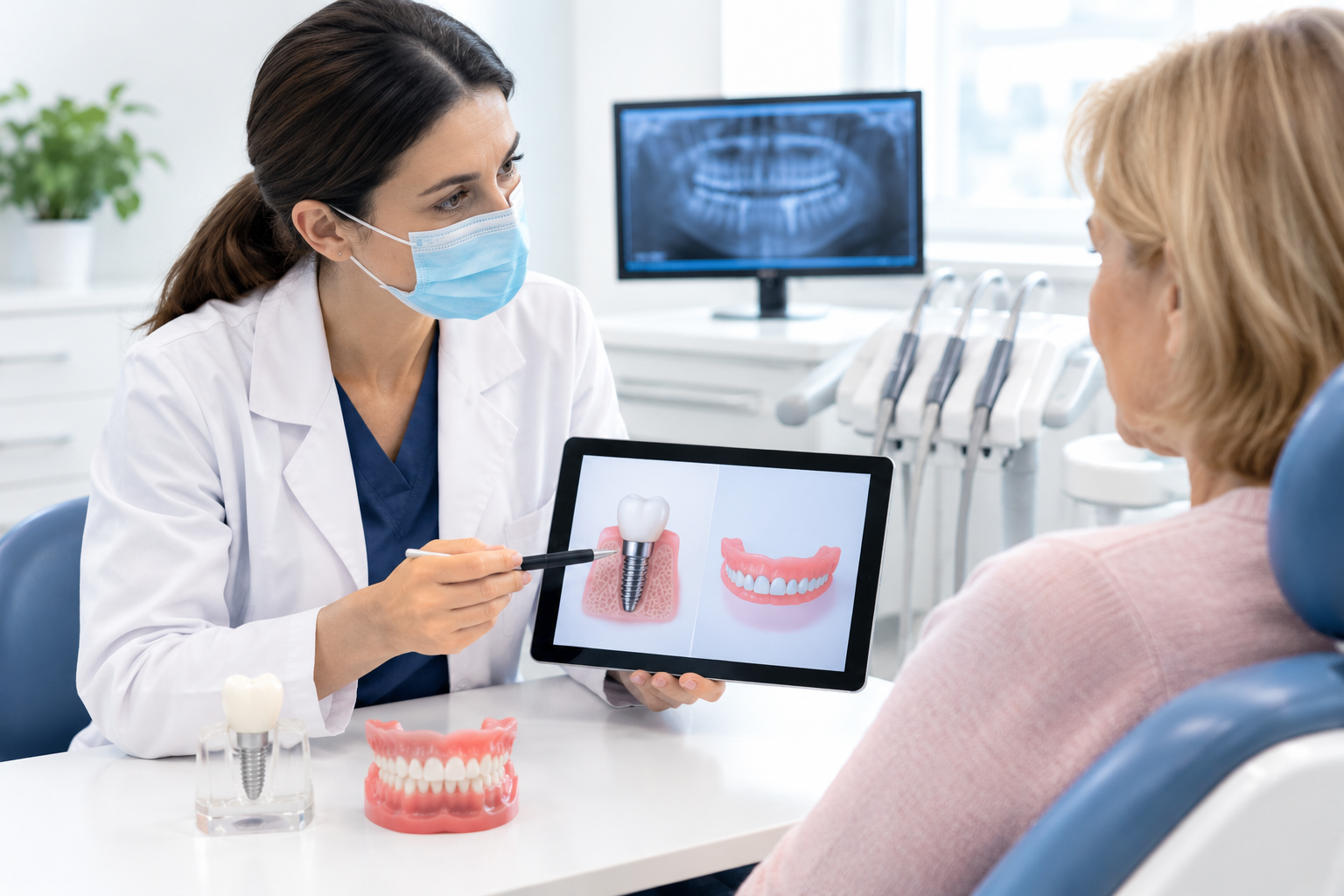
Picture two people who both lost their lower teeth. One surfs at six in the morning and eats steak on Saturdays. The other travels for work, hates surgery and wants a fix before spring. Same problem, different answers. A good dentist malibu patients trust will tell you that the right choice in the Dental Implants vs. Dentures debate has less to do with which one is “better” and more to do with how you live. So let’s start there.
Before You Compare Anything
1. Describe Your Normal Week
Forget the brochure for a minute. What do you eat? Do you talk for a living? Do you play a wind instrument, run, swim or sleep badly? Any of that affects the decision. Write down what your teeth have to do for you in a normal week, then bring that list to your appointment.
2. Prepare a Simple Questions List
Consultations go fast. A written list keeps you from leaving with half your questions unasked. Split it into three groups: how it feels, what it costs and how long it takes.
What to Bring to Your Consultation
- A list of medications and supplements
- Any old dental X-rays or records
- Your insurance card, if you have one
- A rough monthly budget
- Your notes on what you eat and what bothers you most
How Each Option Works Day to Day
1. Eating and Speaking
Implants are anchored in the jawbone, so they chew much like natural teeth. Corn on the cob, apples, tough meat. All fine. Dentures sit on the gums. They can shift when you chew, and many people stick to softer foods without noticing they’ve changed their diet. Speech can slip too, especially at first, with certain sounds coming out slushy. Most people adapt. A few never do.
2. Cleaning and Upkeep
Implants get brushed and flossed like regular teeth, plus regular cleanings and checkups. Dentures come out every night. You soak them, scrub them and clean your gums, and you may need adhesive. It’s a routine, not a burden, but it is a routine. Skip it and you can end up with sore spots or a fungal infection called denture stomatitis.
3. Comfort and Confidence
Ask denture wearers what worries them and you’ll hear one answer a lot: “What if they move?” Implants mostly erase that worry. Dentures can be made to fit well, and a good fit helps a great deal, but the fit changes over time.
The Jawbone Question
Bone stays strong because chewing pressure passes down through tooth roots into it. Take the roots away and the bone in that area slowly shrinks. An implant acts like a root and gives the bone something to work against. A denture sits on top and doesn’t. As the jaw changes shape, dentures need relining or replacing to stay snug. That ongoing cost surprises people.
Cost, Time and Commitment
1. Upfront Price and Long-Term Price
Dentures cost less at the start, often by a wide margin. Implants cost more at the start, and the bill is larger because you’re paying for surgery, a post, a connector and a crown for each tooth. The honest way to compare Dental Implants vs. Dentures is over ten or twenty years, counting relines, replacements and adhesive. Ask for numbers on both and do the math at your kitchen table.
2. Treatment Timeline
Dentures can be ready in a matter of weeks, and some patients get temporary ones the same day teeth are removed. Implants take longer. The bone needs roughly three to six months to bond with the post, then the crown goes on. If a wedding is two months away, that changes things.
3. Who Should Probably Skip Implants
Not everyone is a candidate. Active gum disease, heavy smoking, poorly controlled diabetes and very thin bone can make implants risky or add steps like a graft first. Some people simply don’t want surgery, and that’s a perfectly sound reason. A well-made denture beats a badly placed implant every time.
The Middle Option: Implant-Supported Dentures
A small number of implants can anchor a denture so it clicks into place and stays put. It costs more than a regular denture and less than an implant for every missing tooth. For people missing most or all of their teeth, it’s often the choice that gets overlooked, so ask about it directly.
Malibu Specifics Worth Checking
1. Choosing a Local Practice
Picking the first dentist malibu search results show you, without asking a single question, is a common mistake. Look at years of experience, ask how many cases like yours they’ve handled and check real before and after photos. Dr. David Sturgeon has more than 25 years of experience and handles implants, dentures, bridges and full mouth reconstruction at Sturgeon Dental, 24955 Pacific Coast Hwy, Suite C100. The practice keeps a patient results page where you can see finished cases.
2. Insurance and Financing
Coverage often differs between implants and dentures, so confirm what your plan pays before you commit. A reliable dentist malibu office will give you a written estimate broken out by stage. Sturgeon Dental accepts some dental insurance plans and offers financing, which can spread the cost of an implant over time.
3. Appointments and Scheduling
The office is open Monday to Thursday from 9 AM to 5 PM and Friday from 9 AM to 4 PM, closed on weekends. Implants need several visits over months, so check that those hours fit your work and your commute along Pacific Coast Highway before you start.
Making the Final Call
1. Match the Option to Your Life
If you’re active, eat everything and want something you can forget about, implants usually suit you. If you want a lower upfront cost, can’t have surgery or need teeth quickly, dentures make sense. If you’d rather have both worlds, implant-supported dentures sit in between. Sleep on it, but don’t sleep on it for a year, because bone loss keeps going while you decide.
2. Warning Signs
Whichever you choose, call your office the same day if you notice swelling that returns, pain that increases after the first few days, a loose implant, sores under a denture or a bad taste in your mouth. Early problems cost less and heal faster than late ones.
Questions for the Dentist
- Which option do you recommend for my mouth, and why not the other?
- How much bone do I have left, and will I need a graft?
- What will each option cost over ten years, including repairs?
- Can I have temporary teeth while I wait?
- What are the risks that apply to me in the Dental Implants vs. Dentures decision?
Conclusion
Implants feel closest to natural teeth, protect the bone and cost more upfront. Dentures cost less, move faster and ask for daily care and periodic relining. Neither one wins on every point, which is why Dental Implants vs. Dentures is a lifestyle question as much as a dental one. A clear exam and a written plan from a dentist malibu patients return to will give you an honest answer for your own mouth, and no article can do that. Bring your list from week one, ask what the dentist would choose in your place, then decide at your own pace.
FAQs
1. What is the biggest difference in Dental Implants vs. Dentures?
Implants are anchored in the jawbone and stay fixed, while dentures rest on the gums and come out daily. That affects chewing, comfort, cleaning and cost.
2. Do dental implants last longer than dentures?
Implants usually last longer with good care and regular checkups. Dentures typically need relining or replacement as your jaw changes shape. Your habits and gum health affect both.
3. Can I switch from dentures to implants later?
Often, yes, but bone loss may mean you need a graft first. Ask a dentist malibu office for an X-ray or scan to see how much bone remains.
4. Are dentures painful?
New dentures can cause sore spots while your mouth adjusts, and a follow-up visit usually fixes them. Pain that continues or sores that don’t heal need a call.
5. Does insurance cover dental implants and dentures?
It varies a lot by plan and by type of treatment. Ask your dentist malibu office for a pre-treatment estimate so you know what your plan pays and what financing could cover.