
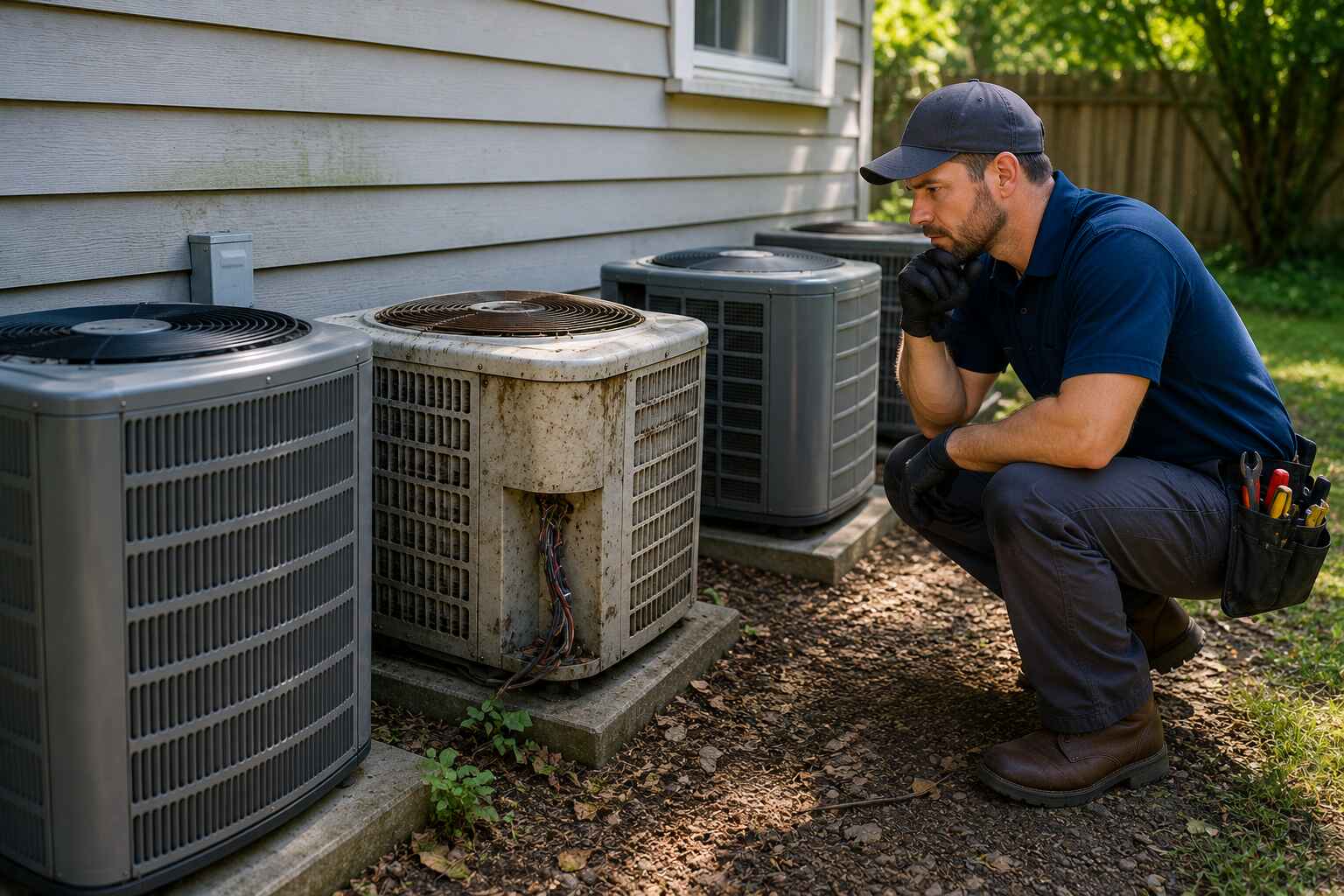
People ask us this one a lot, usually right before signing on a new system. Which brand should I stay away from? It’s a fair question, but the honest answer is a little more complicated than naming names and calling it done. A brand’s reputation only tells part of the story. The other half comes down to how the unit was installed, sized, and maintained, and that part rarely makes it into a “worst brands” list you find online.
Let’s look at what the actual data says, not just what gets repeated around the internet.
Why “Stay Away From” Isn’t Quite the Right Frame
Installation Matters More Than the Logo on the Unit
Here’s something we see constantly on service calls. A homeowner blames the brand for a system that’s constantly breaking down, when the real issue is a rushed install years earlier, wrong refrigerant charge, undersized ductwork, none of which the brand had anything to do with. Even a premium unit performs poorly if it was never set up correctly. That’s part of why, when people call us for AC repair Rock Hill SC issues, the diagnosis is often installation related, not manufacturing related.
What the Real Data Actually Shows
Rather than going off internet forum complaints, which tend to be louder from unhappy customers than satisfied ones, it’s worth looking at actual survey data. Consumer Reports has surveyed tens of thousands of its members on central air conditioning system ownership, tracking predicted reliability across major brands over time.
What Independent Reliability Data Says
Brands That Ranked Lower for Reliability
According to Consumer Reports’ member survey data, brands including Comfortmaker, Heil, Luxaire, and York landed in the lower reliability tiers compared to other major manufacturers. That doesn’t mean every unit from these brands fails, but statistically, members reported more issues with these brands than with some competitors.
Reliable Doesn’t Always Mean Recommended
Here’s the part that surprises people. Consumer Reports found that Armstrong and Day & Night stood out for reliability specifically, yet that didn’t translate into the highest owner satisfaction scores. Meanwhile, American Standard and Trane earned strong owner satisfaction ratings even though they weren’t necessarily the most statistically reliable brands in the survey. Reliability and how much people actually like living with their system are two different measurements, and they don’t always line up the way you’d expect.
Why Two Rankings Don’t Always Match
This tells you something important. A brand can have a great track record on paper and still leave customers unsatisfied because of something unrelated to mechanical failure rates, like noise level, customer service response time, or how the local dealer network handles warranty claims. None of that shows up if you only look at one ranking in isolation.
Red Flags That Matter More Than the Brand Name
Weak Local Parts Availability
Here’s a question most homeowners never think to ask: if a part fails, how long does it take to get a replacement in the Carolinas specifically? Some brands have thin distribution networks in this region, meaning a two-day repair turns into a two-week wait for a part. That’s a bigger daily headache than a brand’s overall reliability score, especially in July.
Warranty Fine Print
Watch for warranties that cover parts but not labor, or that require proof of annual professional maintenance to stay valid, proof a lot of homeowners never realize they need to keep. A great warranty on paper is only as good as what it actually pays out when something breaks.
The Compressor Question Nobody Asks Upfront
Ask specifically how long the compressor warranty runs and whether it’s transferable if you sell the home. The compressor is the single most expensive component to replace, and warranty terms on it vary more between brands than most people realize.
How to Actually Choose the Right AC Brand for Your Home
Match the Brand to Your Climate
A brand that performs great in a dry, mild climate might not hold up the same way against South Carolina’s humidity and long cooling season. Ask your installer specifically how a brand performs in hot, humid conditions, not just its general national reputation.
Ask Your Installer What They’d Put in Their Own Home
This is genuinely one of the most useful questions you can ask any technician. We’ll tell you straight, and most honest installers will too, since we’re the ones who end up back at your house if the choice doesn’t hold up.
Where This Leaves Rock Hill Homeowners
When you’re comparing HVAC companies in Rock Hill SC and the brands they carry, ask which manufacturers they install most often and why. A company that’s installed and serviced a brand for years locally will know how it actually performs in our climate, not just what the marketing brochure claims. That local track record is worth more than a national ranking built from a national average.
If you’re weighing your options for a new system, our AC installation page covers the brands we install and stand behind for homes across York County. For an independent, non-manufacturer source on brand reliability, Consumer Reports’ central air conditioning reliability data is worth reviewing directly rather than relying on secondhand summaries floating around online.
Conclusion
There isn’t a clean, universal list of AC brands to avoid, and anyone who hands you one without context is oversimplifying a more complicated picture. What the data actually shows is that some brands trend lower on reliability surveys, but installation quality, local parts availability, and warranty terms often matter just as much, sometimes more, than the name stamped on the unit. If you’re calling around comparing HVAC companies in Rock Hill SC for a new system, ask what they install most, why, and how those units hold up specifically in our climate. That answer will tell you more than any brand ranking ever will.
FAQs
1. Is a lower-ranked brand automatically a bad choice?
Not necessarily. A properly sized and installed system from a lower-ranked brand can still perform well for years, while a top-ranked brand installed poorly can fail early. Installation quality plays a huge role either way.
2. Do premium AC brands always cost more to repair?
Generally, yes, since parts and labor tend to track with the original equipment cost. That said, some mid-tier brands have thinner local parts availability, which can make repairs take longer even if they cost less per part.
3. How much does climate affect which AC brand is right for me?
Quite a bit. A brand’s national reliability average doesn’t always reflect how it performs specifically in high humidity, long cooling seasons like South Carolina’s, so local installer experience matters more than a general ranking.
4. Should I trust online reviews over survey data like Consumer Reports?
Survey data from thousands of verified owners tends to be more statistically reliable than scattered online reviews, which often skew toward frustrated customers venting rather than a balanced sample.
5. What’s more important, brand reputation or installer reputation?
Installer reputation, in most cases. A well-known brand installed poorly will underperform, while a solid installer can make a mid-tier brand run reliably for well over a decade.