
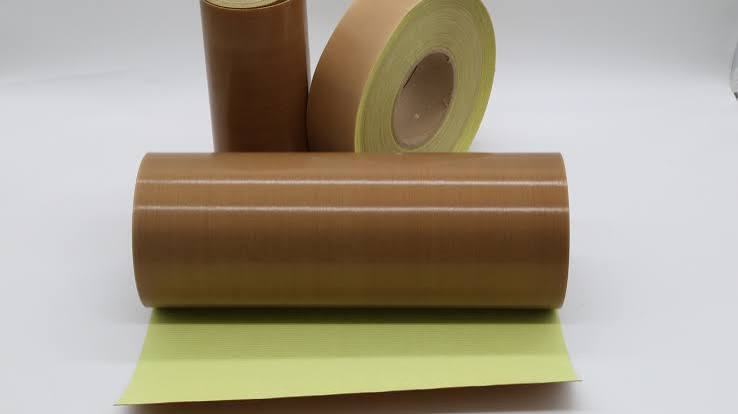
Sealing machinery across the packaging industry depends on a small number of consumable components that do a disproportionately important job — and few are more critical than the non-stick surface material applied to seal bars and heated sealing surfaces. PTFE sticky tape provides the non-stick, heat-resistant barrier that allows sealing equipment to apply heat and pressure to film without the surface adhering — and selecting the right specification for a given application determines seal quality, replacement frequency, and the overall efficiency of the sealing operation.
What PTFE Is and Why It Performs
The performance characteristics of PTFE sticky tape derive from the properties of polytetrafluoroethylene itself — a fluoropolymer with one of the lowest coefficients of friction of any known solid material, exceptional chemical resistance, and the ability to maintain its properties across an operating temperature range that spans from well below freezing to over 260°C. These characteristics make it uniquely suited to the demanding thermal and mechanical environment of continuous sealing operations.
The adhesive backing on PTFE sticky tape is typically a silicone-based pressure-sensitive adhesive chosen for its own high-temperature stability — ensuring the tape remains firmly bonded to the seal bar surface across thousands of thermal cycles without delamination or adhesive migration that would contaminate the sealing surface or compromise the non-stick performance of the outer face.
Key Specifications to Understand
Selecting the correct PTFE sticky tape for a specific application requires understanding the key specifications that determine performance:
- Thickness: Measured in mil (thousandths of an inch) — thicker tape provides longer service life but slightly reduces heat transfer speed
- Width: Must match the seal bar width precisely — incorrect width causes uneven heat distribution and premature edge wear
- Temperature rating: Confirm the tape’s continuous operating temperature rating exceeds the sealing temperature used in the application
- Adhesive type: Standard silicone adhesive for most applications; enhanced adhesive grades for surfaces with texture or low-energy coatings
- PTFE grade: Standard and glass-cloth-reinforced options — reinforced versions offer higher tensile strength and longer service life in high-stress applications
Application and Installation
Correct installation of PTFE sticky tape is as important as specification selection. The seal bar surface must be thoroughly cleaned of all adhesive residue, contamination, and prior tape remnants before application — any surface irregularity trapped beneath the new tape creates a pressure point that accelerates wear and produces inconsistent sealing. Applying the tape in a single piece where possible, without stretching, eliminates the seam lines and tension variations that cause premature failure.
Pressing the tape firmly across the full surface immediately after application — working from the centre outward to eliminate air pockets — ensures complete contact between the adhesive and seal bar surface. Most experienced maintenance technicians run a short sealing cycle on waste film after installation to confirm even heat distribution before returning the machine to production use. Keeping a spare roll of the correct specification on site allows immediate tape replacement without waiting for procurement — eliminating the production delay that tape failure would otherwise cause on a busy sealing line.
Replacement Intervals and Monitoring
Monitoring the condition of PTFE sticky tape as part of a regular preventive maintenance routine prevents the incremental seal quality degradation that characterises tape worn beyond its effective service life. Visual inspection for discolouration, surface roughening, edge lifting, or adhesive bleed at the tape margins identifies replacement need before it becomes visible in seal quality. Tracking replacement intervals against cycle counts allows facilities to establish predictive replacement schedules that eliminate unexpected production interruptions.
Final Words
Specifying and maintaining sealing surface consumables correctly is one of the highest-return maintenance investments available to any packaging operation. Facilities that source quality machine components — including PTFE sealing tapes — through a specialist packaging equipment parts distributor benefit from accurate specification guidance, consistent product quality, and reliable availability that general industrial supply channels rarely match.