
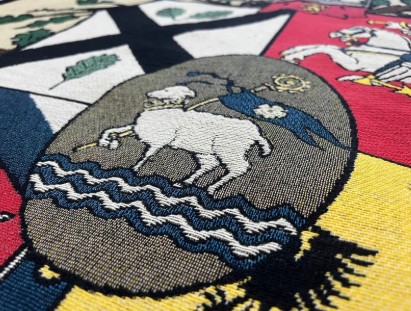
A photograph, a painting, or a family crest usually lives on paper, canvas, or a screen. Weaving turns the same image into something with real texture, built thread by thread. That is the idea behind custom tapestries, which translate a chosen design into a woven textile made to hang on a wall for years. The process involves specialized looms, chosen fibers, and practical decisions about size, file quality, and timing. This guide explains how woven tapestries are made, which materials they use, what size limits apply, how to prepare an image, and what to expect from order to final delivery.
What Makes a Woven Tapestry Different
A woven tapestry is not a print on fabric. The image is built into the textile itself, so color, texture, and detail come from the threads rather than from ink on the surface. That gives woven pieces rich texture and depth, which is why they suit everything from family crests and fine art to restaurant installations and gallery exhibitions.
How Jacquard Looms Capture Detail
Jacquard looms use punched cards to control individual threads, which allows exceptional detail and complexity. This technology captures the finest elements of a design, whether it is a detailed landscape, a cherished photo, or a bold abstract pattern. It also produces intricate patterns and smooth color transitions that are hard to achieve by hand. For anyone ordering custom tapestries, this is the step that turns a digital file into a finished textile rich in texture and color.
Materials and Durability
A common fiber blend is about 65% cotton for a soft, natural feel and 35% polyester for added strength. The result is a thick fabric that resists wear and tear, which makes woven pieces well suited to family keepsakes. The added weight also helps a tapestry hang well and stay in place over time. Wool is not part of this blend. Occasionally, a silver or gold lurex thread is added where it suits a design, giving the surface a subtle shimmer.
Size, Shape and Format Options
Dimensions can be personalized, including height, width, and shape, so a piece can be horizontal, square, or vertical to suit the space. The widest loom produces fabric up to 80 inches across, while the other dimension can run longer, for example, 80 by 200 inches. For larger areas, several tapestries can be woven and hung side by side, or two pieces can sometimes be sewn together.
Preparing an Image for Weaving
Almost any image can be woven if you own it or it is in the public domain; copyrighted images usually require a signed waiver. Nearly any file type works, with JPEG the most common, and a file can be converted if needed. A resolution of 72 dpi or higher is great for weaving, although lower-resolution images have been woven before, so it is worth sending a file even if you are unsure. Image details and dimensions are needed for a quote
From Request to Delivery
The ordering process is typically straightforward. First comes a quote request with image details and dimensions. Next, a custom digital preview is reviewed and finishing touches are selected before the order is finalized. Production usually takes four to six weeks, though a rushed order can sometimes be completed in one to two weeks. Finished pieces are made and shipped from the USA, with worldwide delivery available. Planning ahead for events or installations is the best way to help custom tapestries arrive on schedule.
Final Thoughts
Woven tapestries combine traditional craft with modern technology, turning photos, artwork, and logos into durable textile pieces. Knowing how the looms work, what the fabric is made of, and which size and file requirements apply makes the process far easier to plan. Manufacturers such as Quality Tapestries follow this same path from quote to delivery, so understanding it helps you prepare a strong image, set realistic timing, and choose dimensions that suit your space.