
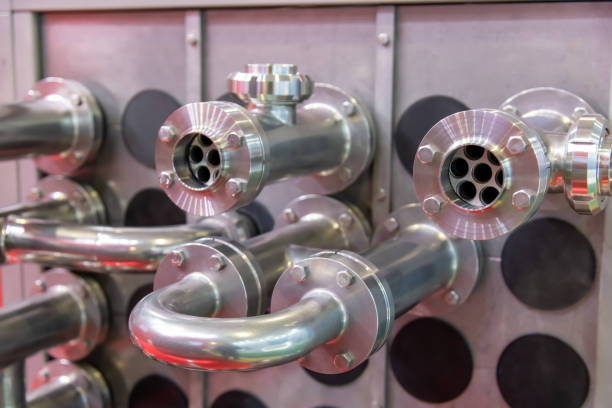
Industrial equipment often generates heat during continuous operation. If this heat is not managed properly, it can affect equipment performance, increase maintenance requirements, and interrupt production. A suitable heat exchanger helps control operating temperatures and supports consistent performance across different industrial applications.
A BCF heat exchanger is a shell-and-tube heat transfer unit designed for applications such as cooling water and lubricating oil. Its compact construction makes it a practical option for auxiliary machinery, turbines, engines, compressors, and other equipment that requires dependable temperature control.
What Is a BCF Heat Exchanger?
A BCF heat exchanger is a straight-tube, fixed-tubesheet heat exchanger designed for industrial heating and cooling duties. It transfers heat between two fluids while keeping them separated. One fluid flows through the tubes, while the other moves through the surrounding shell.
Heat passes through the tube walls from the hotter fluid to the cooler one. This process helps maintain the required temperature without allowing the two fluids to mix during normal operation.
The BCF design is available in different sizes and tube-pass arrangements, allowing it to accommodate various flow and heat transfer requirements. Its pre-engineered construction can also simplify equipment selection when the operating conditions match the available specifications.
Key Features of BCF Heat Exchangers
The design of a BCF heat exchanger offers several features that can be useful in industrial environments.
1. Straight-Tube Construction
Straight tubes provide a direct path for the tube-side fluid. This arrangement supports heat transfer and allows the tube side to be mechanically or steam cleaned when the application and cleaning procedure permit.
2. Fixed-Tubesheet Design
The tubesheets are fixed to the shell, creating a compact assembly with fewer moving parts than some removable-bundle designs. This construction can be economical for applications where the operating conditions are suitable for a fixed-tubesheet unit.
However, the design does not provide a dedicated allowance for differential thermal expansion between the shell and tubes. Temperature changes must therefore be evaluated during equipment selection.
3. Multiple Tube-Pass Options
BCF units are available in one-, two-, and four-pass configurations. The appropriate arrangement depends on the required heat transfer, fluid flow rate, pressure drop, and temperature difference.
Selecting the correct configuration helps the exchanger meet the thermal requirements of the process without creating unnecessary flow resistance.
4. Compact Size
BCF heat exchangers are available in compact shell diameters, making them suitable for installations where equipment space is limited. Standard and custom size options can help accommodate different system layouts.
Common Industrial Applications
BCF heat exchangers can be used in a range of industrial systems where effective heat removal or temperature control is important.
Lubricating Oil Cooling
Lubricating oil helps reduce friction between moving machine components. During operation, the oil absorbs heat and can gradually become too warm. A heat exchanger removes excess heat, helping maintain suitable oil temperatures and supporting consistent lubrication.
Water Cooling
Industrial equipment may require cooling water to remove heat from machinery or process systems. A BCF unit can transfer heat from the warmer fluid to a cooler water stream, depending on the system design and operating conditions.
Turbines and Engines
Turbines and engines generate heat during operation. Heat exchangers can help manage temperatures in associated lubrication and cooling circuits, supporting reliable equipment operation.
Compressor Systems
Compressors may require cooling to manage heat generated during compression and mechanical operation. A properly selected exchanger can help maintain temperatures in compatible oil or water circuits.
Pilot Plants and Auxiliary Equipment
Pilot plants and auxiliary machinery often need compact heat transfer equipment for testing, process development, or supporting smaller industrial systems. BCF units may be suitable when their capacity, materials, and operating limits align with the application.
Benefits of Using a BCF Heat Exchanger
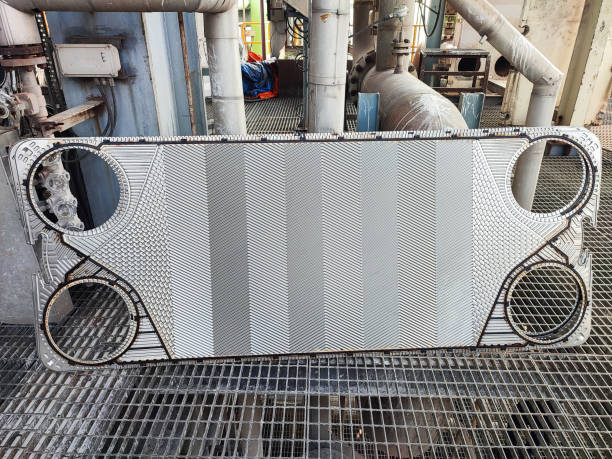
Choosing a suitable heat exchanger can help improve temperature management and simplify equipment integration.
- Effective heat transfer: The shell-and-tube arrangement transfers heat between two separate fluid streams.
- Compact construction: A smaller footprint can make installation easier in space-constrained equipment areas.
- Flexible configurations: Different sizes and tube-pass options help meet varied system requirements.
- Practical tube-side cleaning: Straight tubes can support mechanical or steam cleaning when appropriate.
- Support for auxiliary equipment: The design can be used in suitable cooling applications involving engines, compressors, turbines, and other machinery.
Actual performance depends on the fluid properties, flow rates, inlet temperatures, required outlet temperatures, and the condition of the heat transfer surfaces.
How to Select the Right BCF Heat Exchanger
Before choosing a BCF unit, review the process requirements carefully. A model that works well in one system may not be suitable for another.
Identify the Fluids
Determine which fluids will flow through the shell and tubes. Check their chemical compatibility with the available construction materials and consider whether they contain suspended solids or substances that may cause deposits.
Calculate the Heat Load
Estimate how much heat must be transferred during normal and peak operation. The required heat duty helps determine the appropriate heat transfer area and exchanger size.
Check Flow Rates and Temperatures
Record the inlet and required outlet temperatures for both fluid streams, along with their flow rates. These details help establish whether the selected unit can achieve the required cooling or heating performance.
Review Pressure and Temperature Limits
The published standard design capabilities for BCF models commonly list 150 psi on the tube side and 300 psi on the shell side, with a design temperature of 300°F for both sides. These are general product ratings, not a substitute for checking the exact model, materials, nameplate, and applicable operating conditions.
Consider Cleaning and Maintenance
The fixed-tubesheet design is not intended for mechanical cleaning of the shell side. If shell-side fouling is expected to be significant, evaluate the cleaning requirements before selecting the unit. An alternative design may be more appropriate for applications requiring frequent shell-side access.
Maintenance Tips for Consistent Performance
Regular maintenance helps identify issues before they lead to reduced cooling capacity or equipment downtime.
- Inspect inlet and outlet temperatures to identify changes in heat transfer performance.
- Monitor pressure drop across the exchanger for signs of fouling or restricted flow.
- Check for external leakage, corrosion, damaged connections, or unusual vibration.
- Clean the tube side according to the manufacturer’s instructions and the nature of the fluid.
- Inspect water quality and lubricating oil condition where applicable.
- Confirm that operating pressures and temperatures remain within the limits of the specific unit.
If the exchanger experiences declining performance, investigate possible causes such as deposits, inadequate flow, air trapped in the system, or changes in process conditions. Always isolate, depressurize, and cool the equipment before inspection or maintenance.
Common Problems and Their Causes
A BCF heat exchanger may experience reduced performance when deposits accumulate on heat transfer surfaces or when fluid flow falls below the required level. Inconsistent inlet temperatures, blocked passages, unsuitable fluid properties, and operating conditions outside the original design can also affect performance. In industrial systems that use heat exchangers alongside Elmo Rietschle vacuum pumps, proper equipment selection, regular maintenance, and effective temperature control help support reliable operation.
Leakage requires prompt investigation because it may indicate a damaged tube, failed joint, corrosion, or another mechanical issue. Differential thermal expansion is another important consideration for fixed-tubesheet equipment, particularly when the two fluid streams operate at substantially different temperatures.
A systematic review of flow, temperature, pressure, and maintenance history can help identify the cause and guide corrective action.
Choosing Industrial Heat Transfer Equipment
Selecting an exchanger involves more than comparing dimensions or purchase costs. The design must match the required heat duty, available space, fluid compatibility, pressure limits, and maintenance plan. Understanding these factors helps reduce the risk of selecting equipment that cannot meet the demands of the process.
Courtney & Nye works with industrial customers seeking heat exchangers, pumps, and process equipment for a range of applications. Reviewing the operating conditions and equipment requirements before making a selection can help identify a practical solution for the system.
Conclusion
A BCF heat exchanger offers a compact shell-and-tube design for suitable industrial cooling and heating applications. Its straight-tube construction, fixed-tubesheet arrangement, and multiple tube-pass options make it worth considering for systems involving lubricating oil, water, engines, turbines, and compressors.
The best results depend on matching the exchanger to the required heat load, fluid characteristics, pressure, temperature, and maintenance needs. Proper selection and routine inspection can help support consistent heat transfer and reliable industrial operation.