
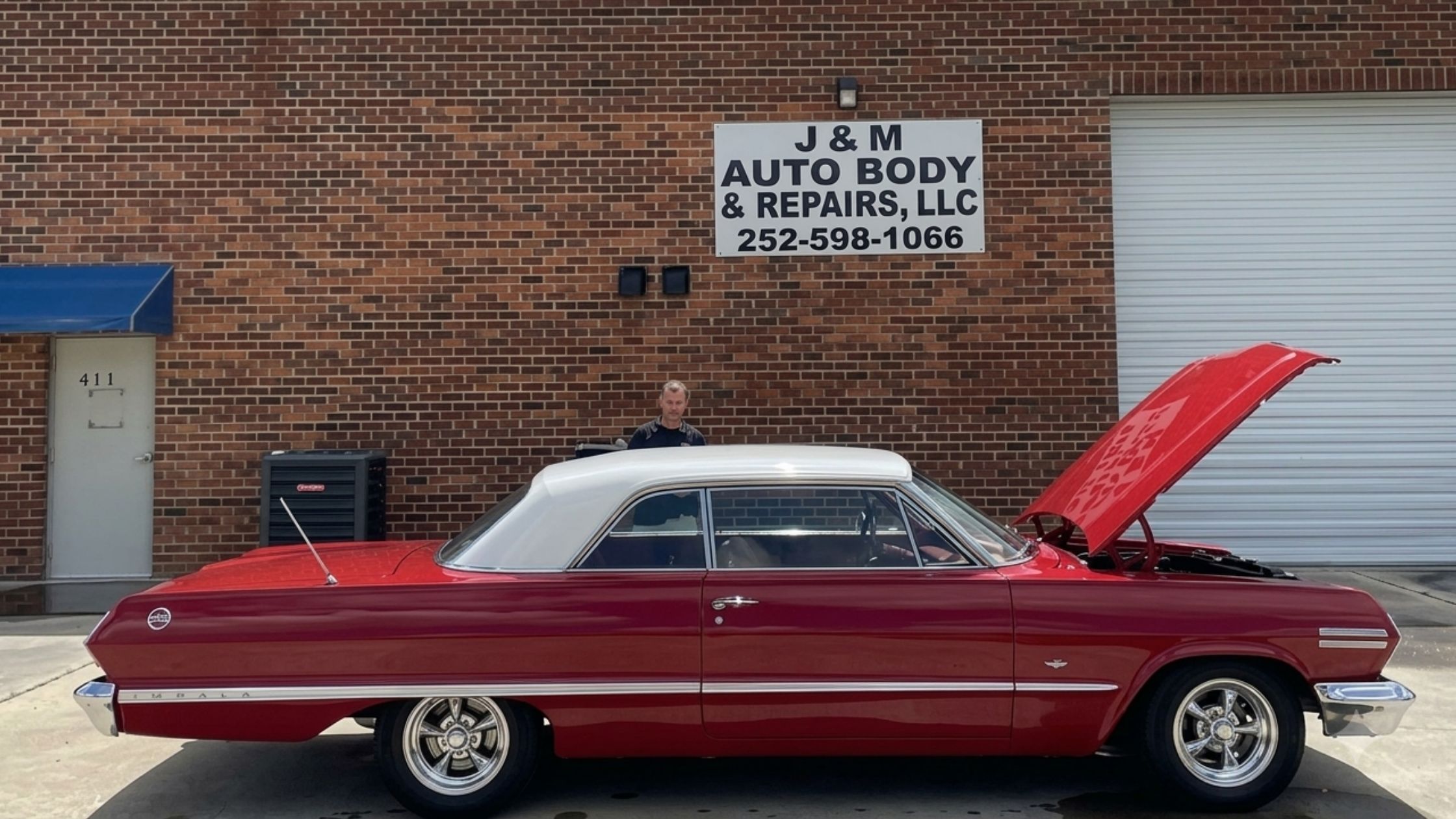
Old cars carry stories. A dented fender or a faded paint job often hides decades of road trips, first dates, or family history. For owners in North Carolina, Henderson vintage car restoration has grown into a serious craft, not a weekend hobby. Local shops now use tools once reserved for factory production lines, and that shift has changed what a good restoration actually looks like.
Why does restoration take longer than most owners expect?
A full restoration is not a paint job with extra steps. Technicians strip a vehicle down to bare metal, inspect the frame, and rebuild sections that rust or old repairs have weakened. Every panel gets checked for straightness before primer touches it. This process protects the car for decades, but it also means the timeline runs longer than a standard repair. Owners who rush this stage often end up paying twice, once for the quick fix and again for the correction.
What role do modern tools play in classic car work?
Shops that specialize in older vehicles now rely on rotisserie stands to rotate a car body during disassembly. This gives technicians access to the underside without repeated lifting, which reduces the risk of new damage. Dustless blasting has also become a preferred method for stripping old paint and rust. It uses water mixed with abrasive media, so heat and warping stay low compared to sandblasting. For thin, original sheet metal on a vintage frame, that difference matters.
How does frame condition affect the final result?
A straight frame is the foundation of any restoration. If the frame sits even slightly out of alignment, panels never fit the way they should, and the car handles poorly on the road. Shops that treat Henderson Collision Repair Shops work and restoration work as separate skill sets often miss this connection. Frame equipment built for modern collision repair works just as well on a 1965 coupe.
A short list of signs a vintage car needs professional attention:
- Uneven panel gaps around doors, hood, or trunk
- Rust bubbling under paint near wheel wells or rocker panels
- A musty smell inside the cabin, which points to water intrusion
- Vibration or pulling while driving at highway speed
- Faded or chalky paint that no longer holds a shine after washing
Why does sourcing original parts matter so much?
Authenticity drives value for most classic car owners. A restoration built with mismatched or reproduction parts might look fine in photos, but collectors notice the difference. Technicians who specialize in this field spend real time tracking down original trim, glass, and hardware. That documentation becomes useful later, whether the car goes to a show or eventually sells.
Contact J & M Auto Body and Repairs LLC to talk through your vehicle’s condition before work begins. A short conversation upfront can save weeks of guesswork once the project starts.
Anyone weighing options for a project car can visit the home page to see the full range of services offered under one roof. The shop’s approach to classic car restoration in Durham has already helped several owners bring long-parked vehicles back to daily driver condition, and that same process applies to full frame-off projects.
How should an owner choose the right shop for the job?
Ask to see finished work, not just photos of a shiny paint job. A shop willing to walk through its process, from frame inspection to final assembly, is usually the one that treats restoration as a craft rather than a shortcut. J & M Auto Body and Repairs LLC brings that same standard to every vintage project that comes through its Raleigh Road facility in Henderson.
Bringing a Classic Back to the Road, the Right Way
A vintage car deserves more than a fresh coat of paint. It deserves a shop that understands frames, sourcing, and the small details that separate a museum piece from a car that just looks old. That is the standard behind every restoration handled by J & M Auto Body and Repairs LLC.