
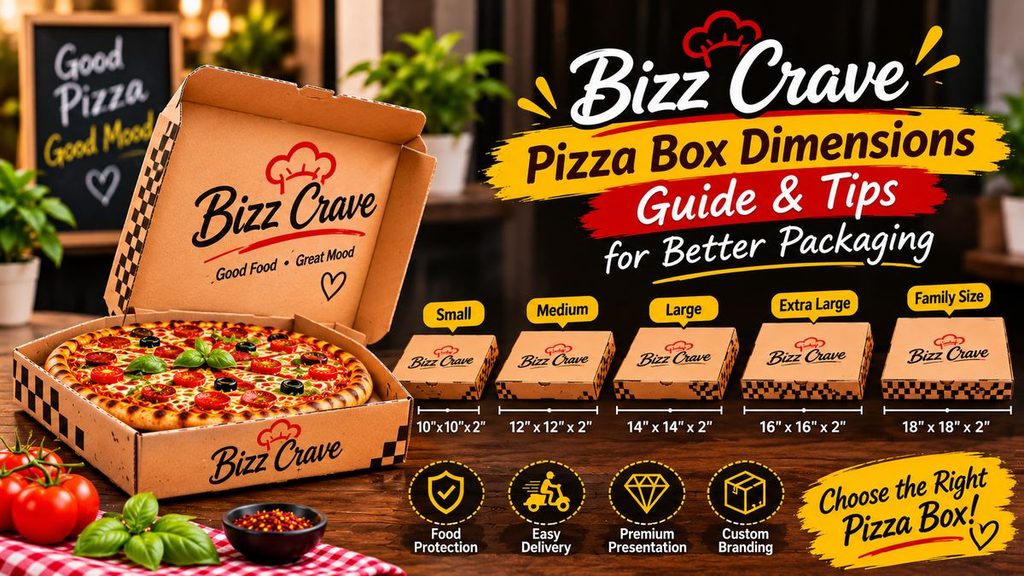
Running a pizza business involves many small decisions that can make a noticeable difference in customer satisfaction. While recipes, ingredients, and service receive much attention, packaging also deserves careful planning. The pizza box dimensions guide helps restaurant owners understand how packaging measurements connect with branding, order preparation, transportation, and business requirements. A pizza box is not simply a container; it is part of the customer’s first impression of a food order. Choosing packaging that suits the menu and business model can make restaurant operations more organized and professional.
Why Packaging Is Part of Your Restaurant’s Identity
When customers receive a pizza order, the packaging is often the first thing they see. Its appearance can influence how they perceive the restaurant before they even open the box.
A thoughtfully designed pizza box can help a business:
- Create a recognizable visual identity.
- Display its logo and contact information.
- Share promotional messages with customers.
- Make takeaway orders look more professional.
- Build a consistent experience across different orders.
For a growing restaurant, packaging is an opportunity to communicate its personality without changing the food itself.
Matching Pizza Packaging With Your Menu
A restaurant may offer several pizza varieties, and each product can have different packaging requirements. Instead of purchasing boxes randomly, businesses should create a packaging plan based on their actual menu.
Individual Pizza Orders
Personal-sized pizzas are often sold as lunch options, quick meals, or individual portions. Compact packaging can make these orders easier to handle and store.
Combination Deals
Some restaurants sell pizza with sides, dips, or additional items. These orders may require separate containers or a larger carrying bag rather than simply increasing the pizza box size.
Group and Celebration Orders
Customers ordering for birthdays, office gatherings, or family events may need several pizzas at once. Restaurants should consider how different box sizes can be stacked and transported together.
Special Pizza Varieties
Stuffed crusts, deep-dish recipes, and pizzas with generous toppings may need packaging with additional internal clearance. The finished product should always be tested before selecting a standard box.
How to Build a Practical Pizza Box Inventory
Keeping too many packaging varieties can make stock management difficult. On the other hand, having only one size may not support every item on the menu.
A practical inventory system begins with understanding customer demand.
Step 1: Review your menu
List every pizza variety and record its actual diameter and approximate height.
Step 2: Group similar products
Identify pizzas that can comfortably use the same box specifications. Avoid assuming that two products fit simply because they share a menu category.
Step 3: Check order history
Review which pizza sizes sell most frequently. This helps determine which packaging types deserve more storage space.
Step 4: Test packaging samples
Before placing a large order, assemble sample boxes and test them with real menu products.
Step 5: Set minimum stock levels
Decide how many boxes of each type should remain available before placing another supplier order.
This approach can help reduce unnecessary inventory and make packaging purchases more predictable.
Understanding Measurements Before Ordering
Pizza packaging suppliers may describe box dimensions using different measurement conventions. This makes it important to confirm exactly what each measurement represents.
For example, a supplier might provide:
- Internal base dimensions.
- External measurements.
- Closed-box height.
- Board thickness.
- Flat packaging dimensions before assembly.
These measurements are not interchangeable. Internal dimensions determine the usable area for the pizza, while external measurements help with storage and transportation planning.
Restaurants should request a specification sheet from the supplier and clarify whether the listed measurements refer to the inside or outside of the assembled box.
Bizz Crave: Making Pizza Packaging More Memorable
A successful pizza business needs more than delicious food; it also requires attractive packaging that creates a memorable experience for customers. The design, quality, and presentation of a pizza box can influence how people recognize and remember a restaurant. Bizz Crave emphasizes the importance of combining creative packaging ideas with practical dimensions to help businesses develop a strong brand identity. From eye-catching logos and attractive color combinations to suitable box sizes and durable materials, every detail contributes to professional presentation. Well-designed packaging can also make takeaway orders more appealing, improve brand recognition, and encourage customers to remember the business. By choosing packaging that reflects their style and meets customer expectations, restaurants can create a consistent and positive impression.
Creative Ideas for Custom Pizza Box Designs
Custom packaging can make an ordinary food order feel more distinctive. Restaurants do not necessarily need complicated artwork to create an appealing design.
Minimal Logo Placement
A simple logo on the center of the lid can create a clean and recognizable appearance.
Brand Color Combinations
Using the same colors across menus, packaging, and promotional materials can strengthen visual consistency.
Printed Customer Messages
A short thank-you message can make packaging feel more welcoming and personal.
QR Code Integration
A QR code may direct customers to a restaurant’s menu, ordering page, or social media profile. It should be tested to ensure that it scans correctly.
Promotional Packaging
Restaurants can use printed offers or seasonal messages to introduce new menu items and encourage repeat orders.
Improving the Customer Delivery Experience
A good delivery experience involves more than preparing delicious food. Packaging must also be convenient for drivers and customers.
Restaurants can improve delivery handling by considering the following points:
- Make sure every box is assembled correctly before use.
- Avoid placing heavy items on top of boxes that may become damaged.
- Use suitable delivery bags to help keep orders organized.
- Separate cold and hot food items when necessary.
- Check that packaging is clean and free from damage.
- Use appropriate seals when order security is required.
These practices can support better order presentation and help reduce avoidable packaging problems.
How to Compare Pizza Box Suppliers
Choosing a supplier should involve more than comparing the price of a single box. Restaurants should evaluate the complete value of the packaging they receive.
Consider these factors before making a decision:
Product specifications: Check the available dimensions, board type, and construction details.
Sample quality: Examine sample boxes for folding, closing, and general durability.
Printing options: Ask whether the supplier supports custom logos, colors, and other design requirements.
Minimum order quantity: Confirm how many boxes must be purchased in one order.
Delivery arrangements: Review delivery charges, estimated lead times, and ordering procedures.
Consistency: Check whether the supplier can maintain the same specifications across repeat orders.
Comparing these details can help businesses avoid selecting packaging based only on an attractive quoted price.
Managing Packaging Costs Without Sacrificing Quality
Packaging expenses can become significant when a restaurant handles a large number of orders. Careful purchasing decisions can help control costs while maintaining an acceptable customer experience.
One useful strategy is to compare the cost per usable box instead of focusing only on the total order price. Businesses should also consider printing charges, transportation expenses, storage requirements, and possible damaged stock.
Buying in bulk may reduce the unit price, but large orders are only practical when the restaurant has enough storage and predictable demand. A smaller trial order can help confirm product quality before committing to a large purchase.
Conclusion
Pizza packaging is an important part of restaurant planning because it connects product protection, customer experience, branding, and daily operations. Understanding pizza box dimensions can help businesses approach packaging decisions with greater confidence. Rather than choosing boxes based only on their advertised sizes, restaurant owners should review their menus, compare supplier specifications, test samples, and organize inventory according to actual demand. With thoughtful design and practical planning, pizza packaging can become a useful part of a restaurant’s identity and service quality.
Frequently Asked Questions (FAQs)
1. What should I check before ordering pizza boxes?
Check the internal measurements, box height, material, construction, printing options, and minimum order quantity. Testing a sample with an actual pizza is also recommended.
2. Can one pizza box size be used for different menu items?
Sometimes, but only when the products fit comfortably and the packaging provides sufficient clearance. Restaurants should test each product before using one box size for multiple menu items.
3. What information can be printed on a custom pizza box?
A custom pizza box can display a restaurant logo, brand colors, website, social media details, QR code, promotional offers, or a short customer message.
4. How can restaurants organize pizza box inventory?
Restaurants can group boxes by size, label storage areas, monitor sales patterns, and establish minimum stock levels for frequently used packaging.
5. Is buying pizza boxes in bulk always better?
Not necessarily. Bulk purchasing may lower the cost per box, but businesses should consider storage space, cash flow, order demand, and packaging quality before buying large quantities.