
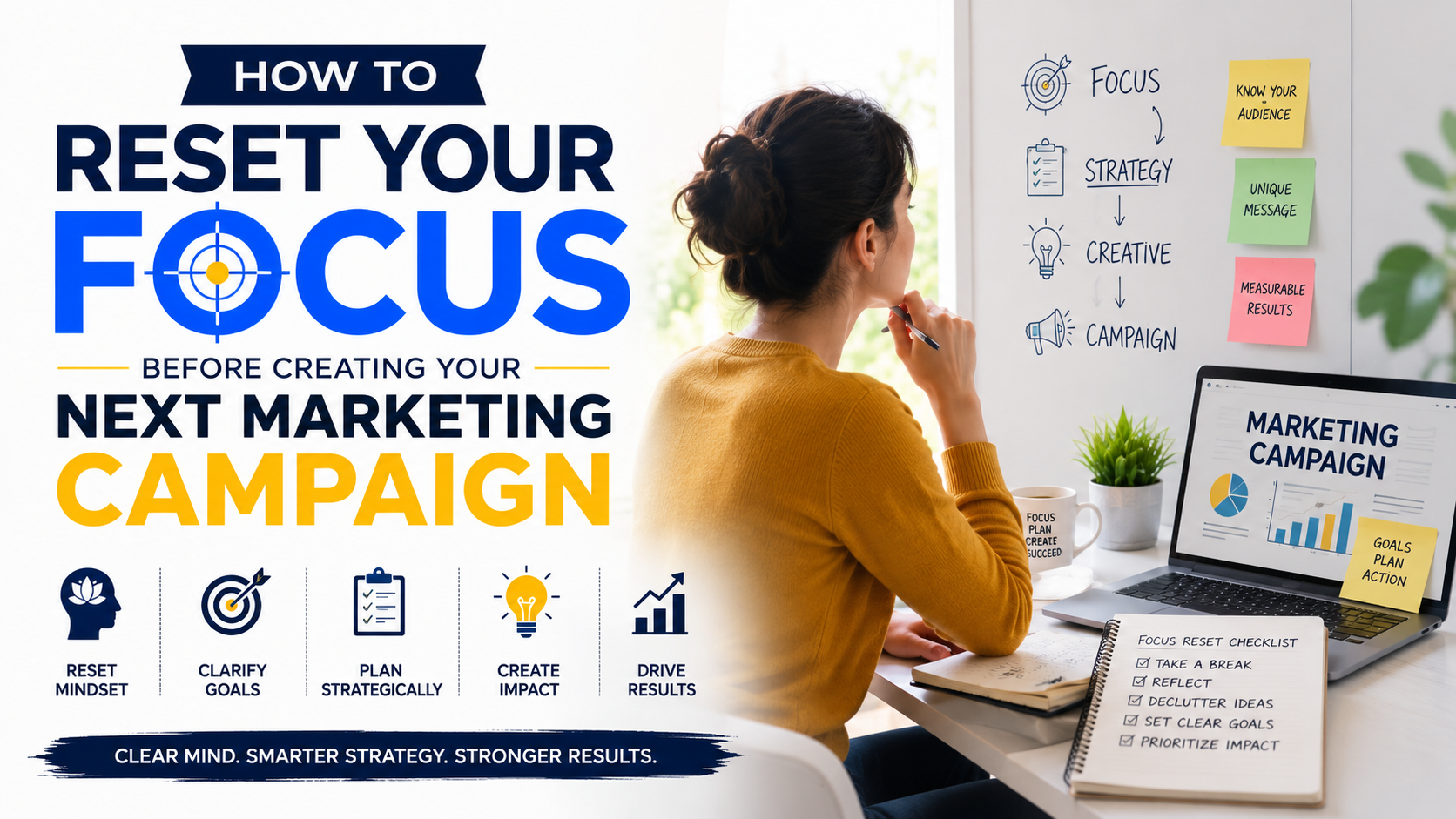
Every successful marketing campaign begins with a good idea. However, good ideas rarely appear when your mind is overloaded with notifications, deadlines, emails, and endless social media scrolling. If you’ve ever sat in front of your laptop for an hour without making real progress, you’re not alone.
Modern marketers, content creators, freelancers, and business owners face constant digital interruptions. Instead of spending time developing creative strategies, they often find themselves switching between tasks, checking messages, or chasing every new trend online.
This is why learning how to reset your focus before starting your next marketing campaign can make a significant difference. A focused mind produces better ideas, stronger messaging, and more effective campaigns. It also helps reduce stress and improves the overall quality of your work.
In this article, we’ll explore practical ways to regain concentration, build a productive workflow, and use AI tools wisely without losing the human touch that makes great marketing memorable.
Why Focus Matters More Than Ever
Marketing today is more competitive than ever before.
Your audience is exposed to thousands of advertisements, videos, emails, and social media posts every day. To stand out, your campaign needs creativity, consistency, and clear messaging.
None of these are possible if you’re constantly distracted.
Many professionals believe they have a time management problem, when in reality they have an attention management problem.
Protecting your focus is often more valuable than finding extra hours in the day.
Signs Your Mind Needs a Reset
Before planning your next campaign, ask yourself a few simple questions.
Do you:
- Open multiple browser tabs without finishing any task?
- Constantly switch between email and social media?
- Struggle to make simple decisions?
- Feel mentally tired before you even begin working?
- Keep rewriting the same content without feeling satisfied?
If your answer is yes to several of these questions, your brain may simply need a reset rather than more motivation.
Start With a Clear Campaign Goal
One reason many campaigns become stressful is because creators try to accomplish everything at once.
Instead of beginning with dozens of ideas, define one clear objective.
For example:
- Generate leads
- Increase brand awareness
- Promote a product launch
- Drive website traffic
- Build an email list
- Increase engagement
When your goal is clear, every creative decision becomes easier.
Without a defined objective, it’s easy to waste hours changing headlines, visuals, or messaging without making meaningful progress.
Remove Digital Noise Before You Create
The first thirty minutes of your creative session are incredibly valuable.
Protect them.
Before you begin:
- Turn off unnecessary notifications.
- Close unrelated browser tabs.
- Silence messaging apps.
- Put your phone away if possible.
- Keep only the documents and tools you need.
A clean digital workspace helps create a clearer mental workspace.
Plan Before You Design
Many marketers jump directly into Canva or a video editor without deciding what they actually want to communicate.
Instead, answer these questions first:
- Who is the audience?
- What problem are you solving?
- What action should the audience take?
- What emotion should the campaign create?
Having these answers before opening any design software saves both time and frustration.
Break Large Projects Into Smaller Tasks
Looking at an entire campaign at once can feel overwhelming.
Instead, divide it into manageable steps.
For example:
Day 1:
- Research your audience.
- Finalise campaign goals.
Day 2:
- Write headlines and marketing copy.
Day 3:
- Design graphics and videos.
Day 4:
- Review everything.
Day 5:
- Schedule and launch.
Completing smaller tasks builds momentum and keeps you motivated throughout the process.
Let AI Speed Up Repetitive Work
Artificial Intelligence has become a valuable assistant for modern marketers.
Instead of replacing creativity, AI helps reduce repetitive work so you can spend more time thinking strategically.
For example, AI can help generate:
- Content ideas
- Headlines
- Ad copy
- Captions
- Video scripts
- Image suggestions
- Campaign variations
If your campaign includes short-form video content, an Instagram reel maker powered by AI can help transform scripts into engaging videos much faster than creating everything manually. Many tools can also suggest transitions, subtitles, background music, and visual layouts, giving creators a strong starting point that they can personalise before publishing.
This approach saves time without sacrificing originality.
Don’t Let Trends Control Your Strategy
Marketing trends change constantly.
Every week there’s a new editing style, viral audio, or social media feature.
Trying to follow every trend often creates unnecessary pressure.
Instead, focus on trends that genuinely match your audience and business goals.
A simple, valuable campaign usually performs better than a complicated campaign that exists only because it’s currently popular.
Build a Small Toolkit You Actually Use
Many marketers download every new AI platform they discover.
Ironically, this creates another source of distraction.
Rather than collecting dozens of tools, choose a few reliable platforms that solve your biggest challenges.
For example:
- One AI writing assistant
- One design platform
- One video editing tool
- One scheduling platform
- One analytics dashboard
A smaller toolkit is easier to learn and much faster to use.
Helpful AI Platforms Worth Exploring
Today’s AI ecosystem offers excellent tools for marketers and creators.
Some popular platforms include:
- ChatGPT for brainstorming, outlining, and drafting marketing content.
- Canva AI for presentations, social media graphics, and visual designs.
- Adobe Express AI for promotional creatives and advertisements.
- InVideo AI for transforming scripts into marketing videos.
- Predis.ai for social media planning and content generation.
- CapCut AI for editing short-form videos.
- VEED for subtitles and browser-based video editing.
- Descript for podcast and video production.
Experiment with a few platforms instead of trying them all. The best AI tool is the one that fits naturally into your workflow and genuinely saves time.
Take Breaks Before Creativity Drops
Many people wait until they feel exhausted before stepping away from work.
A better approach is to take short, intentional breaks before your concentration starts to decline.
Simple activities such as stretching, walking, drinking water, or spending a few minutes away from screens help refresh your attention.
Some of the best campaign ideas appear after stepping away from the computer rather than staring at it for another hour.
Review Before You Publish
Never rush the final stage of a campaign.
Before publishing, ask yourself:
- Is the message clear?
- Does the content solve a real problem?
- Is the call-to-action obvious?
- Would I engage with this if I saw it online?
A five-minute review often catches small mistakes that could affect campaign performance.
Final Thoughts
Learning how to reset your focus before creating your next marketing campaign isn’t about finding a secret productivity hack. It’s about creating an environment where your best ideas have room to develop.
By reducing distractions, setting clear goals, planning your workflow, and using AI responsibly, you can create campaigns that are both effective and enjoyable to build. Tools such as an Instagram reel maker can speed up repetitive production tasks, allowing you to spend more time on strategy, creativity, and audience engagement.
Great marketing doesn’t come from constantly working harder. It comes from thinking more clearly, simplifying your process, and protecting the attention that fuels your creativity.
The next time you prepare a campaign, don’t begin by opening every app on your computer. Start by clearing your mind, defining your objective, and giving yourself the space to create work that truly connects with your audience. In the long run, a focused creator will always outperform a distracted one.