
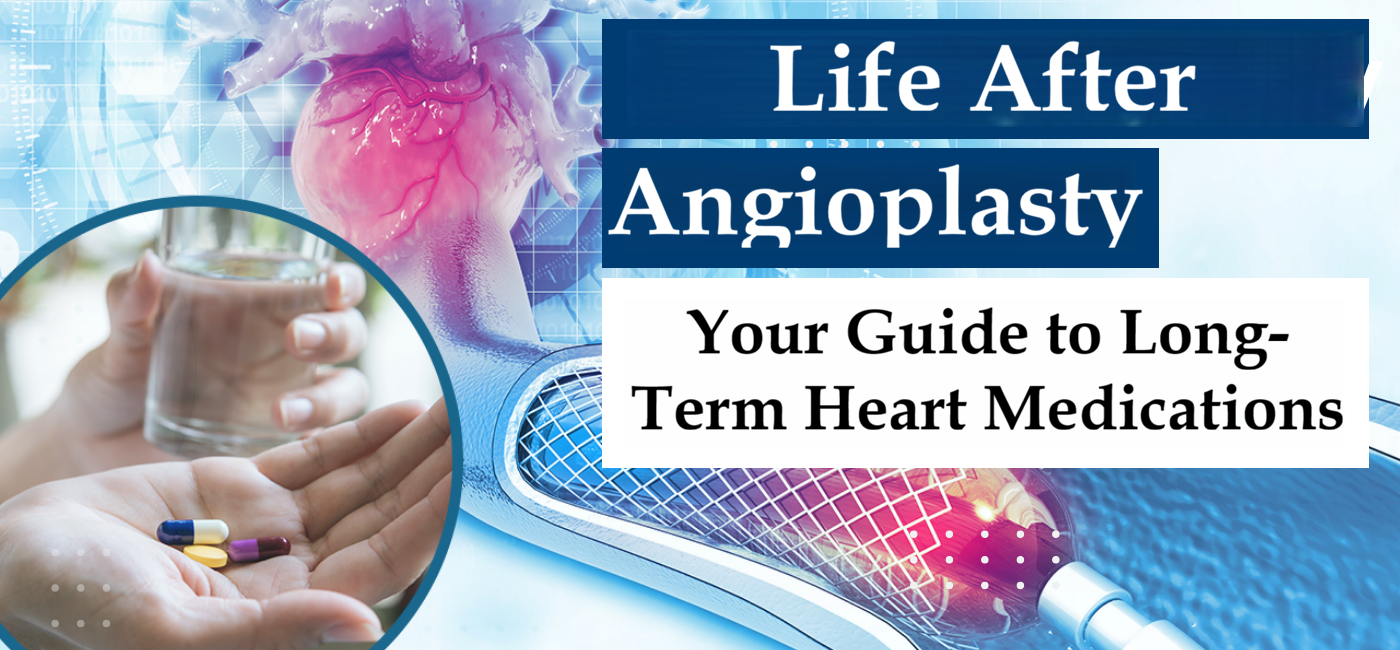
Heart disease does not end when you step off the operating table. The actual path, however, starts with the procedure, and even more so, patients should always strike the right balance between lifestyle changes and ongoing medical care. Your long-term medication plan is among the most crucial and most overlooked aspects of that journey.
If you’ve undergone angioplasty treatment, your doctor has likely discussed the importance of continuing certain prescriptions for months or even years afterward. This cannot be dismissed as just an added precaution, since it is an important measure in preventing new complications that could put the stent in danger and help keep the heart healthy in the long term.
Understanding Angioplasty and Its Purpose
An angioplasty procedure involves making a small incision using minimally invasive techniques to open up constricted/obstructed blood vessels of the heart. Doctors direct a small balloon into the clogged artery using a thin tube referred to as a catheter and inflate it to displace the plaque. A stent, a small mesh tube, is inserted to keep the artery open in most instances.
An angioplasty may be a miracle in terms of the enhancement of immediate blood flow, but it fails to heal an existing heart disease. The lining of arteries is not free of developing clots, inflammation, and accumulation of cholesterol. This is why your cardiologist is almost guaranteed to prescribe the continuing prescriptions during your rehabilitation. Not only do these medicines help prevent an emergency, but they also guard your investment in having a better heart.
Why Long-Term Medications are Necessary After Angioplasty?
Some patients justify the reason as to why they have to take medicines for months, or even throughout their lives, after they undergo the procedure. The solution exists in biology as well as in prevention. Once the stent has been inserted, the artery must heal. In this period, the blood has a higher chance of forming blood clots at the stent location. This is where medications after angioplasty, particularly blood thinners, become essential.
Prescribing long-term medication during angioplasty has several objectives:
• Eliminates blood clots, which may result in a heart attack
• Cut down on the recurring narrowing of the artery
• Regulation of cholesterol and blood pressure that deals with the causes of risk factors
• Enhance recuperation by decreasing inflammation of the arteries
Missing even a short-term medication, these medicines can undo the positive effects of your surgery and cause life-threatening complications.
Common Medications After Angioplasty
The types of medicines that will most likely be incorporated into your post-angioplasty prescription plan first include the following types of medicines:
- Antiplatelet Drugs: These ensure that platelets (minute blood cells) do not clump up to form clots. Well-known medicines are aspirin and clopidogrel. They are necessary following the implantation of a stent, particularly in the initial months.
- Statins: Statins will stabilize the existing plaque and decrease the levels of inflammation in the arteries, even though the cholesterol figures are already in a healthy range.
- Beta Blockers: Beta blockers ease this burden on your heart and ensure that consequent cardiac events are avoided as they slow down the speed of the heart and lower blood pressure.
- Inhibitors of ACE or ARBs: The pharmaceuticals dilate blood vessels, which causes the heart to pump blood with ease, as well as guard the heart muscle in the long run.
- Nitroglycerin (PRN): Although not used regularly, nitroglycerin may assist in the alleviation of occasional chest pains.
How Long Do You Need to Take These Medications?
A common patient question is how long to take medicine after angioplasty, and the answer varies depending on your stent type, health condition, and response to treatment.
- Dual Antiplatelet Therapy (DAPT), commonly consisting of aspirin and clopidogrel, is generally advised between 6 and 12 months in the case of drug-eluting stents, and at a minimum of 1 month in the case of bare-metal stents.
- Statins: The ones that are taken forever are the statins and blood pressure medications, particularly if you have had high cholesterol or hypertension previously.
- Aspirin: others might take aspirin throughout their life to prevent any heart attack or stroke.
The schedule will be amended depending on your progress in healing, test results, and side effects by your cardiologist. One must also never quit any form of medication without the consent of a doctor.
Balancing Benefits and Side Effects
Like all medicines, the medicines that you may use after angioplasty may include side effects. Some are:
• Bleeding or bruising easily (due to antiplatelets)
• Muscle pains (statins)
• Fatigue or cold extremities (beta blockers)
The trick is talking to your doctor without holding back. There are times when the side effects may lessen through dosage modification or substitution of the medicine, and changes in lifestyle that support the heart are made.
Lifestyle Changes That Support Medication Effectiveness
The medicines are better when recommended with heart-friendly lifestyle changes. Think of these suggestions to speed your recovery:
• Eat your arteries healthy – vegetables, fruits, whole grains, lean protein, and heart triggers such as nuts and olive oil are the objectives.
• Physical activity – Even mild walks daily would invite more blood into circulation and encourage medicine to perform better.
• Cope with stress – meditation, yoga, and breathing patterns will aid in keeping up the regularity of the heartbeat and blood pressure.
• Sleep well – Getting a good night’s sleep enables your body to heal and have good circulation.
• Stop smoking and drinking alcohol, which would disrupt prescriptions as well as cause a heart workload.
The Role of Regular Check-Ups and Monitoring
Post-angioplasty follow-up is no mere formality: It is necessary to make any changes to your medicine regimen. Such visits can include:
Blood tests for cholesterol and liver function
• Monitoring the blood pressure
• ECGs as a means of testing heart rhythm
• Chats concerning side effects or issues
In maintaining a follow-up schedule, you can help adjust your prescriptions and keep your heart as safe as it can be.
Your Long-Term Heart Health Plan
Medicines, although an essential component of the recovery, are only one element of your whole plan. Heart health in the long run consists of a compound of:
• Proper prescriptions
• Enhancement in lifestyle
• Periodical tests
Self-knowledge of symptoms
Put it this way, angioplasty cleared the way, but your subsequent lifestyle and prescriptions keep it nice and clear for many years to come.
Conclusion
Angioplasty is a potentially life-saving procedure that achieves its best when coupled with the appropriate long-term prescription. Understanding how long to take medicine after angioplasty is just as critical as the procedure itself. Depending on your health condition, the type of stent used, and the recovery status, your individualized medication plan would be different, yet the same message applies to all of you: do not discontinue the following medications without consulting a healthcare professional.
With consistent medications after angioplasty, healthy lifestyle choices, and regular medical monitoring, you can protect your arteries, prevent future problems, and keep your heart strong for years to come. The procedure is not the end of your treatment; it’s the beginning of a lifelong partnership between you and your healthcare team in trying to live heart-healthy