
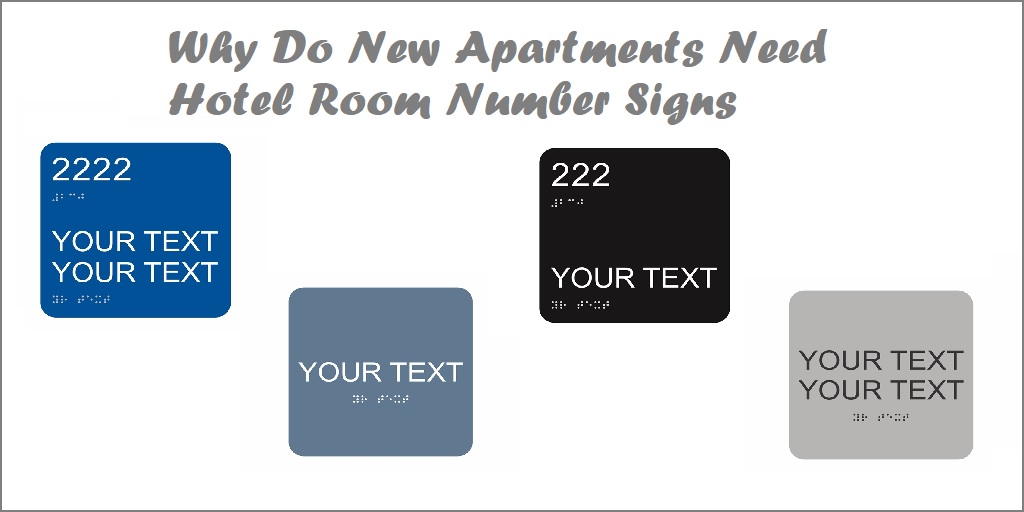
Some new apartment owners are surprised to find out they need something like hotel room number signs, even when their building isn’t anything close to a hotel. It feels like an unusual requirement at first. Then they look into ADA rules and realize it actually makes sense.
They’re stepping into a world where accessibility is tied to every permanent room. Leasing offices. Amenity areas. Shared spaces. Deliveries. Guests. Anyone who enters the building needs clear signs that follow tactile and Braille standards. That part becomes obvious pretty quickly.
Where Hotel Room Number Signs Fit Into Apartment Rules
People outside the design and construction field don’t always realize this, but multi-unit properties fall under several different codes. ADA, FHA, local building rules. They overlap just enough to make signage an easier box to check early on.
Permanent rooms must be labeled with tactile characters and Grade II Braille. That’s written plainly in ADA sections 703.2 and 703.3. It’s not optional for public or common-use spaces. The leasing office is the biggest example. Elevators too. Laundry rooms. Clubhouses. Even hallways. This is where hotel room number signs match the required format. Raised text, Braille, good contrast, simple placement. Apartment owners end up using the same style because it meets every rule without having to reinvent anything.
Some developers go beyond the minimum and use tactile signs for all unit numbers. Not because the law forces it, but because it keeps everything consistent and avoids any confusion during inspections. It lowers the chance of missing a detail that later creates a complaint.
When Apartments Are Treated Like Transient Spaces
A surprising thing happens when part of a building allows short stays. Corporate housing. Insurance stays. A few units listed for less than thirty days. It doesn’t take much for a property to fall under transient lodging categories.
Once that line is crossed, signage rules look similar to hotel requirements. That includes tactile identification on every unit in the program. For owners who plan to mix traditional leases with temporary stays, using standard hotel room number signs from the beginning avoids headaches later when the building is already occupied.
A Practical Reason That Has Nothing To Do With Codes
Even without the legal side, clear tactile signs help people walk through the building without guesswork. Visitors. Delivery drivers. Emergency responders. New tenants moving in with half their belongings. Anyone with low vision. It makes a difference.
Most complaints about apartments come from simple wayfinding problems. Owners realize that hotel room number signs solve an issue before it starts, which is why they show up in more residential projects than people expect.
Why Owners Don’t Want To Get This Wrong With Hotel Room Number Signs
Signage is one of the easiest items for inspectors to flag. Placement that’s a little too high. Wrong contrast. Missing Braille. If it’s not right, it’s obvious. No owner wants to deal with repeat inspections or possible accessibility complaints, so they pick a format that’s already tested.
Anyone who needs ADA-compliant signage, including hotel room number signs, can check Braille Sign Pros for options that meet the standards.
For more information about Braille Signs and Braille Exit Signs Please visit: Braille Sign Pros.