
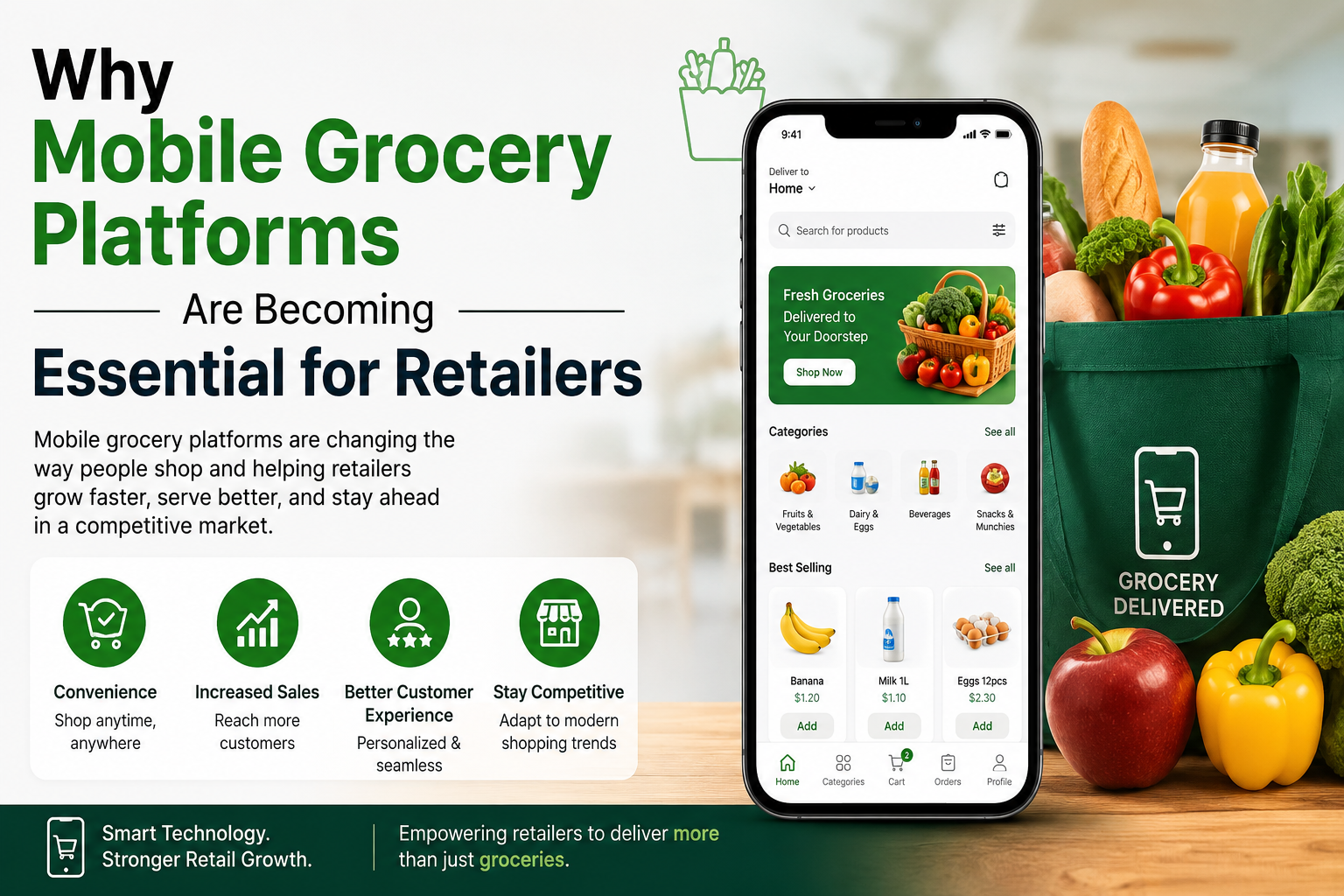
The grocery industry has entered a new era where convenience, speed, and personalized shopping experiences define customer expectations. While traditional brick-and-mortar stores remain an important part of retail, shoppers increasingly rely on their smartphones to browse products, compare prices, place orders, and schedule deliveries. This shift has transformed mobile grocery platforms from an optional business upgrade into a critical retail strategy.
Consumers no longer view mobile shopping as a luxury. Instead, they expect grocery retailers to offer digital experiences that are as smooth and reliable as shopping in-store. Retailers that embrace mobile technology are better positioned to attract new customers, strengthen loyalty, and improve operational efficiency. Those that delay digital transformation risk losing market share to competitors that provide faster, more convenient shopping options.
This article explores why mobile grocery platforms are becoming indispensable for modern retailers, the benefits they deliver, and how they are shaping the future of grocery commerce.
The Evolution of Grocery Shopping
Not long ago, grocery shopping involved weekly trips to local supermarkets, handwritten shopping lists, and waiting in checkout lines. While this model worked for decades, changing lifestyles have dramatically altered consumer behavior.
Today’s customers value convenience above almost everything else. Busy professionals, parents, students, and senior citizens all appreciate the ability to shop from anywhere without interrupting their daily routines. Smartphones have become the primary gateway for these shopping experiences, allowing users to purchase groceries within minutes.
The widespread availability of high-speed internet, digital payment systems, and location-based services has accelerated the adoption of mobile grocery platforms. Retailers now have an opportunity to connect with customers at every stage of their shopping journey, from product discovery to doorstep delivery.
Growing Consumer Demand for Mobile Shopping
Modern shoppers expect instant access to products and services. Whether they need fresh vegetables for dinner or household essentials for the week, customers prefer ordering groceries through a mobile app rather than visiting multiple stores.
Several factors have contributed to this growing demand:
- Faster lifestyles with limited shopping time
- Increased smartphone usage across all age groups
- Secure online payment methods
- Improved logistics and delivery networks
- Consumer preference for contactless shopping
As mobile usage continues to rise, grocery retailers that fail to offer digital shopping experiences may struggle to meet customer expectations.
Why Mobile Grocery Platforms Matter More Than Ever
A mobile grocery platform is much more than an online catalog. It serves as a complete digital storefront that connects retailers directly with customers while streamlining inventory management, order processing, marketing, and customer service. As more businesses invest in grocery delivery app development services, they gain access to customized mobile solutions that improve operational efficiency and enhance the overall shopping experience. By leveraging professional grocery delivery app development expertise, retailers can build scalable platforms that support business growth, strengthen customer loyalty, and adapt to evolving consumer expectations.
Unlike websites that may not always provide an optimized mobile experience, dedicated grocery applications deliver faster performance, personalized recommendations, push notifications, and simplified navigation.
This combination improves customer satisfaction while increasing purchasing frequency.
Enhancing Customer Convenience
Convenience remains the biggest reason customers choose mobile grocery applications.
Instead of driving to a supermarket, searching for products, waiting in checkout lines, and carrying heavy bags home, shoppers can complete their purchases within minutes using their smartphones.
Key convenience features include:
Easy Product Search
Customers can instantly search thousands of products using keywords, categories, or voice search.
Saved Shopping Lists
Frequently purchased items can be reordered with just a few taps, making repeat purchases effortless.
Flexible Delivery Options
Customers appreciate having multiple choices, including:
- Same-day delivery
- Scheduled delivery
- Store pickup
- Express delivery
Secure Digital Payments
Integrated payment gateways support multiple payment methods including credit cards, digital wallets, UPI, and cash on delivery.
These conveniences significantly improve customer satisfaction while encouraging repeat purchases.
Building Stronger Customer Loyalty
Customer retention is often more profitable than acquiring new customers. Mobile grocery platforms help retailers build stronger relationships by delivering personalized shopping experiences.
Personalization features include:
- Product recommendations based on previous purchases
- Personalized discounts
- Birthday rewards
- Loyalty points
- Digital coupons
- Referral programs
Instead of generic promotions, retailers can send offers tailored to individual customer preferences, making marketing campaigns more effective.
Increasing Sales Through Personalized Experiences
Personalization has become one of the strongest drivers of online retail success.
Modern grocery applications analyze shopping behavior to recommend products customers are likely to purchase. This creates opportunities for cross-selling and upselling.
For example:
A customer purchasing pasta may also receive recommendations for pasta sauce, cheese, garlic bread, and beverages.
These intelligent recommendations increase average order value while improving the overall shopping experience.
Expanding Market Reach
Traditional grocery stores are limited by geographic location. Mobile platforms remove many of these barriers.
Retailers can now serve customers across multiple neighborhoods, cities, or even regions without opening additional physical stores.
Expansion becomes easier because customers can discover stores through:
- Mobile app marketplaces
- Digital advertising
- Search engines
- Social media campaigns
- Referral programs
This broader visibility creates new revenue opportunities while reducing dependence on walk-in traffic.
Improving Inventory Management
Managing grocery inventory is challenging because products often have limited shelf life.
Mobile grocery platforms integrate inventory management systems that automatically update stock levels whenever purchases occur.
Benefits include:
- Real-time stock updates
- Reduced inventory errors
- Better demand forecasting
- Lower food waste
- Faster restocking decisions
Customers also benefit by seeing accurate product availability before placing orders.
Better Demand Forecasting
Retailers collect valuable purchasing data through mobile platforms.
This information helps businesses identify:
- Popular products
- Seasonal buying trends
- Peak shopping hours
- Customer preferences
- High-performing categories
Using these insights, retailers can optimize inventory levels, improve supplier relationships, and reduce unnecessary stock shortages.
Faster Order Processing
Manual order management often results in delays and errors.
Mobile grocery platforms automate much of the order workflow.
Orders move seamlessly through:
- Customer order placement
- Inventory verification
- Payment confirmation
- Store picking
- Packaging
- Delivery assignment
- Customer notification
Automation reduces operational costs while improving delivery speed.
Streamlining Delivery Operations
Delivery plays a critical role in customer satisfaction.
Modern grocery platforms integrate delivery management tools that help retailers:
- Assign drivers automatically
- Optimize delivery routes
- Track drivers in real time
- Provide live order tracking
- Send delivery notifications
Customers appreciate knowing exactly when their groceries will arrive, reducing uncertainty and improving trust.
Supporting Omnichannel Retail
Today’s consumers move seamlessly between online and offline shopping.
A customer may browse products online, reserve items through the mobile app, and collect them from the nearest store.
Others may visit the store but later reorder using the app.
Mobile grocery platforms connect these channels into one consistent shopping experience.
Retailers benefit by maintaining customer relationships regardless of where purchases occur.
Better Marketing Opportunities
Traditional advertising reaches broad audiences but often lacks precision.
Mobile grocery platforms enable retailers to communicate directly with customers through:
- Push notifications
- Personalized offers
- In-app promotions
- Flash sales
- Seasonal campaigns
- Abandoned cart reminders
Because these messages target customers based on actual shopping behavior, conversion rates are generally much higher than traditional advertising methods.
Leveraging Artificial Intelligence for Smarter Retail
Artificial intelligence (AI) is transforming mobile grocery platforms from simple ordering tools into intelligent shopping assistants. By analyzing customer behavior, purchase history, seasonal demand, and browsing patterns, AI helps retailers make informed business decisions while enhancing the customer experience.
For example, AI can recommend complementary products based on previous purchases, predict future demand for popular items, and automatically notify customers when frequently purchased products are running low. This proactive approach not only improves customer satisfaction but also increases repeat purchases and average order values.
Retailers also benefit from AI-powered inventory forecasting, which minimizes stock shortages and reduces food waste. With smarter insights, businesses can optimize procurement and ensure that high-demand products are always available.
Data-Driven Decision Making
Every interaction on a mobile grocery platform generates valuable business data. Retailers can use this information to gain deeper insights into customer preferences and shopping habits.
Some key metrics include:
- Best-selling products
- Peak ordering times
- Customer retention rates
- Average order value
- Frequently purchased combinations
- Delivery performance
- Cart abandonment rates
By analyzing these insights, retailers can make strategic decisions regarding pricing, inventory, promotions, and product assortment. Data-driven strategies reduce guesswork and help businesses allocate resources more efficiently.
Improving Customer Engagement
A mobile grocery app provides multiple touchpoints to engage customers beyond the initial purchase. Retailers can keep users informed and interested through timely notifications, personalized promotions, and interactive features.
Effective engagement strategies include:
- Exclusive app-only discounts
- Daily deals and flash sales
- Seasonal offers
- Personalized product suggestions
- Loyalty rewards
- Order updates and delivery tracking
Consistent engagement encourages customers to return regularly, increasing long-term loyalty and lifetime value.
Reducing Operational Costs
Automation within mobile grocery platforms significantly lowers operational expenses. Manual processes such as order management, inventory updates, billing, and customer notifications can be streamlined through integrated software solutions.
Some cost-saving benefits include:
- Reduced paperwork
- Fewer manual errors
- Faster order fulfillment
- Improved staff productivity
- Better inventory control
- Lower customer service workload
These efficiencies allow retailers to focus on business growth rather than repetitive administrative tasks.
Strengthening Brand Identity
A dedicated mobile grocery application serves as a direct extension of a retailer’s brand. Unlike third-party marketplaces, a branded app enables businesses to maintain complete control over the customer experience.
Retailers can customize:
- App design
- Brand colors
- User interface
- Promotional campaigns
- Loyalty programs
- Customer communication
This consistent branding builds trust and helps businesses establish a recognizable presence in an increasingly competitive market.
Competing with Large Retail Chains
Independent grocery stores often struggle to compete with national supermarket chains due to limited resources. However, mobile grocery platforms level the playing field by giving smaller retailers access to advanced digital capabilities.
With a well-designed app, local grocery businesses can offer:
- Online ordering
- Home delivery
- Real-time inventory
- Digital payments
- Personalized customer service
- Loyalty rewards
These features enable smaller retailers to deliver experiences comparable to larger competitors while maintaining the personalized service that local customers value.
Meeting the Expectations of Modern Consumers
Consumer expectations continue to evolve rapidly. Shoppers now demand convenience, speed, transparency, and flexibility throughout the buying process.
A modern grocery platform addresses these expectations by providing:
- Fast product searches
- Easy checkout
- Multiple payment options
- Real-time delivery tracking
- Instant order confirmation
- Responsive customer support
Retailers that consistently meet these expectations are more likely to earn customer trust and encourage repeat business.
Essential Features Every Mobile Grocery Platform Should Include
To remain competitive, retailers should invest in platforms equipped with features that improve both user experience and operational efficiency.
Some of the most valuable features include:
User Registration and Profiles
Simple sign-up options using email, phone numbers, or social media accounts make onboarding quick and convenient.
Smart Product Categories
Well-organized categories and filters help customers quickly find the products they need.
Advanced Search Functionality
Search features with auto-suggestions, barcode scanning, and voice search improve usability and save time.
Real-Time Inventory Updates
Displaying accurate stock availability prevents customer frustration caused by ordering unavailable products.
Secure Payment Integration
Supporting multiple payment methods, including credit cards, digital wallets, UPI, and cash on delivery, gives customers flexibility.
Order Tracking
Real-time order tracking increases transparency and enhances customer confidence throughout the delivery process.
Ratings and Reviews
Allowing customers to review products and services helps build credibility while assisting future shoppers in making informed decisions.
Customer Support
Integrated chat, FAQs, and support channels enable users to resolve issues quickly without leaving the app.
Sustainability and Reduced Food Waste
Sustainability has become an important priority for both consumers and retailers. Mobile grocery platforms contribute to environmentally responsible practices by improving inventory accuracy and reducing unnecessary waste.
Demand forecasting helps businesses stock products more efficiently, minimizing spoilage. Digital receipts reduce paper usage, while optimized delivery routes decrease fuel consumption and carbon emissions.
Some retailers also use their platforms to promote eco-friendly products, reusable packaging, and environmentally conscious purchasing habits, strengthening their brand image among sustainability-focused consumers.
Future Trends Shaping Mobile Grocery Platforms
The grocery retail industry will continue evolving as technology advances. Several emerging trends are expected to influence the next generation of mobile grocery platforms.
These include:
- AI-powered virtual shopping assistants
- Voice-based grocery ordering
- Predictive shopping recommendations
- Subscription-based grocery deliveries
- Smart shopping lists connected to household devices
- Contactless and autonomous delivery solutions
- Blockchain-powered supply chain transparency
- Augmented reality product visualization
Retailers that adopt these innovations early will be better prepared to meet changing customer expectations and maintain a competitive edge.
Why Retailers Should Invest Now
The transition toward digital grocery shopping is no longer a temporary trend—it represents a lasting shift in consumer behavior. Waiting too long to invest in a mobile grocery platform may result in lost customers, reduced market share, and missed revenue opportunities.
Early adopters gain several advantages, including:
- Stronger customer loyalty
- Higher sales through personalized marketing
- Improved operational efficiency
- Better inventory management
- Enhanced customer satisfaction
- Greater business scalability
- Increased brand visibility
- Valuable customer insights for future growth
Investing today allows retailers to build a solid digital foundation that can adapt to future technologies and evolving consumer preferences.
Conclusion
Mobile grocery platforms have become an essential component of modern retail success. They empower businesses to deliver convenient shopping experiences, streamline operations, improve inventory management, and build lasting customer relationships. Beyond facilitating online orders, these platforms provide valuable data insights, personalized marketing opportunities, and scalable solutions that support long-term growth.
As customer expectations continue to rise, retailers must embrace digital transformation to remain relevant and competitive. A thoughtfully designed mobile grocery platform enables businesses to offer seamless shopping experiences while improving efficiency and profitability. Whether serving a neighborhood community or expanding into new markets, retailers who invest in mobile technology today will be better positioned to thrive in the future of grocery commerce.