
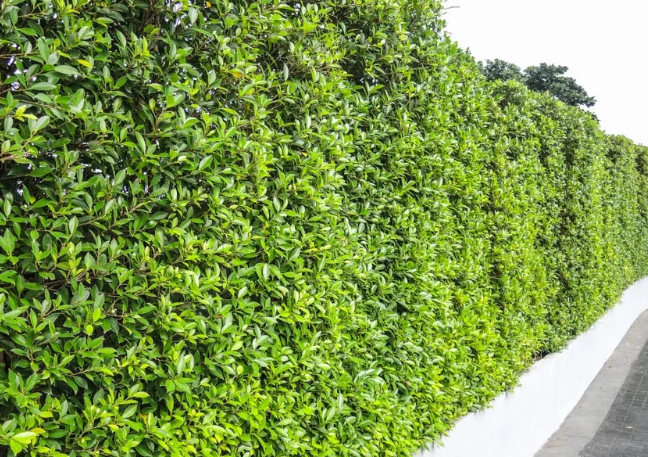
Creating privacy in an outdoor space does not always require a solid fence or artificial screen. Plants can provide a softer, more natural boundary while adding greenery, shade, and visual structure to the landscape. Ficus Nitida is a popular option for this purpose because of its dense evergreen foliage, fast growth, and ability to respond well to regular pruning. With the right planting location and care routine, it can develop into an attractive living screen that provides year-round coverage.
What Makes Ficus Nitida Suitable for Screening?
One of the main advantages of this plant is its dense foliage. The glossy green leaves create a full appearance, making it useful for separating outdoor areas and reducing unwanted views. Unlike deciduous plants that lose their leaves during colder seasons, Ficus Nitida remains evergreen, helping maintain consistent screening throughout the year.
It is also adaptable to different landscape settings. It can be used around residential gardens, commercial properties, boundaries, and outdoor living areas. Its ability to tolerate heat, coastal conditions, and urban environments makes it particularly useful in suitable warm climates.
Growth and Mature Size
Understanding the eventual size of a plant is important before establishing a hedge or screen. Indian Laurel can become a substantial plant when allowed to grow without regular pruning. Depending on growing conditions and form, it can reach significant heights and widths.
Its relatively fast growth can be an advantage when the goal is to establish screening within a reasonable period. Plant Clearance notes that Ficus hedges can gain around 30–60 centimetres per year with suitable sunlight, watering and fertilisation.
However, faster growth also means regular maintenance is necessary. Without trimming, the plant can become larger than intended, particularly in smaller gardens.
Planting for a Dense Hedge
Spacing plays an important role when establishing a continuous screen. Plants that are positioned too far apart may take longer to create a visually connected hedge, while planting too closely can increase competition for water, nutrients, and growing space.
For hedge formation, recommended spacing can depend on the size of the plants and the desired final density. Plant Clearance recommends spacing Ficus Nitida hedge plants approximately 3–5 feet apart.
The planting area should have well-draining soil and receive full sun to partial shade. Preparing the soil properly and positioning each plant at the appropriate depth can give the roots a stronger start.
Watering and Ongoing Care
Newly planted specimens require consistent watering while their root systems become established. Once established, Indian Laurel has moderate water requirements and can tolerate periods of reduced rainfall better than newly planted specimens.
Mulching around the base can help retain soil moisture and reduce competition from weeds. However, mulch should be kept away from the trunk or stems to avoid creating overly damp conditions around the plant base.
Regular fertilisation during active growing periods can also support healthy foliage and vigorous development. Care should be adjusted according to local conditions, soil quality and the plant’s overall performance.
Pruning for Shape and Density
Pruning is particularly important when Ficus Nitida is being used as a formal hedge. Regular trimming encourages a controlled shape and helps maintain the desired height and width.
Rather than waiting until the plant becomes excessively large, light and consistent pruning can make maintenance more manageable. It also allows homeowners and landscapers to shape the hedge according to the available space.
The plant’s responsiveness to pruning makes it suitable for both informal screens and more structured landscape designs.
Creating a Long-Term Outdoor Screen
A successful living screen requires more than simply selecting a fast-growing plant. Location, spacing, irrigation, soil drainage, and pruning all influence how well the hedge develops.
Ficus Nitida can provide dense, evergreen foliage while adding natural structure to a landscape. Its adaptability and ability to be shaped make it a practical option for properties seeking a greener alternative to conventional screening.
Conclusion
A well-planned living screen can improve privacy while contributing colour, texture and structure to an outdoor environment. For homeowners exploring privacy hedge plants offer a combination of evergreen foliage, vigorous growth and strong pruning tolerance that can make it a practical choice for creating a natural boundary. Selecting plants according to climate, available space and maintenance expectations helps create a healthier and more attractive result.