
Corporate and private events have changed noticeably over the past few years. Guests no longer respond to hospitality experiences the same way they did before hybrid work, digital fatigue, and shorter attention spans reshaped social behaviour. Event planners are increasingly expected to create environments that feel interactive, flexible, and emotionally engaging without appearing excessive or overproduced.
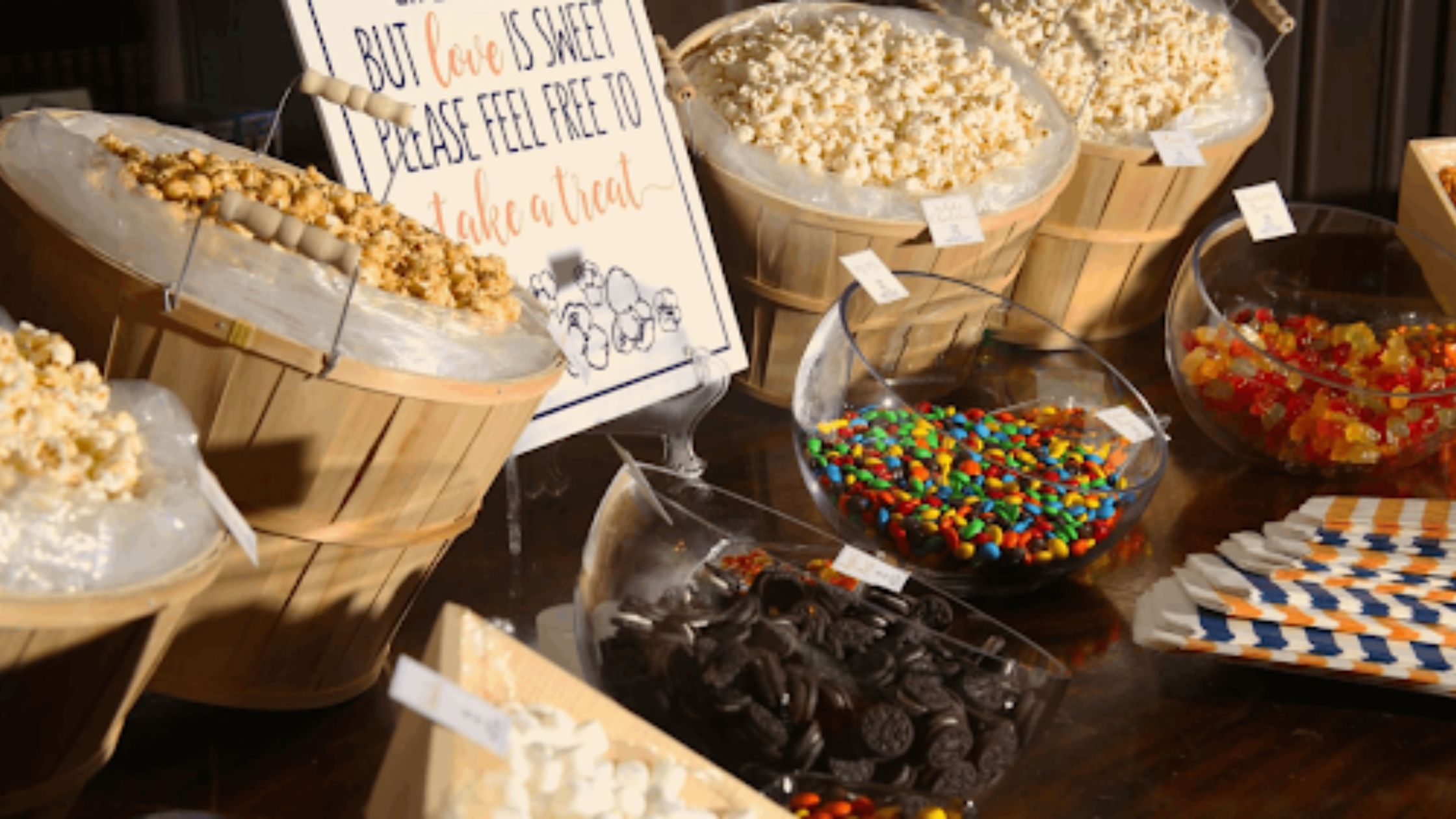
That shift helps explain the rising popularity of the candy and popcorn buffet across corporate events, conferences, experiential activations, and modern celebrations. What was once viewed as a novelty feature is now being reconsidered as a practical hospitality tool that encourages movement, conversation, and sensory engagement in ways traditional catering setups often fail to achieve.
According to EventMB’s event trend reporting and industry observations from experiential marketing firms, attendee engagement increasingly depends on immersive micro-experiences rather than large-scale spectacle alone. Food presentation has become part of that behavioural equation.
Why Static Catering Layouts Are Losing Impact
Traditional event catering often prioritizes visual presentation over guest interaction. Large dessert tables and formal plated arrangements may photograph well, but they do not always encourage movement or participation inside the room.
This operational challenge matters more than many organizations initially realize.
Modern events are frequently designed around networking, collaboration, and flexible movement patterns. Guests move between breakout spaces, presentations, lounges, and informal conversations throughout the experience. Food stations that interrupt that rhythm can unintentionally slow engagement.
A candy and popcorn buffet functions differently because it encourages low-pressure interaction.
Guests approach casually. They return multiple times. Conversations often begin naturally around flavor choices, customization, or nostalgia-driven reactions. These small behavioural moments can influence the overall social atmosphere more than highly structured hospitality elements.
Event strategists are paying closer attention to these details because attendee experience metrics now influence everything from conference retention to employee engagement outcomes.
The Psychology Behind Interactive Snack Stations
Consumer behaviour research consistently shows that interactive environments increase emotional memory retention. Studies published through the Journal of Consumer Research have demonstrated that multisensory experiences tend to strengthen positive event recall compared to passive experiences alone.
This helps explain why popcorn and candy stations continue gaining traction in both corporate and social settings.
Several behavioural factors contribute to their effectiveness:
- portability supports guest mobility
- sensory elements create stronger environmental awareness
- customization increases perceived participation
- familiar snack formats reduce social friction
- informal interactions encourage conversational flow
Unlike formal dining setups, guests do not feel obligated to pause their participation in the event itself. They continue networking, moving, and engaging while interacting with the buffet.
That operational flexibility is particularly valuable at:
- conferences
- office celebrations
- product launches
- trade shows
- experiential marketing events
- employee appreciation gatherings
The format aligns naturally with how modern attendees behave.
Why Packaged Hospitality Is Expanding at Corporate Events
The rise of packaged snack experiences represents another significant shift within event operations.
Interest in packaged popcorn for corporate events increased substantially after organizations began prioritizing flexible distribution, cleaner handling practices, and mobile-friendly hospitality formats during large gatherings.
This trend has persisted well beyond temporary health-related concerns.
Today’s corporate events often involve:
- multi-room schedules
- hybrid attendee movement
- distributed networking spaces
- flexible seating environments
- shorter session transitions
Packaged popcorn supports these operational realities efficiently.
It also provides several secondary advantages:
- simplified inventory management
- easier replenishment cycles
- reduced food waste
- improved portability
- streamlined guest distribution
- easier sponsor integration for branded experiences
Many event organizers now view individually packaged snack formats as part of broader event flow management rather than simply a catering decision.
That distinction matters because operational convenience increasingly shapes hospitality planning decisions in large-scale event environments.
Where Event Design Is Becoming More Sensory
The broader hospitality industry is moving toward experience layering rather than isolated visual presentation.
In practical terms, this means planners are thinking more carefully about how environments feel rather than simply how they appear in photographs.
A candy and popcorn buffet contributes to that sensory layering naturally through:
- aroma
- texture
- colour variation
- movement
- sound
- guest interaction
Fresh popcorn, in particular, creates an atmospheric effect that many event professionals now intentionally use to energize quieter environments. Scent marketing research from the Harvard Business Review has repeatedly highlighted how smell influences emotional response and environmental perception in commercial spaces.
Events operate under similar psychological dynamics.
Attendees often remember how a space felt long after they forget individual decorative details.
This is one reason experiential event design has become increasingly important within industries ranging from technology conferences to luxury retail activations.
Why Simplicity Is Quietly Outperforming Overproduction
One notable shift across hospitality and event planning is the growing preference for experiences that feel approachable rather than excessively curated.
Overly complicated catering presentations can create unintended hesitation among guests. People may admire the setup visually without fully engaging with it.
Snack buffets built around recognizable formats tend to perform differently.
Popcorn and candy carry familiarity. Guests understand immediately how to interact with the experience. That simplicity reduces friction while still allowing planners to introduce elevated presentation, premium flavours, or branded styling elements.
The strongest event experiences increasingly balance:
- accessibility
- movement
- flexibility
- visual identity
- operational practicality
This balance matters more than novelty alone.
Many event planners have discovered that guests rarely remember the most elaborate feature of an event. Instead, they remember the element that made social interaction feel easier and more natural throughout the experience.
That behavioural insight continues reshaping hospitality strategy across the industry.
The Business Value Behind Informal Hospitality
Organizations are also beginning to recognize that hospitality design influences measurable business outcomes.
At corporate events, environmental comfort affects:
- networking quality
- attendee participation
- booth engagement
- dwell time
- social sharing behaviour
- overall event satisfaction
Informal snack stations often support these goals surprisingly well because they create what behavioural psychologists sometimes refer to as “soft interaction zones.” These are low-pressure spaces where guests naturally pause, reconnect, and re-engage without structured facilitation.
That dynamic is difficult to replicate through formal catering alone.
For companies investing heavily in live events, conferences, and employee experiences, even small improvements in attendee engagement can influence long-term brand perception and relationship-building outcomes.
Hospitality decisions are increasingly being evaluated through that broader operational lens.
Looking Ahead
The growing relevance of candy and popcorn buffet experiences reflects a larger evolution taking place within event strategy itself. Modern hospitality is becoming less focused on spectacle and more focused on behavioural design, flexibility, and emotional atmosphere.
As attendee expectations continue shifting, event planners are prioritizing experiences that encourage interaction naturally rather than forcing engagement through excessive production.
Snack stations may seem like a small operational detail on the surface. In practice, they often influence movement patterns, conversational energy, and guest comfort more than highly engineered visual elements.
That is why interactive hospitality formats continue gaining traction across corporate events, experiential activations, and modern celebrations alike.
The future of event design may ultimately belong to experiences that feel less performative and more intuitively human.