
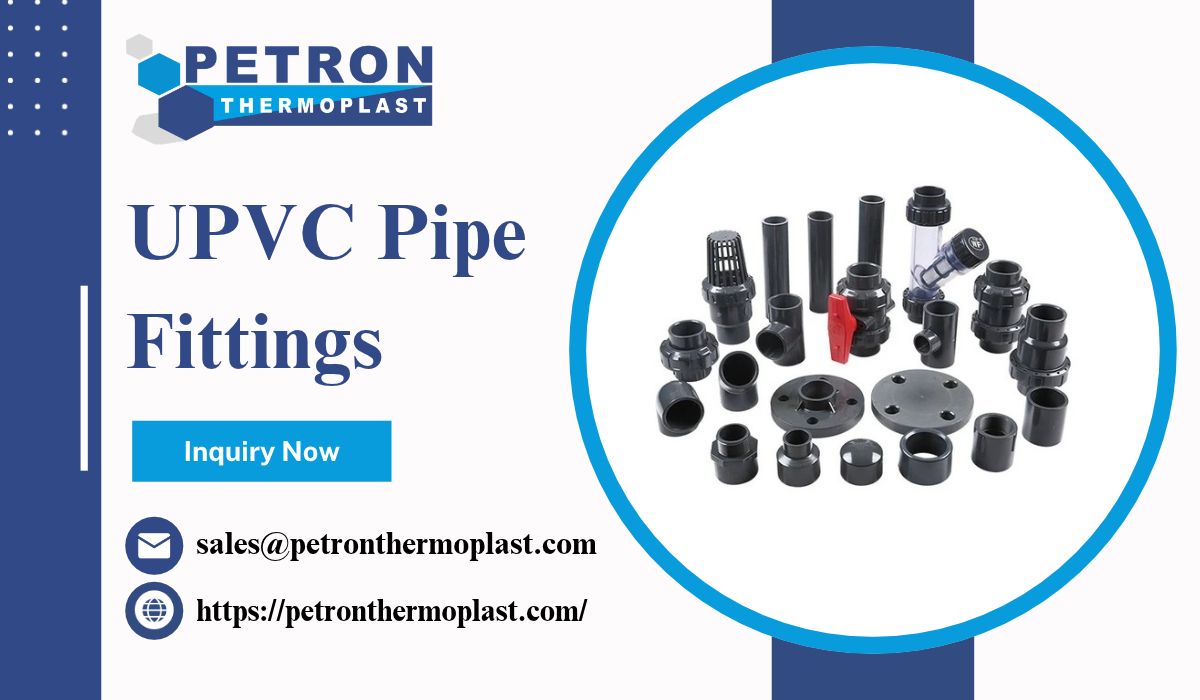
Customized piping systems are essential for industries that require reliable fluid transportation, efficient plant operations, and flexible installation options. UPVC Pipe Fittings for Customized Industrial Installations help connect pipelines, change flow directions, manage branch connections, and support different piping layouts. These fittings are widely considered for water distribution, wastewater treatment, chemical processing, and other industrial applications where the material is suitable for the operating conditions.
Petron Thermoplast offers UPVC pipe fitting solutions for industrial piping requirements, with options to suit different project specifications. Whether you are developing a new plant, expanding an existing pipeline, or upgrading a fluid distribution system, selecting the right fittings can help improve installation efficiency and long-term system performance.
What Are UPVC Pipe Fittings?
UPVC stands for unplasticized polyvinyl chloride. It is a rigid thermoplastic material used in various piping applications. UPVC pipe fittings are components designed to join pipes, create branches, change direction, or connect different sections of a piping network.
Unlike flexible piping materials, UPVC maintains a rigid structure under suitable operating conditions. Its relatively low weight can also make handling and installation easier compared with some traditional piping materials.
Industrial projects often require fittings in different shapes, connection styles, and dimensions. Customized selection helps engineers match the piping layout with the available installation space, flow requirements, and project design. However, UPVC is not suitable for every chemical or operating temperature. Material compatibility, pressure rating, and service conditions should always be checked before selecting fittings.
Why Customized UPVC Pipe Fittings Are Important?
Every industrial installation has different requirements. A standard fitting may not always match the layout, connection dimensions, or space available at the site. Customized planning helps address these challenges before installation begins.
Key reasons to consider customized UPVC pipe fittings include:
- Project-specific dimensions: Select suitable sizes and connection arrangements according to approved piping drawings.
- Flexible pipeline layouts: Use appropriate elbows, tees, reducers, and other fittings to create the required configuration.
- Installation space management: Plan pipe connections for compact equipment areas and restricted spaces.
- Simplified procurement: Coordinate fitting specifications with project schedules and material lists.
- Consistent system design: Match fitting requirements across different sections of the same piping network.
- Maintenance planning: Choose accessible connection arrangements that support inspection and future servicing.
Customized solutions should be based on engineering requirements rather than dimensions alone. Pressure, temperature, chemical exposure, joining methods, and applicable standards also influence fitting selection.
Types of UPVC Pipe Fittings for Industrial Applications
Different fittings perform specific functions within a piping system. The following options are commonly considered for industrial installations, subject to product availability and project compatibility.
- UPVC Elbows
UPVC elbows change the direction of a pipeline. They are commonly used where pipes need to turn around equipment, walls, structural elements, or other installation obstacles.
Elbows are available in different angles, including 45-degree and 90-degree configurations. The appropriate angle depends on the piping layout and required flow path.
- UPVC Tees
UPVC tees connect a branch line to a main pipeline. They are useful for distributing water or other compatible fluids to multiple sections of an industrial facility.
The choice between equal and reducing tee configurations depends on the diameter of the main line and the branch connection.
- UPVC Reducers
Reducers connect pipes of different diameters. They help engineers accommodate changes in pipeline size where required by the system design.
Concentric and eccentric designs serve different layout requirements. The correct option should be selected according to flow direction, equipment arrangement, and engineering specifications.
- UPVC Couplings and Sockets
Couplings and sockets join compatible pipe sections or connect pipes with other fittings. They are commonly used in pipeline assembly, repairs, and extensions.
The connection type must match the pipe dimensions and the joining method specified for the installation.
- UPVC End Caps and Plugs
End caps and plugs close pipeline openings. They may be used for terminating a line or isolating a section where the design permits.
For pressurized systems, the selected component must have an appropriate pressure rating and a compatible connection.
- UPVC Unions
Unions allow compatible pipeline sections to be disconnected for maintenance or equipment replacement without cutting the pipe. They can be useful near valves, instruments, and serviceable equipment.
- UPVC Flanges
Flanged connections are used where a pipeline needs to connect with compatible equipment, valves, or another flanged component. The flange dimensions, drilling pattern, gasket, and pressure rating should match the system requirements.
Technical Factors to Consider Before Ordering
Before purchasing UPVC pipe fittings for customized industrial installations, review the project’s technical requirements. This helps reduce the risk of ordering components that do not match the intended operating conditions.
| Technical factor | What to confirm |
| Material | Verify that UPVC is suitable for the fluid and service environment |
| Nominal size | Match fitting dimensions with the piping design |
| Pressure rating | Check the fitting rating at the actual operating temperature |
| Temperature | Confirm the permissible service temperature for the selected product |
| Connection type | Specify the required socket, threaded, or flanged connection |
| Fitting configuration | Identify elbows, tees, reducers, unions, and other required components |
| Chemical compatibility | Check compatibility with the fluid concentration and exposure conditions |
| Standards | Confirm the applicable dimensional and product standards |
| Installation method | Follow the specified joining procedure and manufacturer’s instructions |
Applications of Customized UPVC Pipe Fittings
UPVC pipe fittings are used in various industries where the material is compatible with the fluid and operating environment.
Water Treatment Plants
Water treatment facilities use piping networks to move water between treatment stages, storage systems, and distribution lines. UPVC fittings may be suitable for compatible water-handling applications.
Wastewater Management
In suitable wastewater systems, UPVC fittings help connect pipeline sections and route flow through treatment and drainage infrastructure. The wastewater composition should be assessed before material selection.
Chemical Processing
Some industrial chemicals can be handled through properly selected UPVC piping systems. However, not all chemicals are compatible with UPVC. Engineers should verify chemical concentration, temperature, pressure, and exposure conditions before specifying fittings.
Manufacturing Facilities
Factories often require piping for utilities, water distribution, and process-related services. Customized fittings can help accommodate equipment positions, branch lines, and changes in pipeline direction.
Commercial and Industrial Infrastructure
Large buildings and industrial facilities may use UPVC fittings in compatible water distribution and utility systems. Selection should follow the relevant project specifications and local codes.
Industrial Equipment Connections
UPVC fittings can connect compatible equipment and pipeline sections where the design requires specific angles, branches, or diameter transitions.
Benefits of Choosing the Right UPVC Pipe Fittings
Correctly specified UPVC pipe fittings can provide several practical advantages.
- Corrosion resistance: UPVC does not rust like conventional iron-based materials, although its suitability still depends on the service environment.
- Lightweight construction: Components are generally easier to handle than many metal alternatives.
- Installation convenience: Compatible joining systems can simplify pipeline assembly when installed correctly.
- Low routine maintenance: Properly selected and installed fittings may require less corrosion-related maintenance than certain metallic alternatives.
- Flexible system design: Different fitting configurations help accommodate project-specific piping layouts.
- Material consistency: Using compatible components throughout the system supports a coordinated installation.
How to Select UPVC Pipe Fittings for a Customized Project?
A structured selection process can help procurement teams, contractors, and engineers avoid unnecessary delays.
Step 1: Define the application. Identify the fluid, operating environment, and purpose of the pipeline.
Step 2: Confirm the operating conditions. Record the working pressure, temperature, chemical concentration, and any expected pressure variations.
Step 3: Prepare the fitting list. Identify the required fitting types, quantities, nominal sizes, and connection styles.
Step 4: Share drawings and specifications. Provide approved piping layouts, equipment connection details, or a bill of materials where available.
Step 5: Verify material compatibility. Confirm that UPVC is suitable for the intended service. Consider another material if the application exceeds its limits.
Step 6: Review product details. Check dimensions, ratings, applicable standards, and joining instructions before confirming the order.
Step 7: Plan installation and inspection. Ensure the fittings are installed according to the manufacturer’s instructions and inspected before the system is commissioned.
Why Choose Petron Thermoplast for UPVC Pipe Fittings?
Petron Thermoplast provides UPVC pipe fitting solutions for industrial piping requirements. For customized installations, project teams can share their technical specifications to help identify suitable product options.
When discussing your requirements, provide details such as fitting type, nominal size, connection style, quantity, application, and delivery destination. Drawings or a bill of materials can also help clarify the scope of the order.
Petron Thermoplast supports inquiries for industrial requirements, including project-based procurement and bulk order discussions. Product suitability, customization possibilities, lead time, and export arrangements should be confirmed against the specific order.
Customization and Bulk Order Requirements
For large industrial installations, a clear procurement specification helps keep purchasing and installation teams aligned. Before requesting a quotation, prepare the following information:
- Required UPVC fitting types and quantities
- Nominal sizes and connection dimensions
- Connection method and relevant standards
- Operating pressure and temperature
- Fluid or chemical name and concentration
- Project drawings or bill of materials
- Required delivery schedule and destination
Conclusion
UPVC Pipe Fittings for Customized Industrial Installations help engineers plan pipeline connections around project-specific dimensions, equipment positions, and fluid distribution requirements. Elbows, tees, reducers, couplings, unions, and flanges each serve a different purpose within an industrial piping network.
The right selection begins with understanding the operating conditions, checking chemical compatibility, confirming pressure and temperature limits, and matching the fittings to the approved design. With careful planning, industrial teams can improve installation coordination and reduce avoidable procurement errors. Petron Thermoplast welcomes inquiries for UPVC pipe fitting requirements. Contact the team with your specifications to discuss suitable options for your industrial piping project.