
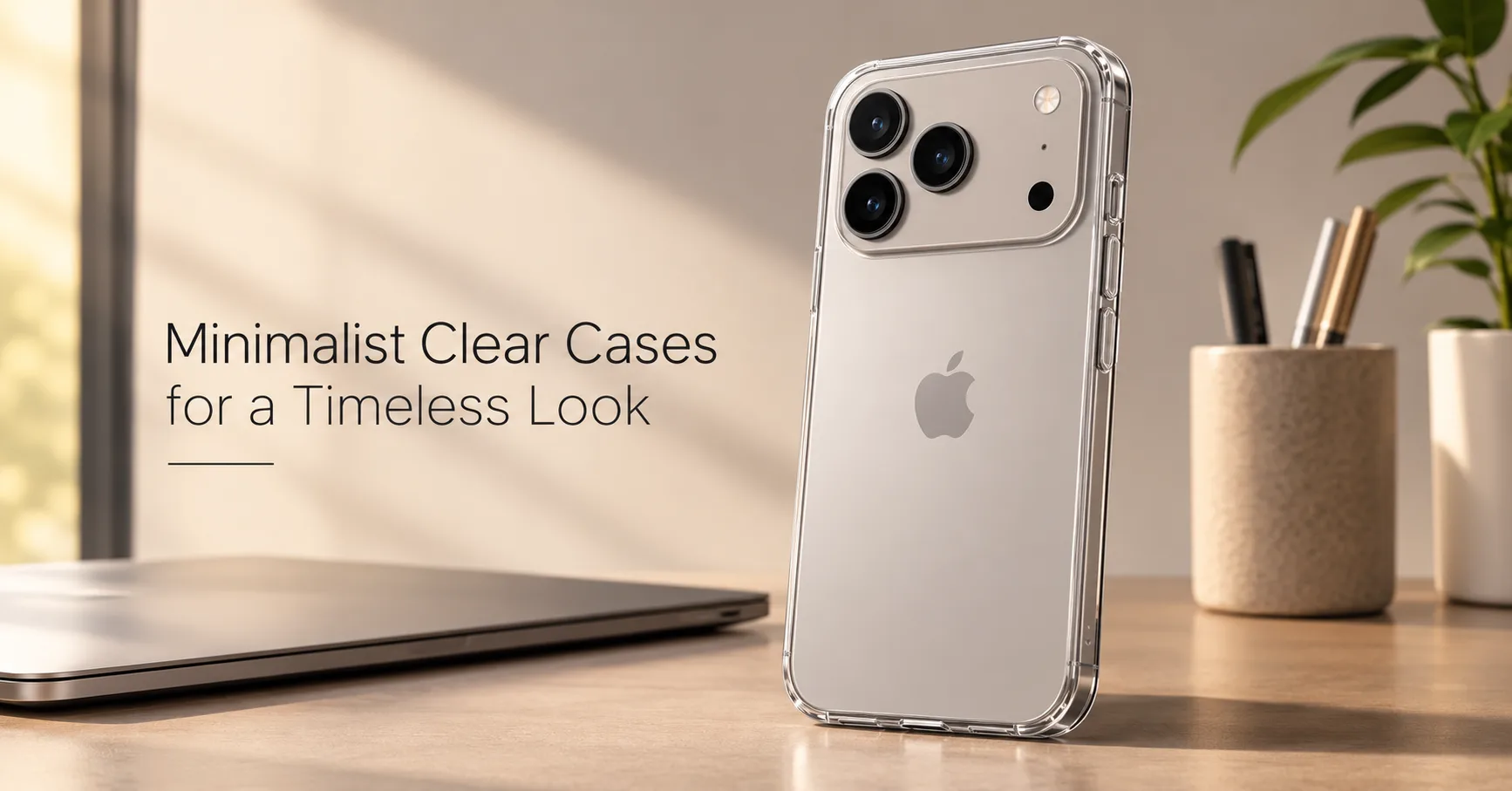
The thinnest iPhone case is a hard shell about 1mm thick or less. It adds almost no bulk. It stops scratches and small bumps. For bigger drops, you need a little more case.
You paid a lot for your iPhone. It looks great. It feels great. Then you snap on a thick case and it feels like a brick. So you want almost nothing. But how thin can a case go before it stops doing its job? Here is the plain answer.
What counts as a thin case?
Most people mean a case about 1mm thick or less. Some are even thinner. You may hear people call this a “nudecase” feel. The idea is simple. The phone feels like it has no case on at all.
Thin cases do three things well. They keep scratches off the frame and back. They add a little grip. And they keep the phone’s shape, which matters to a lot of buyers.
Why slim feels better
Apple lists the iPhone 17 Pro Max at 231 grams. That is a lot to hold all day. A chunky case makes it worse. Your pocket feels it. Your wrist feels it.
Slim iPhone cases fix that. A good slim iPhone cover also slides in and out of a jacket pocket without a fight. Picture a real estate agent heading to a viewing. She grabs her phone, keys and coffee. A bulky case is one more thing to juggle.
The honest trade-off: thin vs safe
Here is the part many sellers skip. Thin cases protect less than thick ones. Less material means less cushion.
Phones fall a lot. A YouGov report quoting Corning says the average person drops their phone about seven times a year. Repairs hurt too. A Vodafone survey found 19.1% of Australians were living with smashed screens because repairs cost too much. And a Finder survey of 2,005 Australians found one in ten had broken a device beyond repair in five years. 48502 what do british consumers do when their phone screens crack +2
So what can a thin case do? It handles everyday scuffs and many small bumps. It will not save your phone from every fall.
Two cheap fixes help a lot:
- Add a tempered glass screen protector.
- Pick a case with a small raised lip around the screen and camera.
If you work on a building site or in a busy kitchen, go thicker. Be honest with yourself about your day.
Which material works best?
Material matters more than thickness. Here is the short guide.
- Hard PP shell: Light and matte. Easy to hold. A good slim protective case for daily life. It can crack on a hard corner hit.
- Aramid fibre: Thin, tough and a little bendy. Notebookcheck says aramid cases give a good balance of protection and low bulk. It is not the same as carbon fibre. notebookcheck
- Carbon fiber: Stiff, light and sharp-looking. A carbon fiber phone case can be real fibre or a carbon pattern on plastic. Ask which one you are buying. Some real-fibre designs can weaken signal. Many carbon fibre phone cases use a pattern, so it is rarely a worry. If you like a thin option, look at this 0.45mm carbon pattern case.
- PC plus TPU: A hard shell with a soft edge. PC fights scratches and TPU absorbs shock. Together they cover both jobs. Read more on polycarbonate TPU. newcase
- Thin leather: A slim iPhone leather case feels warm and ages well. If you want the best leather iphone case, look for real hide, neat stitching and a snug fit.
Will a thin case work with MagSafe?
Yes, if it is built for it. The iPhone 17 Pro and Pro Max support MagSafe and Qi2 charging up to 25W. apple
A magnetic phone case has magnets built in. That keeps the pull strong. A thin body keeps the gap small, so car mounts and wallets hold well. A case with no magnets can weaken that grip.
Think of a rideshare driver with a magnetic car mount. One bump in the road and a weak hold drops the phone. Test any case with your own mount.
Get the right fit for your model
Fit matters. Cutouts must line up with the buttons, camera and ports.
Shopping for an iPhone 17 Pro Max case? Do not guess. The Max and the Pro are different sizes. An iPhone 17 Pro case will not fit the Max. Check each iPhone 17 Pro Max cover and iPhone 17 Pro cover for the exact model name.
Same rule for any iPhone 18 Pro Max case. If the listing says only “Pro”, ask before you buy.
Quick checklist before you buy
- Thickness listed in mm
- Raised lip for screen and camera
- Magnets built in, if you use MagSafe
- Material you trust
- Exact model name
- Matte finish, if fingerprints annoy you
- Clear return policy
Style counts too. The best leather phone cases and luxury leather cases look great, but they cost more. Sleek phone cases in matte plastic are a lighter pick. Choose what fits your day.
FAQs
What is the thinnest iPhone case?
Cases about 1mm thick or less are the thinnest. Aramid fibre, thin PP and carbon-pattern shells lead this group.
Do thin iPhone cases protect from drops?
They help with scratches and small bumps. They give less cushion than thick cases. Add a screen protector for better odds.
Do thin cases work with MagSafe?
Yes, if magnets are built in. Check that the listing says MagSafe or magnetic.
Is a carbon fiber phone cover better than plastic?
It looks premium and feels stiff. Plastic is often easier to grip. Check if the cover is real fibre or a pattern.
Will an iPhone 17 Pro case fit the Max?
No. The sizes differ. Always buy a case made for your exact model.
Conclusion
The thinnest case is not always the best case. It is the best case for you when it matches your day. Want a barely-there feel? Go slim. Drop things a lot? Add a screen protector or step up the thickness.
Ready to find yours? Browse the thinnest iPhone case range at Sleek Cases and pick the one made for your exact model.
Resources and references
- Apple iPhone 17 Pro specs
- Apple: MagSafe-compatible iPhone models
- Notebookcheck: aramid fibre phone cases
- ITWire: Vodafone survey on smashed screens in Australia
- TechGuide: Finder survey on broken and lost phones
- YouGov: how often people drop phones (Corning data)