
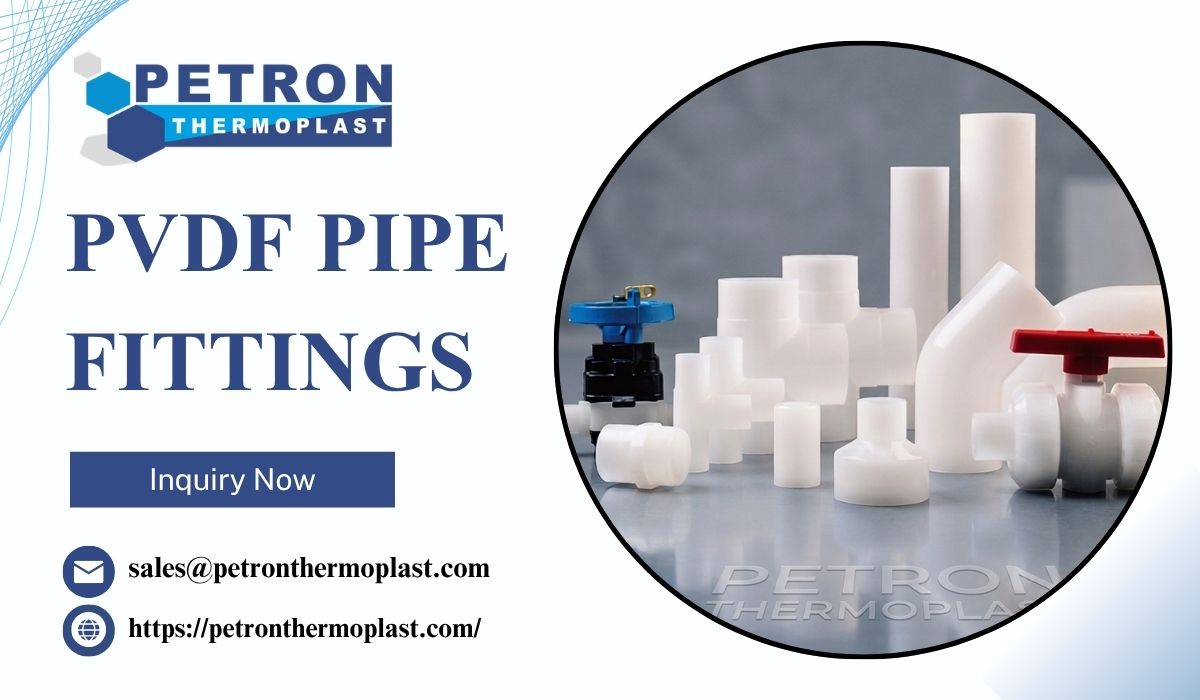
Industrial piping systems often operate under challenging conditions, including elevated temperatures, chemical exposure, and continuous fluid transfer. Choosing the right piping components is essential for maintaining system reliability and reducing unplanned maintenance. PVDF pipe fittings are used in specialized industrial applications where chemical resistance, thermal performance, and dependable connections are important.
Petron Thermoplast offers industrial plastic piping solutions for businesses looking for suitable fittings for demanding operating environments. PVDF pipe fittings can be considered for chemical processing, pharmaceutical manufacturing, high-purity fluid handling, and other applications where their material properties meet the process requirements.
When selecting PVDF fittings for temperature-resistant applications, buyers should evaluate the operating temperature, pressure, fluid composition, connection method, and compatibility of the complete piping system.
What Are PVDF Pipe Fittings?
PVDF stands for polyvinylidene fluoride, a high-performance thermoplastic known for its chemical resistance and useful thermal properties. PVDF pipe fittings connect pipeline sections, change flow direction, create branches, and connect pipes to compatible equipment. These fittings are available in different configurations depending on the piping system and manufacturer’s product range. Common fitting designs may include elbows, tees, reducers, couplers, adapters, and flanged connections.
PVDF is used in applications where standard plastic materials may not provide the required combination of chemical resistance and temperature performance. However, not every PVDF fitting is suitable for every fluid or operating condition. The specific material grade, fitting design, pressure rating, and installation method must be confirmed before use.
Why Choose PVDF Pipe Fittings for Temperature-Resistant Applications?
Temperature can affect the mechanical performance, pressure capacity, and service life of piping components. PVDF offers several properties that make it worth considering for selected industrial applications.
- Useful Thermal Performance
PVDF can operate in a range of temperatures that makes it suitable for many demanding industrial services. Its exact operating limits depend on the material grade, fitting design, pressure, fluid, and duration of exposure.
As temperature increases, the allowable pressure of a thermoplastic piping system may decrease. Buyers should therefore consult the manufacturer’s pressure-temperature data instead of selecting a fitting based only on its nominal pressure rating.
- Chemical Resistance
PVDF offers resistance to many acids, bases, solvents, and other industrial chemicals. This makes it useful for certain chemical transfer and process applications.
Chemical compatibility is not universal. The exact chemical, concentration, temperature, exposure time, and any mixed substances must be reviewed before the material is approved for service.
- Corrosion Resistance
Unlike conventional metal fittings, PVDF does not rust. This can be an advantage in applications where corrosion resistance is a major requirement.
The full piping assembly still needs to be assessed, including seals, joining materials, valves, supports, and connected equipment. A chemically resistant fitting alone does not guarantee that the complete system is suitable.
- Mechanical Reliability
PVDF can provide useful mechanical properties for industrial piping applications when operated within its specified limits. Correct installation, proper pipe support, and compatible connection methods are essential for reliable performance.
Thermal expansion and contraction should also be considered in systems exposed to temperature changes. Pipeline routing and support arrangements may need to accommodate these movements.
- Suitability for Specialized Applications
PVDF is used in selected high-purity and demanding industrial environments. Its suitability depends on the material grade, manufacturing quality, system requirements, and applicable industry standards.
Where purity is critical, buyers should request relevant material and quality documentation rather than assuming that every PVDF product is suitable for high-purity service.
Technical Specifications to Check Before Selection
For temperature-resistant service, buyers should review the following parameters before finalizing an order.
| Parameter | What to Confirm |
| Material grade | Exact PVDF grade and product construction |
| Operating temperature | Normal, minimum, and maximum expected temperatures |
| Pressure rating | Permitted pressure at the intended operating temperature |
| Chemical compatibility | Fluid composition, concentration, and exposure conditions |
| Fitting dimensions | Nominal size and dimensional compatibility |
| Connection type | Available joining or connection method |
| Thermal expansion | Expected movement due to temperature changes |
| Installation requirements | Support, alignment, and joining procedures |
| Documentation | Available technical datasheets and inspection records |
| Applicable standards | Standards required for the project and application |
Applications of PVDF Pipe Fittings
PVDF pipe fittings are used in several industries where their properties suit the operating environment.
Chemical Processing Plants
Chemical facilities may use PVDF fittings in compatible process lines for transferring acids, solvents, and other industrial fluids. Material selection should be based on the exact chemical and operating conditions.
Pharmaceutical Manufacturing
Selected pharmaceutical processes require controlled handling of liquids and compatible piping materials. Where cleanliness or purity is important, buyers should confirm the suitability and documentation of the specific PVDF product.
Semiconductor and High-Purity Systems
PVDF is used in some high-purity fluid handling systems. These applications may require specific material grades, surface characteristics, cleanliness controls, and installation procedures.
Industrial Water Treatment
Certain water treatment systems use PVDF fittings where chemical compatibility and operating conditions justify their selection.
Specialty Manufacturing
Manufacturing processes involving demanding temperatures or compatible industrial chemicals may benefit from PVDF piping components, subject to engineering review.
Not every application requires PVDF. For less demanding service, another material may be more economical. Material selection should balance performance requirements, compatibility, and total system cost.
How to Select PVDF Pipe Fittings for Temperature-Resistant Service?
Choosing the correct fitting requires an assessment of the complete application rather than temperature alone.
- Define the temperature range. Identify normal operating temperature, maximum temperature, start-up conditions, cleaning cycles, and any temperature fluctuations.
- Confirm the operating pressure. Review the expected pressure at the actual operating temperature. Include relevant changes during start-up, shutdown, and normal operation.
- Identify the fluid. Provide the chemical name, concentration, and any relevant safety data. Mixed chemicals may have different compatibility characteristics from individual substances.
- Choose the correct fitting configuration. Confirm the required fitting type, size, connection method, and dimensional requirements.
- Review the full system design. Consider thermal expansion, pipe supports, valves, seals, connected equipment, and installation constraints.
- Verify documentation. Obtain the relevant technical datasheet and confirm that the selected product meets project requirements before purchasing.
These checks help reduce the risk of selecting a fitting that cannot safely handle the intended service conditions.
Installation and Maintenance Best Practices
Correct installation is essential for the performance of PVDF pipe fittings in demanding applications.
- Follow the manufacturer’s specified joining procedure and installation instructions.
- Use compatible pipes, fittings, seals, and joining materials.
- Avoid excessive mechanical stress and ensure appropriate pipe support.
- Account for thermal expansion and contraction where temperature changes are expected.
- Verify alignment before completing connections.
- Inspect joints and fittings according to the approved commissioning procedure.
- Monitor for leakage, deformation, or other signs of damage during operation.
- Follow the recommended inspection and maintenance schedule.
Why Choose Petron Thermoplast for PVDF Pipe Fittings?
Petron Thermoplast provides industrial plastic piping solutions for businesses with different project requirements. Buyers looking for PVDF pipe fittings can share their operating conditions and technical specifications to discuss suitable product options.
When requesting a quotation, provide the required fitting types, sizes, quantities, operating temperature, pressure, chemical details, connection requirements, and delivery destination. Technical drawings and product specifications can help clarify the project scope. For bulk orders and industrial projects, confirm product availability, applicable technical documentation, and delivery timelines with the sales team before finalizing procurement.
Contact Petron Thermoplast at sales@petronthermoplast.com or visit https://petronthermoplast.com/ to discuss your PVDF pipe fittings requirements.
Conclusion
PVDF pipe fittings can be a suitable choice for industrial applications that require a combination of chemical resistance and temperature performance. They are used in selected chemical processing, pharmaceutical, high-purity, and water treatment systems where their material properties meet the required conditions.
The best fit is not determined by temperature resistance alone. Buyers must also evaluate pressure, chemical compatibility, fitting dimensions, connection type, thermal expansion, and installation requirements. Petron Thermoplast can be contacted to discuss PVDF pipe fittings for industrial and project-based requirements. Share your application details and technical specifications to help identify an appropriate solution.