
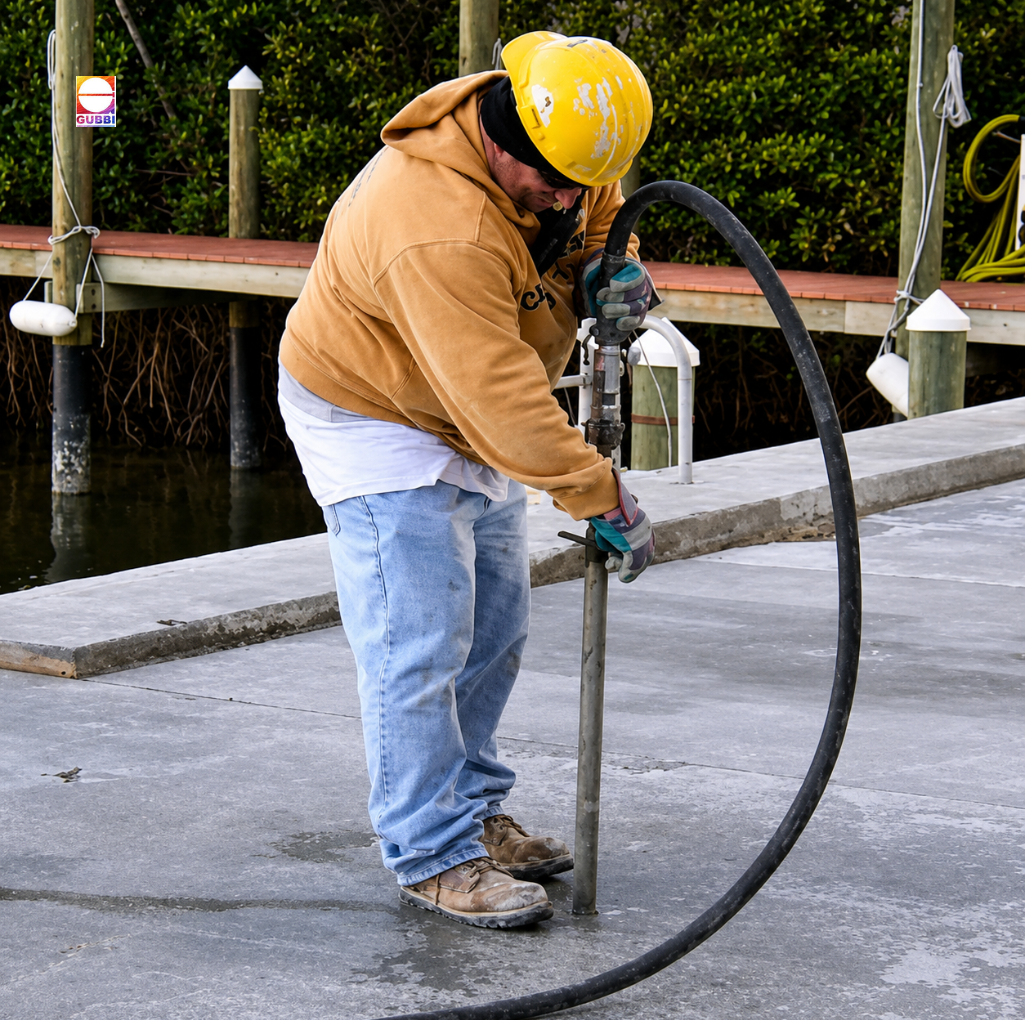
Existing buildings and infrastructure can develop cracks, water leakage, concrete deterioration, voids, and reduced structural performance because of ageing, environmental exposure, operational changes, or construction-related deficiencies. Instead of immediately considering demolition or replacement, appropriate retrofitting services can help improve the performance of an existing structure. Grouting techniques can complement these solutions by addressing internal cracks, leakage pathways, cavities, and other defects that require treatment beyond surface-level repairs.
What Are Retrofitting Services?
Retrofitting services involve improving an existing structure so that it can safely meet its present or revised functional requirements. The approach may involve strengthening structural members, repairing deteriorated concrete, improving connections, controlling corrosion, or addressing defects that affect performance. Retrofitting is particularly relevant when industrial buildings, commercial structures, bridges, warehouses, plants, and other assets need continued operation without complete reconstruction. The selected method depends on structural condition, loading requirements, usage, and future performance expectations.
Why Existing Structures Need Retrofitting
A structure can remain operational while gradually developing problems that are not immediately visible. Changes in machinery loads, increased occupancy, ageing reinforcement, concrete deterioration, seismic requirements, water ingress, and repeated environmental exposure can affect structural performance. Retrofitting services provide an opportunity to address these conditions systematically rather than treating individual defects as isolated problems. A proper assessment helps determine whether the requirement involves repair, strengthening, waterproofing, grouting, or a combination of different rehabilitation techniques.
Where PU Grouting Becomes Useful
Water entering through concrete cracks, construction joints, honeycombed areas, or other pathways can create persistent maintenance problems. PU grouting is commonly considered when active water ingress needs to be controlled within an existing concrete structure. Unlike a surface coating that primarily works on the exposed face, injection grouting introduces material into identified internal pathways. This makes the technique useful for selected leakage conditions where water is travelling through cracks, joints, voids, or interconnected openings within the structure.
What Is PU Injection Grouting?
PU injection grouting is an injection-based repair technique that uses polyurethane material to treat selected cracks, joints, cavities, or leakage paths. The material is injected through strategically positioned packers or injection points. Depending on the product and site conditions, polyurethane can react with moisture and expand, helping occupy internal spaces and restrict water movement. The method is particularly useful for structures where leakage is active and the affected pathway cannot be effectively addressed through ordinary surface treatment alone.
How PU Injection Grouting Works
The process generally begins with identifying the visible leakage location and understanding the likely internal water path. Suitable injection points are then established around the affected crack or joint. Packers are installed and the selected polyurethane material is injected under controlled pressure. The grout travels through available openings and reacts according to its formulation and surrounding conditions. Injection continues according to the planned sequence until the required treatment response is achieved and the leakage pathway has been appropriately addressed.
Why Surface Waterproofing May Not Be Enough
Surface waterproofing can be useful for preventing water from reaching a protected surface, but it may not address an internal leakage pathway that already exists within concrete. When water is moving through cracks, joints, voids, or honeycombed sections, treating only the exposed face may leave the underlying route untouched. This is where PU injection grouting can become an important rehabilitation option. The injection approach focuses on the internal path, making diagnosis and correct execution especially important.
Common Applications of PU Grouting
PU grouting can be considered for several industrial, commercial, and infrastructure applications where water ingress is creating an operational or maintenance concern. Typical areas may include basements, underground structures, retaining walls, lift pits, water-exposed concrete, tunnels, slabs, construction joints, and other RCC components. The technique may also be incorporated into broader rehabilitation work where leakage is occurring alongside concrete deterioration. The suitability of polyurethane depends on the defect, moisture condition, structural requirement, and selected material system.
PU Grouting for Concrete Leakage
Concrete leakage should not always be treated simply as a waterproofing problem. Continuous water movement can contribute to dampness, reinforcement corrosion, deterioration of concrete, staining, and recurring maintenance requirements. PU grouting for concrete leakage can help address selected internal water paths by injecting material directly into the affected zone. However, stopping visible water should not replace investigation of the reason for leakage. Joint movement, cracks, poor construction, groundwater pressure, and concrete defects should be considered before selecting the treatment.
PU Injection for Cracks and Joints
Not every crack should automatically receive polyurethane injection. The crack width, depth, movement, moisture condition, location, and structural significance influence the selection of an appropriate repair method. PU injection is particularly relevant when water is associated with the crack or joint and flexibility is required from the sealing system. Where the primary objective is structural crack bonding rather than water control, another injection material may be more appropriate. Correct diagnosis therefore remains more important than choosing a material based only on popularity.
Injection Grouting Contractors and Their Role
Experienced injection grouting contractors play an important role because successful grouting involves more than pumping material into a crack. Contractors need to understand the defect, establish injection points, select suitable equipment, control pressure, follow the correct sequence, and monitor material behaviour during application. Poorly planned injection can result in incomplete filling, uncontrolled material movement, unnecessary drilling, or recurring leakage. For industrial and infrastructure projects, contractor capability should therefore be evaluated alongside material quality and project methodology.
How to Choose Injection Grouting Contractors
When comparing injection grouting contractors, project owners should look beyond quotations and ask how the defect will be assessed before execution. Important considerations include experience with similar structures, availability of appropriate injection equipment, understanding of different grout materials, safety practices, quality control, and ability to coordinate grouting with other repair activities. Contractors should also be able to explain why a particular injection system has been proposed. A technically suitable methodology is generally more valuable than selecting a contractor based only on the lowest initial price.
PU Grouting Versus Other Grouting Methods
Different grouting materials serve different purposes, so PU grouting should not be treated as a universal solution. Cement-based grouting can be suitable for certain void-filling and stabilization requirements, while epoxy injection may be considered for specific structural crack repair applications. Microfine cement can be used where finer penetration is required under appropriate conditions. Polyurethane is particularly associated with water ingress and leakage control. The correct choice depends on the defect characteristics, required performance, moisture condition, substrate, and project objectives.
Role of Retrofitting Services in Industrial Buildings
Industrial buildings often have requirements that differ from ordinary structures because repairs may need to accommodate machinery, production activities, operational loads, vibration, restricted access, and shutdown limitations. Retrofitting services can help address structural deficiencies while retaining the existing asset and its functional layout. Depending on the assessment, work may involve concrete rehabilitation, strengthening, jacketing, crack treatment, corrosion-related repairs, grouting, or protective systems. A coordinated strategy can reduce unnecessary intervention and focus resources on areas that require technical attention.
Retrofitting and PU Grouting Can Work Together
Retrofitting and grouting are not necessarily separate activities. An existing structure may require strengthening in one area while simultaneously needing leakage treatment in another. For example, a deteriorated RCC structure could require concrete repair and strengthening while water ingress through construction joints requires PU injection grouting. Combining suitable techniques under one rehabilitation strategy can help address different causes of deterioration without treating every problem with the same material. The objective should be to restore appropriate structural and functional performance rather than simply conceal visible defects.
Importance of Site Assessment Before Grouting
A site assessment is one of the most important stages before beginning injection grouting. The visible location of water or cracking may not always represent the complete defect. Engineers and contractors need to consider surrounding concrete condition, crack pattern, water pressure, joint configuration, accessibility, reinforcement location, and possible pathways behind the visible surface. The assessment helps determine injection locations, material requirements, equipment, and sequencing. Without adequate investigation, even a technically good grout may not provide the expected result.
Factors That Affect PU Grouting Selection
The selection of a PU grouting system depends on several site-specific factors. These may include whether water is actively flowing, the size and depth of the crack, expected structural movement, surrounding concrete condition, required reaction time, injection pressure, and the intended function of the treatment. The grout formulation should also be compatible with the project requirements and manufacturer’s application recommendations. Understanding these variables helps prevent inappropriate material selection and supports a more controlled repair process.
Benefits of Professional Injection Grouting
Professionally planned injection grouting can offer practical advantages when the technique is suitable for the defect. It can target internal leakage paths with relatively limited surface intervention, reduce the need for extensive demolition in selected situations, and support rehabilitation of existing concrete structures. For operational industrial and commercial facilities, controlled repair methods may also help reduce disruption when compared with major reconstruction. However, the actual outcome depends on diagnosis, material selection, injection technique, site conditions, and quality of execution.
Why Timely Structural Rehabilitation Matters
Ignoring cracks, leakage, and concrete deterioration can allow small defects to develop into more complicated maintenance problems. Water ingress can contribute to reinforcement corrosion, while persistent cracking may indicate movement or deterioration that requires further investigation. Retrofitting and rehabilitation should therefore be considered before damage progresses beyond manageable repair conditions. Early technical assessment can help project owners understand the seriousness of a defect and determine whether injection grouting, concrete repair, strengthening, waterproofing, or another intervention is required.
Selecting a Suitable Retrofitting Partner
For a complex rehabilitation project, selecting a contractor with experience across multiple repair techniques can simplify project coordination. Gubbi Civil Engineers Limited can be considered when an industrial, commercial, or infrastructure project requires a combination of structural rehabilitation, retrofitting, grouting, waterproofing, or concrete repair. The important consideration should be whether the contractor can understand the complete defect condition and develop a suitable methodology instead of recommending one technique for every situation. Project experience, technical capability, equipment, safety, and execution planning should all be evaluated.
Retrofitting for Long-Term Asset Performance
The objective of retrofitting should not simply be to make a damaged area look repaired. The larger goal is to improve the structure’s ability to perform under its intended conditions and extend the useful life of the existing asset. This requires understanding why deterioration occurred and selecting measures that address the underlying requirement. Grouting may control leakage, while strengthening may address capacity. Protective coatings may reduce environmental exposure, and concrete rehabilitation may restore deteriorated sections. These measures can work together when properly planned.
Maintenance After PU Injection Grouting
Grouting should not be considered the final step in managing an existing structure. Treated areas should be observed after completion for renewed leakage, crack movement, dampness, concrete deterioration, or other changes. Regular inspection is particularly valuable for industrial and infrastructure assets where even a small recurring defect can affect operations or maintenance planning. Keeping records of repaired locations, observed conditions, materials used, and subsequent inspections can also help identify recurring problems and support better decisions during future rehabilitation work.
Making the Right Repair Decision
Choosing between retrofitting, PU grouting, PU injection grouting, and other repair methods requires a condition-based approach. A visible crack does not automatically mean that injection is required, and water leakage does not always mean that surface waterproofing is sufficient. The cause, location, severity, moisture condition, structural importance, and future use of the asset should guide the decision. Professional injection grouting contractors can help evaluate these factors and develop a repair strategy suited to the actual project condition.
Retrofitting services, PU grouting, PU injection grouting, and injection grouting contractors each have an important role in the rehabilitation of existing structures. Retrofitting focuses on improving structural performance, while PU injection can address selected water-bearing cracks, joints, and internal leakage paths. The most suitable solution depends on proper diagnosis rather than simply choosing the most commonly used technique. For industrial, commercial, and infrastructure assets, timely assessment and technically planned rehabilitation can help protect structural performance and extend asset service life.