
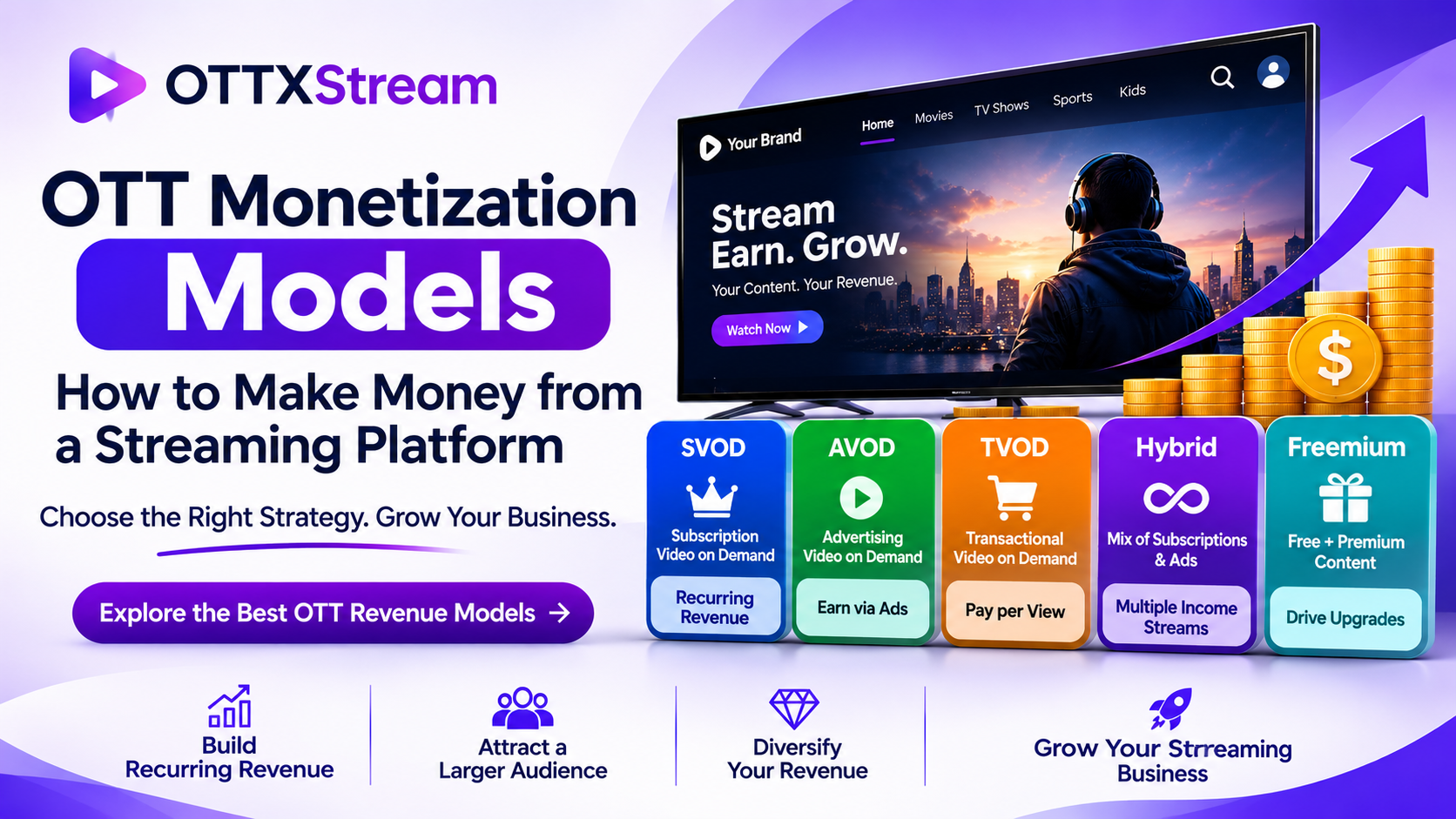
The OTT streaming industry has created new opportunities for businesses, media companies, and content creators to distribute video content and generate digital revenue. From entertainment platforms and sports streaming services to online education and fitness businesses, organizations are exploring different ways to monetize their video libraries.
However, launching a streaming platform is only the first step. To build a sustainable business, companies need a clear monetization strategy that attracts viewers, encourages engagement, and generates consistent revenue.
Choosing the right OTT monetization model helps businesses determine how viewers access content, how payments are collected, and how revenue is generated from their streaming services.
In this guide, we will explore the most popular OTT revenue models, their benefits, and how businesses can choose the right strategy for their streaming platform.
What Is an OTT Monetization Model?
An OTT monetization model is a business strategy used to generate revenue from video content delivered through an internet-based streaming platform.
OTT stands for Over-the-Top, which refers to distributing video content directly to viewers through the internet without relying on traditional cable or satellite television.
Businesses can monetize their OTT platforms in several ways, including subscriptions, advertisements, individual content purchases, and premium memberships.
The right monetization strategy depends on the target audience, content type, pricing preferences, and long-term business objectives.
1. Subscription Video on Demand (SVOD)
Subscription Video on Demand, commonly known as SVOD, is one of the most popular OTT monetization models.
Under this model, viewers pay a recurring subscription fee to access a library of video content.
Businesses can offer monthly, quarterly, or annual subscription plans depending on their audience and pricing strategy.
How SVOD Works
The process is straightforward:
- A viewer creates an account on the streaming platform.
- The viewer selects a subscription plan.
- The payment is processed.
- The subscriber receives access to eligible video content.
- The subscription renews according to the selected billing cycle.
Benefits of SVOD
- Creates recurring revenue
- Encourages long-term customer relationships
- Supports premium and exclusive content
- Helps businesses forecast revenue
- Provides opportunities for membership-based services
SVOD is suitable for entertainment platforms, educational businesses, fitness brands, and media companies with valuable content libraries.
2. Advertising Video on Demand (AVOD)
Advertising Video on Demand is a monetization model in which viewers access video content for free while businesses generate revenue through advertisements.
This model allows streaming platforms to attract a wider audience by reducing the need for paid subscriptions.
How AVOD Works
A streaming platform offers free video content and displays advertisements before, during, or after playback.
Revenue may be generated through advertising impressions, video ad placements, or other advertising arrangements.
Benefits of AVOD
- Attracts viewers who prefer free content
- Reduces barriers to audience growth
- Creates advertising revenue opportunities
- Supports large-scale content distribution
- Allows businesses to monetize non-premium content
AVOD can be suitable for entertainment platforms, news services, content creators, and businesses with a large audience.
3. Transactional Video on Demand (TVOD)
Transactional Video on Demand allows viewers to pay for individual videos or specific content rather than subscribing to an entire platform.
Users may purchase or rent movies, sports events, educational programs, or premium video content.
How TVOD Works
A viewer selects a specific video or event and completes a payment to access it.
Depending on the platform’s offering, access may be provided for a limited rental period or as a permanent digital purchase.
Benefits of TVOD
- Generates revenue from individual content
- Works well for premium and exclusive videos
- Does not require recurring subscriptions
- Supports pay-per-view events
- Allows flexible content pricing
TVOD is particularly useful for sports events, online workshops, concerts, and premium entertainment releases.
4. Hybrid OTT Monetization Model
A hybrid OTT monetization model combines multiple revenue strategies within a single streaming platform.
For example, a business may offer free videos supported by advertisements while providing premium content through paid subscriptions.
Another platform may combine subscriptions with pay-per-view access for special events.
Benefits of a Hybrid Model
- Creates multiple revenue streams
- Offers flexible viewing options
- Supports different audience segments
- Allows businesses to test monetization strategies
- Reduces dependence on a single revenue source
A hybrid approach can be useful for businesses with diverse content libraries and different customer preferences.
5. Freemium OTT Model
The freemium model provides selected content or platform features for free while charging users for premium access.
Businesses can use free content to attract viewers and encourage them to upgrade to paid plans.
How Freemium Works
A streaming platform may offer:
- Free access to selected videos
- Premium content for subscribers
- Exclusive programs for paid members
- Additional features through upgraded plans
Benefits of Freemium
- Helps attract new users
- Allows viewers to explore content before paying
- Creates opportunities for subscription upgrades
- Supports audience engagement
- Encourages conversion through premium offerings
This model is suitable for educational platforms, fitness services, and content creators who want to build a community before introducing paid access.
Which OTT Revenue Model Is Best for Your Business?
There is no single monetization model that works for every streaming business.
The right approach depends on your content strategy, audience expectations, and business goals.
| OTT Model | Revenue Source | Suitable For |
|---|---|---|
| SVOD | Recurring subscriptions | Premium streaming platforms |
| AVOD | Advertising | Free content platforms |
| TVOD | Individual purchases or rentals | Movies, events, premium videos |
| Hybrid | Multiple revenue sources | Diverse content businesses |
| Freemium | Free and premium access | Education, fitness, creators |
Before selecting a model, businesses should evaluate their content value, audience size, pricing expectations, and operating costs.
Essential Features for OTT Monetization
A successful streaming platform requires technology that supports its revenue strategy.
Subscription Management
Subscription management helps businesses create plans, track renewals, manage user access, and handle recurring billing.
Payment Integration
Secure payment integration allows viewers to purchase subscriptions, rent videos, or access premium content.
Advertising Management
For advertising-supported platforms, ad management capabilities help businesses organize video advertisements and measure campaign performance.
Content Access Control
Access control ensures that users can view content according to their subscription plans, payment status, or content permissions.
Analytics and Reporting
Analytics help businesses understand subscription performance, viewer engagement, advertising activity, and revenue trends.
These capabilities support better business decisions and help improve the streaming experience.
How OTTXStream Can Support Your Streaming Business
Building a profitable streaming platform requires more than choosing a monetization model. Businesses also need reliable technology to manage video content, subscribers, payments, and the overall viewing experience.
OTTXStream helps businesses explore branded OTT streaming solutions designed for modern video distribution and monetization requirements.
With the right OTT platform solution, businesses can create subscription-based services, distribute premium content, and develop flexible revenue strategies.
Whether you are a media company, sports organization, educational business, or content creator, OTTXStream can help you explore the technology needed to support your streaming business.
Conclusion
OTT monetization models provide businesses with different ways to generate revenue from digital video content.
Subscription-based streaming, advertising-supported content, transactional access, and hybrid strategies each offer unique opportunities.
The best approach depends on your audience, content value, and business objectives.
By selecting the right monetization model and using suitable streaming technology, businesses can build a sustainable OTT platform that supports audience growth and long-term revenue generation.
Ready to monetize your video content?
Explore OTTXStream and discover how branded OTT streaming solutions can support your business goals.
Visit: https://ottxstream.com/