
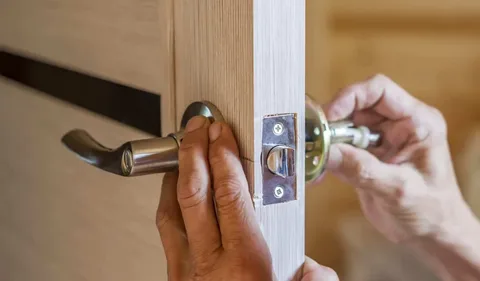
Opening a restaurant involves more than choosing décor, kitchen equipment, and seating. Door and lock decisions affect security, employee access, customer movement, and daily operations from the first day. Old Glory Locksmith provides commercial locksmith services that can help restaurant owners plan these details before installation rather than treating them as finishing touches. The right restaurant door and lock hardware should match each doorway’s purpose, traffic level, accessibility needs, and security requirements.
Key Takeaways
- Different restaurant doors require different hardware based on function and traffic.
- Entry doors should balance customer access, security, durability, and appearance.
- Kitchen, storage, office, and staff areas need controlled access without slowing operations.
- Fire-rated doors and exit hardware must remain compatible with applicable life-safety requirements.
- Hardware should be selected as part of the building plan rather than after doors are installed.
Start With the Doorway’s Purpose
The first planning step is to classify every doorway according to how people use it. A main entrance has different requirements from a kitchen entrance, employee-only door, restroom, office, stockroom, or exterior service door. Treating every opening the same can create unnecessary security gaps or make busy areas harder to operate.
The restaurant industry remains substantial, with more than 1 million restaurant and foodservice outlets in the United States. The National Restaurant Association projected $1.55 trillion in industry sales for 2026, while employment was expected to reach 15.8 million. With that scale of activity, commercial door hardware must support repeated daily use rather than occasional residential-style traffic.
For a new restaurant, the main entrance usually needs durable locks, appropriate handles, door closers, and potentially an access control system. Back-of-house doors may require stronger security, while employee entrances can benefit from controlled credentials or restricted keys. Storage areas may need simple keyed access, depending on the operation.
The important point is that the hardware specification should follow the function of each opening. This approach prevents an owner from paying for unnecessary equipment in low-risk areas while overlooking critical access points elsewhere.
Choose Hardware for Traffic and Durability
Restaurant doors experience frequent cycles throughout the day. Employees move between kitchens, dining areas, storage rooms, offices, and exterior loading points while customers repeatedly enter and leave. Hardware that performs adequately in a low-traffic building may wear faster in a busy restaurant.
Commercial-grade hinges, closers, latch assemblies, lever handles, and exit devices should therefore be considered where usage is high. Door closers are particularly important on entrances and doors that must return to a closed position. The closer needs enough force to control the door without making it difficult for customers or employees to operate.
Kick plates can also be useful on heavily used doors, especially around kitchen and service areas. They help protect lower door surfaces from repeated contact with carts, equipment, and foot traffic. In food-service environments, hardware finishes should also tolerate regular cleaning and exposure to moisture.
Accessibility must remain part of this decision. ADA standards generally require accessible doorways to provide at least a 32-inch clear opening, measured with the door open 90 degrees. Accessible operating hardware must also be usable without tight grasping, pinching, or twisting.
3. Plan Access for Employees and Service Areas
Back-of-house access deserves particular attention because restaurants have several spaces that should not be freely accessible to customers. Kitchens, offices, liquor storage, inventory rooms, cash-handling areas, and employee-only entrances can require different levels of control.
For restaurants in growing markets, commercial locksmiths in Phoenix may be considered when operators need assistance evaluating multiple access points. The key consideration is not simply installing a lock but determining who should enter each space, when they should enter, and how access should be removed when staffing changes.
A master key system can simplify operations when managers need access to several areas while employees receive keys limited to their responsibilities. Restricted key systems can provide additional control where unauthorized duplication is a concern. Electronic access control may be appropriate for businesses that want to issue individual credentials and change permissions without replacing physical locks.
Kitchen doors deserve special attention because employees may move through them while carrying trays, supplies, or equipment. Hardware should support the movement required by the workflow without creating unnecessary obstacles. At the same time, the selected assembly must remain compatible with the door’s fire, security, and accessibility requirements.
Restaurant owners should also plan for employee turnover. Physical keys can become difficult to track when several people have access, while individually assigned electronic credentials can make changes easier. However, electronic systems introduce additional considerations such as power, connectivity, credential management, and emergency access.
4. Protect Entrances, Exits, and Restricted Areas
The customer entrance creates the first security boundary, but exterior service doors and emergency exits can be just as important. A restaurant can have an attractive front entrance while leaving a poorly controlled rear door exposed to unauthorized entry.
Operators evaluating commercial door lock installation in Phoenix should consider the complete access pattern rather than focusing on the most visible doorway. Rear entrances, delivery doors, employee entrances, and patio connections can each create different security requirements.
Exit doors require especially careful planning because security measures cannot interfere with lawful emergency egress. Panic hardware or other exit devices may be required depending on the occupancy, door location, and applicable building and fire codes. A locksmith or qualified door professional should coordinate with the applicable code requirements instead of selecting hardware based only on appearance or price.
Fire-rated openings also require compatible hardware. A fire door assembly may depend on the door, frame, hinges, closer, latch, and other components working together as intended. Replacing one component without considering the complete assembly can create compliance problems.
For accessible doors, the hardware should also be easy to operate. ADA requirements state that operable parts generally must be usable with one hand and cannot require tight grasping, pinching, or twisting; the maximum activation force for applicable operable parts is generally 5 pounds.
Consider the Full Cost Before Installation
Hardware price should not be the only purchasing factor. A lower initial cost can become more expensive when components wear prematurely, require frequent adjustment, or fail to suit the restaurant’s traffic pattern.
The decision should account for door frequency, exterior exposure, cleaning practices, employee turnover, security sensitivity, accessibility, and future expansion. A restaurant planning additional locations may also benefit from standardized hardware specifications that make maintenance and key management easier across properties.
Another consideration is whether the existing doors and frames can support the selected hardware. A new lock does not automatically solve an underlying problem with alignment, hinges, strike placement, frame damage, or door sag. These conditions should be identified before installation.
It is also useful to document every opening during construction. A simple door schedule can record the room served, hardware type, access level, keying requirements, and whether the opening has fire or accessibility considerations. That record becomes valuable when repairs or replacements are needed later.
Common Planning Mistakes to Avoid
Many restaurant owners focus heavily on the front entrance because customers see it. Yet the most important security decisions may involve doors customers never notice. Service entrances, offices, storage rooms, and employee-only areas can contain valuable equipment, inventory, records, or cash-related materials.
Another common mistake is selecting hardware before confirming the door specification. Door thickness, swing direction, frame condition, fire rating, and existing preparation can affect whether a particular lock or exit device is suitable.
Owners should also avoid creating access systems that are difficult to manage. If a restaurant has dozens of employees but only one shared key or credential type, it becomes harder to determine who has access when someone leaves the business. A controlled system can make personnel changes easier to manage.
A practical planning tip is to walk through the restaurant as three different users: a customer entering from the street, an employee starting a shift, and a manager closing the building. This reveals where doors need convenience, where they need stronger restrictions, and where access could interfere with daily workflow.
Hardware Selection Checklist
- Match hardware to each doorway’s purpose and traffic level.
- Verify accessibility requirements before ordering handles and locks.
- Coordinate fire-rated openings with compatible door hardware.
- Consider employee turnover when choosing keying or credential systems.
- Inspect doors, frames, hinges, and strikes before replacing individual components.
Frequently Asked Questions
What locks are commonly used on restaurant doors?
Restaurants may use commercial-grade cylindrical locks, mortise locks, electronic access control, restricted key systems, or exit devices depending on the doorway. The appropriate choice depends on traffic, security requirements, door construction, and applicable codes.
Should a restaurant use a master key system?
A master key system can be useful when managers need access to multiple areas while employees only need entry to specific spaces. The key hierarchy should be planned carefully so access remains controlled without becoming unnecessarily complicated.
Does every restaurant exit need panic hardware?
Not necessarily. Exit hardware requirements depend on factors such as occupancy, occupant load, door location, and applicable building and fire codes. The requirements should be confirmed for the specific property before hardware is ordered.
Can electronic access control replace physical locks?
Electronic access control can reduce reliance on traditional keys for selected doors, but it does not eliminate the need for suitable mechanical hardware. Emergency operation, power failure, accessibility, and code requirements must all be considered.
When should door hardware be selected during a restaurant build-out?
Hardware should be planned during the design and construction stages, before doors and frames are finalized. Early coordination helps prevent compatibility issues and allows access, security, accessibility, and life-safety requirements to be addressed together.
Final Considerations
Restaurant door hardware should be viewed as part of the building’s operational infrastructure rather than a minor finishing detail. The best specification accounts for customer flow, employee movement, restricted areas, accessibility, emergency egress, durability, and future maintenance.
Because each opening can serve a different purpose, a restaurant benefits from a doorway-by-doorway assessment before purchasing equipment. Careful planning can reduce avoidable replacements while creating a more consistent security and access system throughout the property.
Contact a Locksmith Before Installation
Opening a restaurant gives owners an opportunity to address door security before operational problems appear. Old Glory Locksmith can help evaluate existing openings, identify appropriate locking options, and coordinate hardware choices around access, security, and everyday restaurant use. Professional assessment is particularly useful when a project includes multiple entrances, staff-only areas, storage rooms, or specialized exit hardware. Contact the team before installation so each doorway can be evaluated according to its intended function and requirements.