
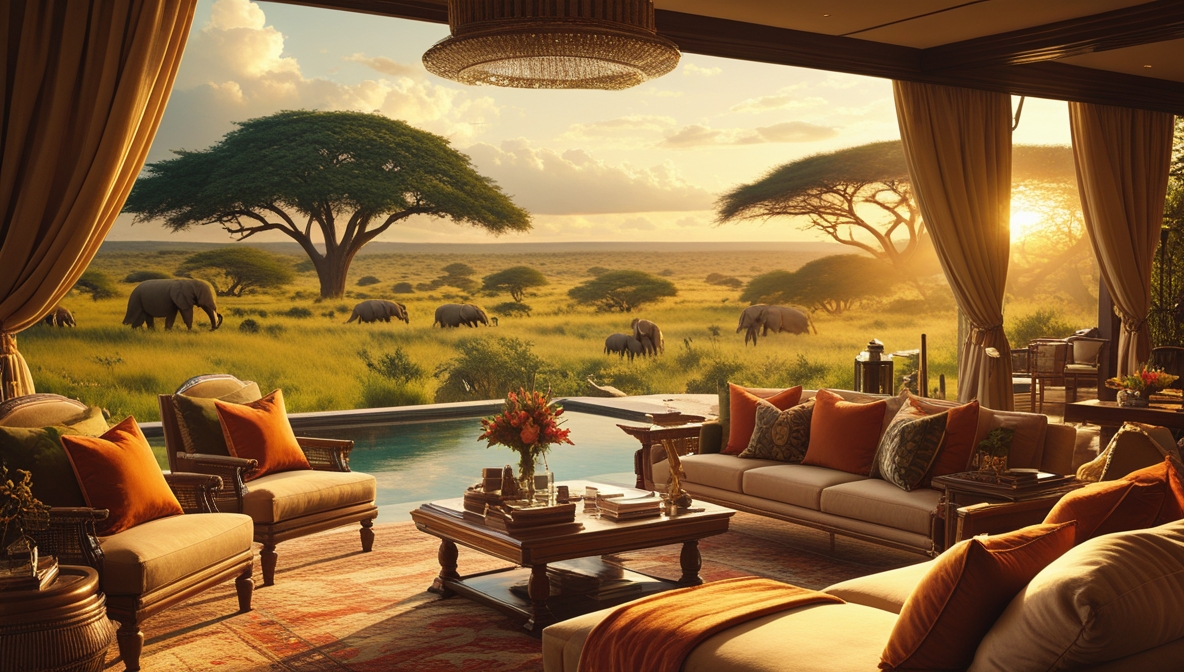
A safari can take many forms. Some travelers choose budget group departures with fixed routes and shared vehicles. Others invest in refined journeys that deliver privacy, expert guidance, premium lodges, and carefully managed logistics. The difference between a standard safari and a luxury safari extends far beyond price. It reflects quality, access, comfort, and execution at every stage of travel.
A luxury safari places the guest at the center of the experience. It prioritizes time in prime wildlife areas, professional guiding, elevated accommodation, and operational excellence. Standard tours often focus on cost efficiency and fixed departures, while luxury journeys focus on exclusivity and consistency.
The following seven distinctions define what truly sets a luxury safari apart.
1. Access to Prime Wildlife Locations
Wildlife drives every safari. However, not all itineraries provide equal access to key ecosystems.
In East Africa, destinations such as Serengeti National Park and Masai Mara National Reserve rank among the most sought-after safari regions in the world. A standard safari may visit these parks but often stays in peripheral areas to reduce accommodation costs. Guests may spend additional time driving to reach productive wildlife zones.
A luxury safari secures camps and lodges positioned inside or adjacent to wildlife corridors. During the Great Migration, high-end operators select properties aligned with herd movement rather than fixed year-round bases. This proximity reduces transit time and increases meaningful viewing hours.
Access also includes entry timing. Luxury operators coordinate early departures to avoid vehicle congestion and position guests ahead of peak traffic. The result: clearer views, fewer vehicles, and stronger photographic opportunities.
2. Private Vehicles vs. Shared Game Drives
Vehicle configuration defines flexibility.
Standard tours typically operate with shared vehicles carrying six to seven guests. Each participant follows a fixed schedule. The guide balances varied interests within the group, which limits time at sightings.
Luxury safaris frequently include private vehicles. A dedicated guide adapts each drive to guest priorities. Photographers can wait for the perfect angle. Families can return to camp early if needed. Couples can enjoy longer sunset drives without pressure from other travelers.
Private vehicles also increase comfort. High-end safari vehicles feature upgraded suspension systems, charging stations, refrigeration units, and ample storage. These details elevate both practicality and enjoyment.
3. Accommodation Standards and Design
Accommodation shapes the rhythm of a safari.
Standard tours often utilize mid-range lodges or permanent camps with essential amenities. These properties provide comfort but may lack privacy or distinctive design.
Luxury safaris partner with boutique camps and high-end lodges that combine refined architecture with environmental responsibility. In regions such as Ngorongoro Crater and Okavango Delta, premium camps position tents or suites to maximize panoramic views while maintaining distance between units.
Guests can expect:
- Spacious suites with indoor and outdoor showers
- High-quality bedding and furnishings
- Private decks overlooking wildlife areas
- Dedicated dining spaces
- Attentive camp staff
Seasonal mobile camps in the Serengeti relocate to follow migration routes. This mobility keeps guests near wildlife activity without sacrificing comfort.
Luxury accommodation also invests in sustainability. Solar power systems, water conservation programs, and responsible waste management protect fragile ecosystems.
4. Guide Expertise and Professional Training
A safari guide transforms a wildlife sighting into a meaningful encounter.
Standard tours may assign competent guides with general knowledge. However, luxury safari operators recruit experienced professionals with advanced certifications, field training, and years of tracking experience.
In destinations like Kruger National Park, leading guides complete rigorous programs in ecology, animal behavior, and bush safety. They interpret subtle signs such as alarm calls, spoor patterns, and territorial markings.
Luxury guides provide context rather than commentary. They explain predator hierarchy, migration cycles, vegetation patterns, and conservation initiatives. They also maintain strict ethical standards by positioning vehicles responsibly and respecting wildlife boundaries.
This level of expertise creates a deeper and more rewarding safari experience.
5. Culinary Quality and Dining Experience
Food plays a central role in luxury travel.
Standard safaris typically serve buffet-style meals with limited customization. These meals satisfy basic needs but rarely create lasting impressions.
Luxury safaris elevate dining into a highlight of the journey. Professional chefs prepare fresh, high-quality dishes using local ingredients and international techniques. Guests may enjoy:
- Cooked-to-order breakfasts before sunrise drives
- Scenic bush lunches
- Multi-course dinners under lantern light
- Curated wine selections
- Private bush dinners for special occasions
In camps within the Tarangire National Park or along the Chobe River near Chobe National Park, dining settings complement the surrounding wilderness.
Attention to dietary preferences, presentation, and service distinguishes luxury from standard offerings.
6. Logistics, Air Transfers, and Time Efficiency
Time defines value in a safari itinerary.
Standard tours often rely on long overland transfers between parks. Guests may spend entire days driving between regions, reducing wildlife viewing time.
Luxury African Safaris and Tours frequently incorporate charter flights or scheduled bush flights between camps. A short flight over the Serengeti plains replaces a six-hour road transfer. Guests arrive rested and ready for afternoon activities.
Operators coordinate airport assistance, luggage handling, and park permits with precision. These logistical details reduce friction and protect valuable time in the field.
Efficient routing also allows guests to combine multiple ecosystems in one journey, such as pairing the Serengeti with the Ngorongoro highlands or extending to coastal retreats on Zanzibar.
7. Service Standards and Guest Attention
Luxury travel depends on consistency.
Standard tours may operate with rotating staff and limited guest-to-staff ratios. Service remains polite but transactional.
Luxury safaris invest in attentive hospitality teams. Camp managers, chefs, guides, and housekeeping staff work together to anticipate guest needs. Staff members often remember beverage preferences, wake-up times, and special requests without prompting.
High-end operators also provide 24-hour support before and during travel. They coordinate visa guidance, packing recommendations, and contingency plans in case of weather disruptions.
This commitment to service defines the emotional tone of the safari.
Additional Factors That Elevate a Luxury Safari
Beyond the seven core distinctions, several additional elements reinforce the difference between standard and luxury tours.
Privacy and Exclusivity
Luxury camps limit guest numbers. Fewer vehicles operate in private concessions, particularly in regions bordering the Masai Mara or within private reserves in South Africa. Reduced density creates quieter wildlife encounters.
Conservation Partnerships
Premium operators often support conservation initiatives. In Botswana’s Okavango Delta, many high-end camps operate within community-managed concessions. Guest fees contribute directly to habitat protection and local employment.
Cultural Integrity
Luxury safaris facilitate respectful engagement with local communities. Visits to Maasai villages near the Serengeti or San communities in Botswana occur in collaboration with local leaders and follow ethical guidelines.
FAQ Questions About Luxury Safaris
1. What is considered a luxury safari?
A luxury safari includes private vehicles, high-end lodges or camps, expert guides, premium dining, and efficient logistics with strong service standards.
2. How much does a luxury safari cost?
Luxury safaris in Africa typically range from $800 to $2,500 per person per night, depending on destination, season, and accommodation level.
3. Is a luxury safari worth the price?
Yes, travelers receive better access to wildlife areas, professional guiding, privacy, refined accommodation, and high service consistency.
4. What is the difference between mid-range and luxury safari?
Mid-range safaris provide comfortable lodging and shared vehicles, while luxury safaris add private vehicles, premium camps, superior dining, and charter flights.
5. Which African country offers the best luxury safari?
Tanzania, Kenya, Botswana, and South Africa rank among the top choices, with regions like the Serengeti, Masai Mara, Okavango Delta, and Kruger offering exceptional high-end safari options.
6. How many days do you need for a luxury safari?
Seven to ten days allow travelers to visit multiple ecosystems without rushing, while longer itineraries offer deeper wildlife immersion and relaxation.
7. Are luxury safaris safe?
Yes, reputable operators maintain licensed guides, well-maintained vehicles, and coordinated emergency protocols to ensure guest safety.
Conclusion
A luxury safari reflects precision, expertise, and elevated service at every level. It places guests in prime wildlife locations, provides private vehicles and professional guides, and delivers refined accommodation in remarkable settings. It respects conservation priorities while offering comfort and exclusivity.
Standard tours provide access to Africa’s wildlife at accessible price points. Luxury safaris transform that access into an exceptional travel experience defined by privacy, quality, and consistency.
When travelers seek more than sightings when they expect excellence in planning, hospitality, and execution they choose a luxury safari.