
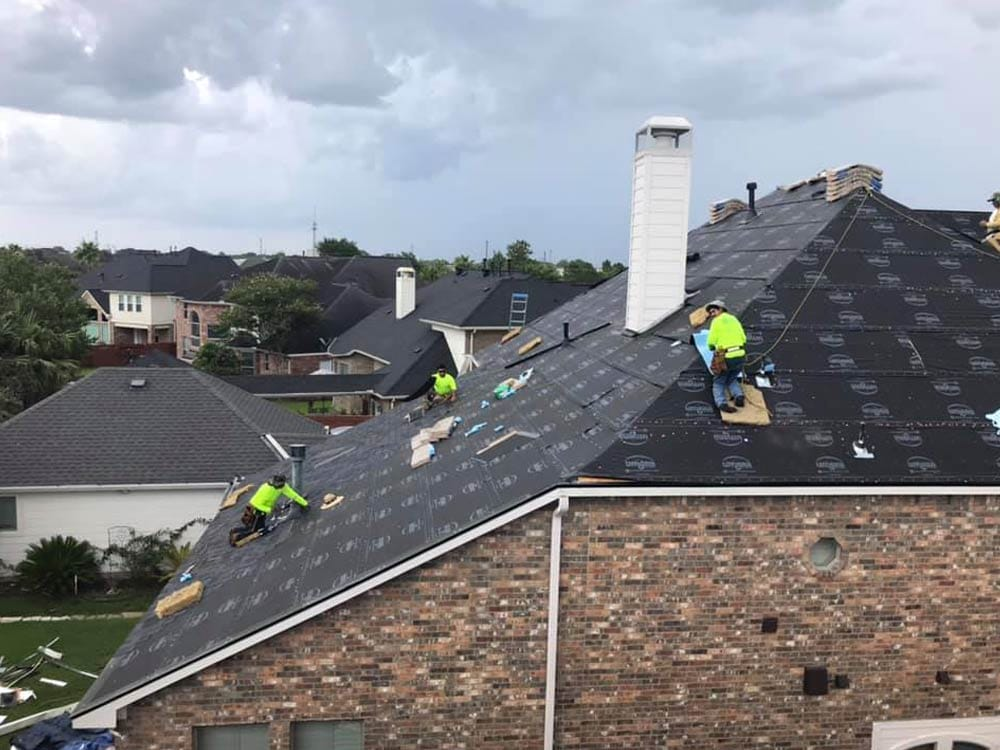
Most homeowners just about never think twice about their roof until you begin to see water where it shouldnôt be. When that happened, the damage was far more severe than just that water stain on the ceiling. If you‘ve been thinking about getting your roof replacement in Tomball, TX today, you‘re likely to be noticing one thing in particular; a shingle in the yard after a windy night, a higher than normal energy bill, a water stain in the ceiling that wasn‘t there yesterday. None of those things happen by accident.
Tomball is enjoying the Texas weather that pushes roofs to their edge, with spring hail storms, the unbelievable heat of Texas summer (by July, its triple digits)and year-round humidity. They can maintain 25 years in other states, but begin to have significant problems at 15-18 years. How do I know if it’s repaired or a tear-off? Follow these 5 clues to the condition and what each requires.
1. Your Roof Is Past (or Near) Its Expected Lifespan
Most asphalt shingled roofs have a lifespan of 15 to 25 years. The grade of shingle used and the adequacy of the attic‘s ventilation at the time of installation can influence the longevity of a roof. Replacing a roof installed before 2010 is essential if no updates have been made since, regardless of the apparent health of the roof from the highway.
Here‘s the deal about aging shingles: granules that shield against UV rays fall off at various rates. You may not necessarily get a bald spot when looking at the roof. However, a contractor walking the roof, or at least viewing some close-up images, can determine how much of the protective coating remains.
2. You’re Seeing Leaks or Ceiling Stains
A brown stain on the ceiling is never a little trouble. It indicates that water has already started to get through your roofing system. If it is showing up on your drywall, it has probably been there for some time. It may be arriving at your roofline and displaying up two rooms over, following a rafter or a pipe for a bit.
Not necessarily a full replacement, a small leak can be a bad flashing point or a compromised pipe boot that can be fixed. However, multiple leaks or a patched leak would suggest the roof deck or underlayment has aged out.
3. Shingles Are Cracked, Curling, or Missing
Walk the line of your property after a storm and glance upward. Bending shingle edges, cracked tabs, areas with no granulation, or a tile wearing thin to reveal the underlying substrate are all signs of a roof that has given up its fight to the elements, not just a shingle that was blown away. Missing shingles are the most obvious, as they leave an area open and a target for water to affect other areas of the house.
Signs you need to replace your roof include if the daylight is shining into the attic through the decking, or if your gutters are constantly filling up with granules appearing to be very coarse sand. This is the roof warning you that it is losing its protective layer prematurely.
4. Your Energy Bills Are Climbing for No Clear Reason
This one is totally ignored all the time. A deteriorating roof or one that is not in good shape itself will leak the warmth from those neutralized conditioned air out of the house and bring the warm air in. If the summer electric bill has increased over the last few years, reaching the point where the electric bill seems to have doubled all of a sudden and nothing else has changed in the house, it is worth inspecting that roof.
It‘s not only a leak. Damaged, underperforming underlayment and degenerating ridge vents alter your attic‘s airflow and this is reflected in your utility bill long before it is in signs of damage.
5. There’s Sagging, Soft Spots, or a Roof That Just Looks “Off”
Step back and examine the roofline from the road. Is it flat, or does a section of it sag? Sagging is generally due to builder neglect of the deck sheathing beneath the shingles, a chronic problem as a result of prolonged dampness. Walk the roof and note any soft spots (or have a contractor do so) as they are usually evidence of rotted plywood/OSB deck.
This is the biggest signal that a roof is moving from “watch it” to “fix it now”. A roof will sag into a cosmetic problem however it is also a structural one and will become more and more costly the longer it remains.
What to Do Next
If any one or two of these signs do seem familiar, don‘t second guess. A emergency roof repair, Cypress TX is an investment, and the best first step is a professional inspection not a Google search attempt at diagnosing it yourself from a picture. A good contractor will honestly tell you if a repair will last a few more years or if you need to move on to an entire replacement.
When you do get quotes, ask specifically about the material that is rated for Texas heat and hail, the warranty, and how the company handles insurance claims if your damage is storm related. Those three questions are often enough to eliminate many contractors.
Final Thoughts
Very seldom does a roof suddenly fail completely. They tell you something is wrong before it happens; examples are a deteriorating shingle, an occasional stain, or bill that is a little higher than last year. Identifying these early signals could make the difference between an easy re-roof and a significant repair bill once the water damage moves into the attic, insulation or framing. If you are a Tomball resident, and any of the signs listed above seem to ring true please have it checked out before the next big storm makes the decision for you.
And it isn‘t only a Tomball problem. If a storm just ripped through your neighborhood and you have an unexpected works the same way: get a damaged roof covered as quickly as possible, and the payment for repairs drops significantly.