
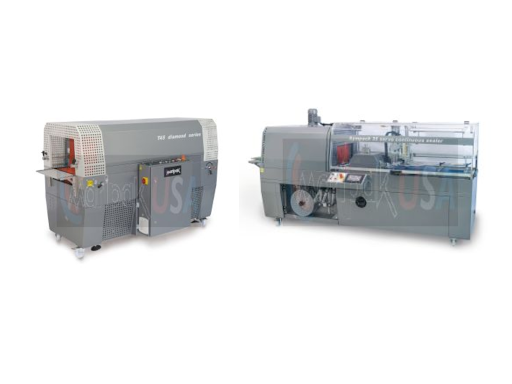
High-volume production environments demand packaging equipment that performs continuously, integrates cleanly into existing line infrastructure, and maintains consistent output quality across extended operating periods. An industrial shrink wrap machine is the category of shrink packaging equipment engineered to meet these demands — combining heavy-duty construction, high-speed operational capability, and the control system sophistication that modern industrial packaging lines require.
Engineering for Industrial Duty
The defining characteristic of an industrial shrink wrap machine is its engineering specification relative to commercial or retail-grade equipment. Industrial machines are built with heavier frame structures, higher-rated drive systems, more robust sealing and cutting mechanisms, and industrial-grade electrical and pneumatic components throughout. These choices reflect the reality of the operating environment — multi-shift operation, temperature variation, vibration, and the throughput volumes that place continuous mechanical stress on every component in the machine.
Tunnel specifications on industrial-grade systems reflect the same philosophy — larger apertures, higher heating capacity, more powerful airflow systems, and temperature control precision that maintains consistent shrink quality across high-speed product flows. The combination of a correctly specified sealer and an appropriately matched industrial tunnel is what produces consistent, retail-quality shrink results at production speeds. Facilities that underspecify the tunnel relative to the sealer’s output rate — or that select a tunnel based on initial cost rather than thermal capacity — consistently find that the tunnel becomes the quality constraint on the line rather than the performance enabler it should be.
Typical Applications
An industrial shrink wrap machine is deployed across a wide range of production environments:
- Food and beverage manufacturing: End-of-line multipacking and tray wrapping at high production speeds
- Consumer goods: Wrapping of household products, personal care items, and promotional multipacks
- Pharmaceutical distribution: Tamper-evident wrapping of product cases and transit units
- Publishing and print: Wrapping of publication bundles, boxed products, and stationery sets for distribution
- Industrial and building supply: Bundle wrapping of hardware, components, and building materials for wholesale distribution
Control Systems and Automation
Modern industrial shrink wrap machine systems incorporate PLC-based control architectures that support recipe-driven operation, allowing operators to switch between product formats rapidly by recalling stored parameter sets rather than manually recalibrating temperature, speed, and tension settings for each format change. This capability significantly reduces changeover time and eliminates the setup variation that causes quality issues in the first packages produced after a format switch.
Integration with factory automation systems — via standard industrial communication protocols — allows the wrapping machine to receive production orders, report throughput data, and participate in line-wide fault management systems. This connectivity is increasingly expected in modern manufacturing environments where production data is central to operational efficiency monitoring and continuous improvement programmes.
Selecting the Right Specification
Specifying the correct industrial shrink wrap machine for a given application requires a thorough assessment of current and projected throughput requirements, product dimensions and weight range, film specification, available floor space, and the integration requirements of the surrounding line. A machine that is correctly specified for current requirements but has no headroom for throughput growth may require replacement sooner than expected — making scalability a worthwhile consideration in the initial specification exercise.
Working with an equipment supplier who takes a consultative approach — assessing the application in detail before recommending a specification, rather than applying a standard configuration to every enquiry — consistently produces better outcomes than purchasing on specification sheet comparisons alone. Suppliers who can provide reference sites in the same industry sector — where the proposed equipment is operating under comparable conditions — give buyers the most credible evidence of real-world performance that specification sheets alone cannot provide.
Final Words
Industrial packaging line performance reflects the quality of every specification decision made before installation. Facilities ready to invest in the right shrink wrapping solution should contact Maripak USA — a specialist packaging equipment provider with the industrial application knowledge, product range, and technical support capability to deliver systems that perform from day one and continue to do so across the machine’s full working life.