
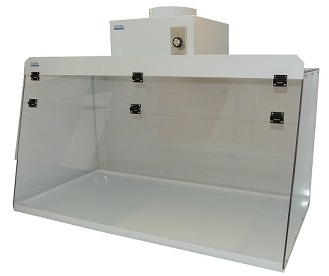
When laboratory space is limited, every inch of your work area matters. You still need effective protection when handling chemicals, vapors, fumes, or other airborne contaminants, but installing a full-size fume hood may not be practical. A benchtop fume hood can provide a compact solution that fits directly on an existing laboratory work surface while supporting safer chemical-handling practices.
Choosing the right model, however, requires more than checking its dimensions. You need to consider your available bench space, application, airflow, exhaust arrangement, materials, accessibility, and future laboratory needs. By evaluating these factors before purchasing, you can select a hood that works efficiently without overwhelming your workspace.
Measure Your Available Laboratory Space
Start by measuring the area where you plan to install the hood. Record the available width, depth, and height, including the clearance above the bench.
A compact laboratory setup can quickly become crowded when you add equipment, containers, electrical connections, and exhaust components. Choose a benchtop fume hood that leaves enough room for routine laboratory tasks and safe operator movement.
Also consider access to nearby cabinets, shelves, sinks, electrical outlets, and other instruments. A hood that physically fits may still be unsuitable if it blocks essential equipment or creates an awkward workflow.
Match the Hood to Your Application
Your application should guide your selection. Think about what you will handle inside the hood and how frequently you will perform the work.
Consider:
- Chemical type and concentration
- Potential vapor or fume generation
- Sample size
- Frequency of use
- Required working area
- Heat-producing processes
- Equipment that must fit inside the hood
If you only need containment for small-scale procedures, a compact benchtop design may provide an appropriate workspace without requiring the footprint of a conventional floor-mounted hood.
For specialized applications, review the manufacturer’s specifications and safety requirements before making your decision.
Evaluate Airflow and Exhaust Requirements
Airflow is one of the most important considerations when selecting a fume hood. The hood should provide appropriate air movement for the intended application while working with your laboratory’s ventilation system.
Determine whether you need a ducted configuration and understand where the exhaust will be routed. Your existing building ventilation system may influence installation requirements.
Avoid selecting a hood based solely on size or appearance. A properly sized hood with an appropriate exhaust arrangement can support a more effective laboratory workflow.
If you are comparing a compact benchtop chemical fume enclosure for small laboratoryapplications, review airflow and exhaust specifications carefully before purchase.
Check the Interior Construction
The materials used inside the hood should be compatible with your laboratory environment.
If you regularly work with corrosive or reactive chemicals, look for construction materials designed to withstand the substances used in your procedures. Pay attention to the work surface, interior panels, sash, hardware, and other exposed components.
Material compatibility can affect durability and maintenance. Selecting construction suited to your applications can help reduce premature wear and keep the workspace easier to maintain.
Consider Working Height and Accessibility
Limited space should not mean sacrificing usability. You need enough room to comfortably place samples, containers, and small laboratory equipment inside the hood.
Consider the opening size, working depth, sash arrangement, and visibility. A compact hood should still allow you to observe your work without creating unnecessary ergonomic problems.
Before purchasing, identify the largest equipment or containers you expect to use. Then verify that the available working area accommodates them without excessive crowding.
Think About Installation Requirements
Installation can become a major issue in a small laboratory. Before ordering, determine what connections and supporting infrastructure the hood requires.
For a ducted unit, check the exhaust pathway, connection requirements, available ventilation capacity, and installation location. You should also determine whether electrical connections or additional accessories are necessary.
Planning these details in advance can prevent installation problems and unexpected modifications to your laboratory.
Prioritize Maintenance and Cleaning
A fume hood should be practical to maintain as well as easy to install. Look for surfaces that can be cleaned according to your laboratory procedures and inspect how easily you can access commonly maintained components.
Regular cleaning helps keep the workspace suitable for laboratory operations. Follow the manufacturer’s maintenance instructions and your facility’s established safety procedures.
You should also keep the hood free from unnecessary items. A cluttered work area can interfere with airflow and reduce the usable workspace.
Select a Hood That Supports Your Future Needs
Your laboratory requirements may change over time. The smallest available hood is not necessarily the most suitable choice if you expect to add equipment or perform additional procedures later.
Think about your expected workload and equipment needs over the next few years. A slightly larger benchtop design may provide greater flexibility while still occupying substantially less space than a full-size hood.
Review the available space-saving laboratory fume hood solutions for compact workstations from Global Lab Supply to compare options that may fit your laboratory requirements.
Compare Specifications Before Buying
Create a simple comparison checklist before making your final selection. Compare each model based on:
- Overall dimensions
- Interior working dimensions
- Exhaust configuration
- Airflow specifications
- Construction materials
- Sash design
- Required utilities
- Maintenance requirements
- Available accessories
- Installation considerations
This approach helps you compare models according to your actual laboratory needs rather than choosing based only on price or appearance.
Make Your Limited Laboratory Space Work Smarter
A benchtop fume hood can be a practical option when you need fume-handling capability without giving up valuable laboratory floor space. The right choice depends on your application, available bench area, airflow requirements, construction materials, accessibility, and installation conditions.
At Global Lab Supply, you can explore laboratory equipment options designed to support different workspace and application requirements. If you need assistance determining which configuration suits your space and procedures, contact us today for guidance on selecting laboratory fume hood equipment.
Frequently Asked Questions
What is a benchtop fume hood?
A benchtop fume hood is a compact laboratory enclosure designed to sit on a workbench or laboratory counter. It is commonly used for applications involving fumes, vapors, or airborne contaminants where a full-size hood may not be practical.
Why choose a benchtop fume hood for a small laboratory?
A benchtop design can help conserve valuable floor space while providing a dedicated enclosed workspace. It may be suitable for laboratories performing smaller-scale chemical procedures or processes with limited equipment.
What should you check before installing a benchtop fume hood?
Check available bench dimensions, overhead clearance, airflow requirements, exhaust connections, electrical needs, surrounding equipment, and installation conditions. Always review the manufacturer’s specifications before installation.
How do you choose the right size fume hood?
Measure your available space and determine the size of equipment and containers you need to place inside. Choose a hood that provides adequate working room without unnecessarily consuming valuable bench space.
Can a benchtop fume hood support different laboratory applications?
Yes, depending on its design and specifications. You should match the hood’s construction, airflow, exhaust configuration, and working dimensions to the chemicals and procedures used in your laboratory.