
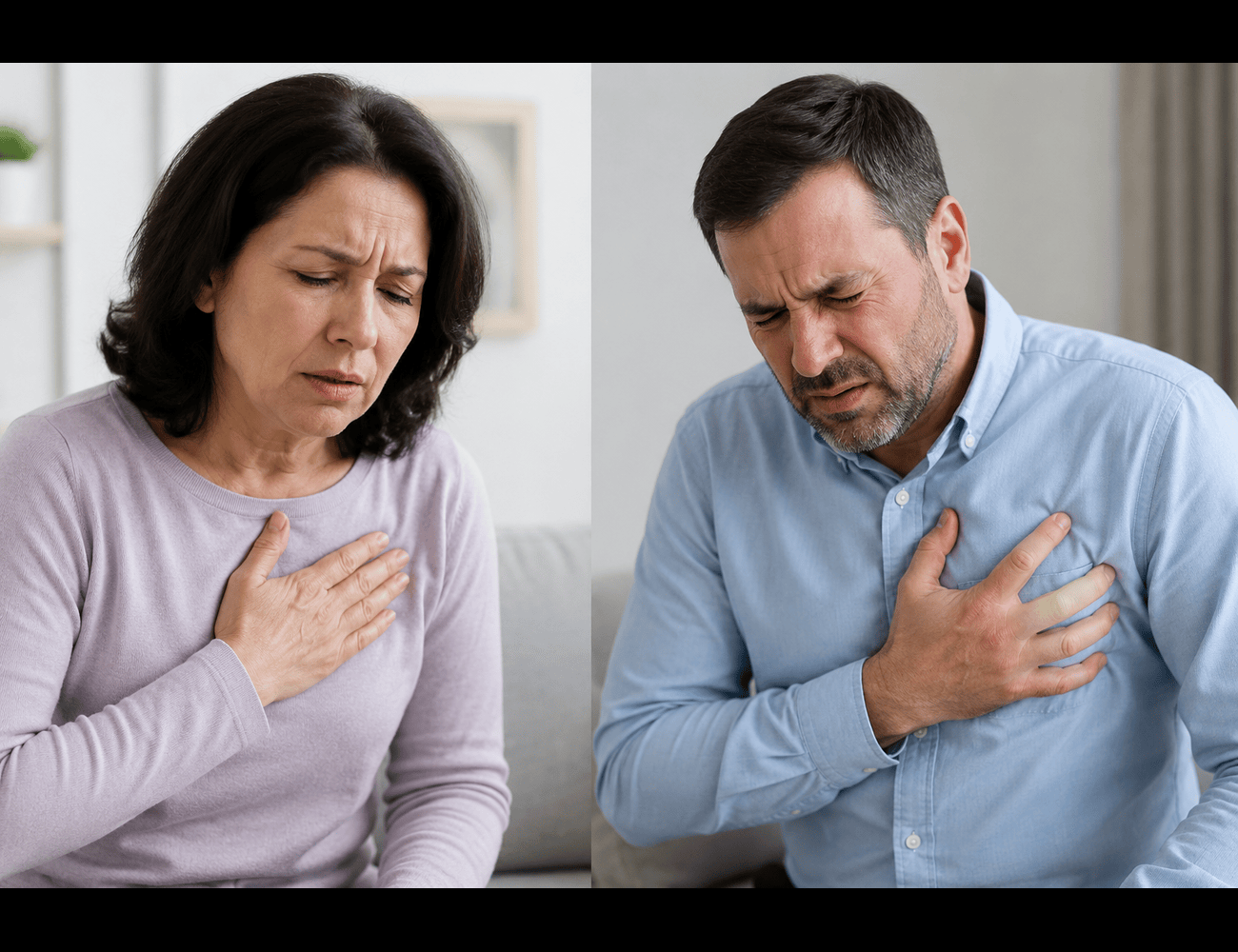
Most of the time, when we think of the symptoms of a heart attack, we think of sudden and sharp chest pain, or chest tightness or heaviness. What we don’t realise is that these are the symptoms of a heart attack that show up in men. However, when it comes to heart attacks in women, these symptoms are not the same, and this is where the confusion begins. In women, the signs are not that obvious and are more often easily ignored and are recognised at a much later stage. We must understand these differences well, to detect the heart attack possibility early and get timely medical attention.
Common Symptoms Of A Heart Attack
The most common symptoms of a heart attack are chest pain, tightness, or chest pressure spreading towards the arm, neck and jaw. Ironically, the common symptoms of a heart attack are easy to ignore. Sometimes, the symptoms can even be as subtle as the feeling of uneasiness or unexplained tiredness.
Heart Attack Symptoms In Men
The symptoms of a heart attack in men are much clearer and in fact, more dramatic than in women. Men are inclined to have more severe pains in the chest area and a constricting or a squeezing feeling. They may also feel chest pains that spread to the left arm. Other common symptoms include abundant sweating and shortness of breath. There’s less doubt about whether something serious is happening.
Heart Attack Symptoms In Women Are More Subtle
With women’s hearts, it works a little differently. Some women do get chest pain, but many describe it differently. Feeling unusually tired without any clear reason. Getting breathless doing something in their daily life that is normally easy to do. Feeling of dullness or ache in the upper back. Or it may be a sort of heaviness in the entire body that is hard to explain. Sometimes it may also reflect in the feeling of nausea. As you can see all of these signs are easy to ignore.
Ignorance Is Life-Threatening
The real problem is not the signs, it is the delay that is caused because we often tend to ignore these subtle signs, or misread them completely, thinking it might be acidity, or lack of sleep, or even a result of not getting enough rest, which in our country, women unfortunately do not get.
In a heart attack situation, is it this delay that makes the real difference? A heart attack in women is not rare. It’s just more likely that the symptoms are often ignored and are recognised at a later stage.
The causes of a heart attack are not mysterious at all. It always comes down to the build-up of plaque inside the artery over time. This plaque buildup blocks the blood flow to the heart, which damages the heart muscle.
The risk factors of a heart attack are also quite straightforward: high blood pressure, Diabetes, Smoking, high levels of bad cholesterol, sedentary lifestyle, to name a few. Stress also plays a major role.
What To Look For In A Heart Attack Situation
The answer to this is tricky. Mostly, it is more about noticing if there is any unusual bodily activity, and consulting your doctor without wasting time. If it is a subtle sign and should be ruled out, we must let the doctor do that for us. Paying attention to our bodies is the best thing we can do for our hearts.
Women’s Hearts Are Subtle, And So Are The Signs That They Give
The signs of a heart attack in women are not that obvious. Well, sometimes they might be, but mostly they aren’t. They’re much quieter than the signs & symptoms of a heart attack in men. A lot less dramatic, and a bit confusing and uncertain. Which also means that recognising these signs is more about not dismissing unusual body changes on our own.
Response Steps In A Heart Attack Situation
The right steps in a heart attack scenario are crucial for faster and timely recovery, as delay causes irreparable damage to the heart muscle. The scope of treatment that is described when one shows signs of a heart attack is best addressed as soon as possible.
Call Emergency Services
The first thing that has to be done is to dial the emergency number. Avoid moving the person to the hospital, which usually requires immediate medical attention.
Administer Aspirin
If he/she is conscious and does not have an allergy to Aspirin, giving it to the patient can work wonders. The blood-thinning property of aspirin aids in increasing blood flow to the heart.
CPR if Needed
This way, if the person collapses with no pulse and breathing, CPR helps pump oxygenated blood to the brain and all the other organs until help arrives.
Stay Calm and Reassure
Calmly easing the situation with the patient is an excellent way to help decrease stress on the heart.
Understanding these emergency steps and being well aware of “what happens in a heart attack” makes a difference in outcomes and saves a person’s life.
Heart Attack Shows Up Differently In Different People A heart attack certainly does not look the same in everyone. Knowing what the symptoms of a heart attack are helps enormously. Equally important is to realise that for everyone, the symptoms might not show up the same predictable way. The causes of heart attack are almost the same in men & women, but the way signs of a heart attack reflect in both genders is quite different. It is advised to know more on heart health, and if there’s any doubt, consult a cardiologist at the first sign.