
When it comes to financing big projects or making significant purchases like home renovations, understanding interest is crucial. One of the simplest forms of interest is simple interest. Knowing how to calculate simple interest on a loan can help you make informed decisions about personal loans for home renovations. In this article, we will demystify the concept of simple interest, walk you through the calculation process, and equip you with the knowledge to approach your financing needs confidently.
What is Simple Interest?
Simple interest is a method used to calculate the interest charge on a loan or investment. Unlike compound interest, wherein interest is calculated on both the initial principal and the accumulated interest from previous periods, simple interest is calculated only on the principal amount. This straightforward approach makes it easier for borrowers to understand how much they will owe over the duration of their loan.
Simple Interest Formula
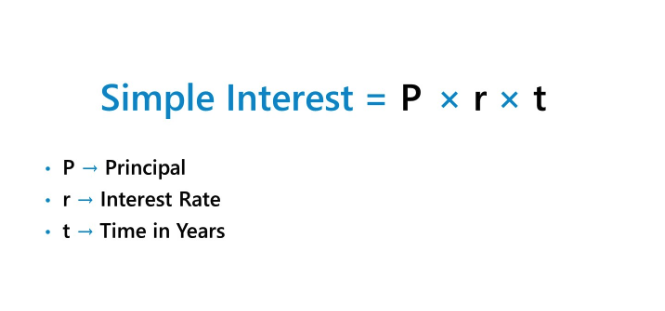
The formula for calculating simple interest is as follows:
SimpleInterest(SI)=Prt
Where:
- SI = Simple Interest
- P = Principal amount (the initial amount of money borrowed or invested)
- r = Annual interest rate (in decimal form)
- t = Time (in years)
Let’s break down these components for better clarity.
Break Down the Components
1. Principal Amount (P)
This is the original sum of money that you borrow from a lender or the amount that is invested. In the context of personal loans for home renovations, it will be the total amount you intend to borrow to finance your renovation project.
2. Annual Interest Rate (r)
The interest rate is usually expressed as a percentage and, for calculations, you’ll need to convert this percentage into a decimal. For instance, if your personal loan has an interest rate of 6%, you would convert this to decimal form by dividing by 100, which gives you 0.06.
3. Time (t)
Time is the duration over which the money is borrowed or invested. This is typically measured in years when calculating simple interest. If your loan term is shorter than a year, you will convert this into years as a decimal (for example, 6 months would be 0.5 years).
Step-by-Step Calculation of Simple Interest
Let’s go through a step-by-step calculation of simple interest using an example. Imagine you are looking to take out a personal loan for home renovations worth $10,000 with an annual interest rate of 5% for a duration of 3 years.
Step 1: Identify the Principal Amount, Interest Rate, and Time
- Principal Amount (P) = $10,000
- Annual Interest Rate (r) = 5% (0.05 in decimal)
- Time (t) = 3 years
Step 2: Plug the Values into the Simple Interest Formula
Using the formula:
SI=Prt
SI=10,0000.053
Step 3: Perform the Calculation
First, multiply the principal by the interest rate:
10,0000.05=500
Then, multiply by the time:
5003=1500
Result
The total simple interest over 3 years for your personal loans for home renovations will be $1,500. This means that at the end of 3 years, you will owe the original loan amount plus the interest, which amounts to $11,500 in total.
Understanding the Implications of Simple Interest
Knowing how to calculate simple interest helps you better prepare for the total cost of your loan. In the case of home renovations, this knowledge allows you to budget more accurately, ensuring that you can afford monthly payments and have a clear understanding of how much your project will ultimately cost.
Comparison with Other Loan Types
While simple interest loans have their advantages, they also come with limitations. For example, most personal loans are often structured as compound interest loans, wherein interest accumulates on interest. This can ultimately lead to a higher total cost than a simple interest loan, especially if you’re unable to pay off the loan quickly.
Tips for Managing Personal Loans Effectively
- Know Your Interest Rates: Always shop around for the best interest rates. A lower rate can significantly reduce the amount of interest you pay.
- Consider Loan Terms: Short-term loans can save you money on interest, but ensure that your monthly payments fit your budget.
- Budget for Renovations: Calculate your expenses accurately and include a buffer for unexpected costs during renovations.
- Read the Fine Print: Understand the terms and conditions of your loan, including any fees that may be associated with it.
- Repayment Strategy: Formulate a repayment strategy that allows you to pay off your loan efficiently and avoids unnecessary interest payments.
Conclusion
Calculating simple interest on a loan is a valuable skill that helps you understand the financial implications of borrowing money, especially for significant expenses like home renovations. By breaking down the components of the interest calculation and utilizing a straightforward formula, you can eliminate confusion around how much money you will owe over time. Armed with this knowledge, you can make better, informed decisions about personal loans for home renovations — ensuring that your project does not become a financial burden. Always remember that budgeting and understanding loans’ terms can lead to a smoother renovation experience.