
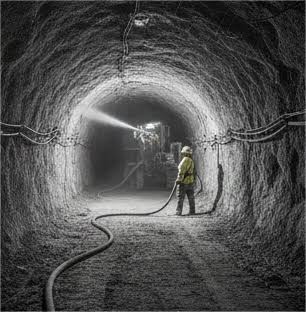
Guniting is a specialized concrete repair technique used to restore damaged, weakened, or deteriorated surfaces without relying heavily on conventional formwork. The process involves pneumatically projecting a cement-based mixture onto a prepared surface at high velocity. This creates a dense layer that bonds with the existing concrete. Guniting is widely considered for RCC repair, structural rehabilitation, strengthening, waterproofing, and maintenance of aging concrete structures.
Why Guniting Is Important for Damaged Structures
Concrete structures are continuously exposed to moisture, weather changes, chemicals, vibration, heavy loads, and general aging. Over time, these conditions may cause cracking, spalling, reinforcement corrosion, surface deterioration, and loss of concrete cover. If such problems remain untreated, deterioration can progress further into the structure. Guniting provides a practical method of rebuilding damaged concrete sections and restoring the required surface profile during rehabilitation work.
How Guniting Works on Existing Concrete
The guniting process begins with proper preparation of the existing surface. Loose concrete, dust, laitance, damaged portions, and other contaminants are removed before application. Depending on the structural requirement, reinforcement treatment, mesh fixing, bonding preparation, and other repair measures may also be necessary. The prepared material is then pneumatically conveyed and projected onto the surface, where impact helps create a compact and well-bonded repair layer.
Role of Guniting Services in Structural Rehabilitation
Guniting services are commonly considered when conventional concrete repair becomes difficult because of restricted access, vertical surfaces, overhead areas, or complicated structural geometry. The technique can be adapted to different rehabilitation requirements after assessing the condition of the structure. Proper planning is important because the required material composition, application thickness, surface preparation, curing method, and reinforcement arrangement depend on the type and extent of existing damage.
Common Problems That Can Require Guniting
Several visible conditions can indicate that a concrete structure needs professional assessment before further deterioration occurs. Common problems include exposed reinforcement, concrete spalling, cracks, honeycombing, damaged concrete cover, surface erosion, moisture-related deterioration, and localized section loss. Guniting may be considered as part of the repair strategy when damaged areas need to be rebuilt. However, the actual repair method should always depend on the cause and severity of deterioration.
Guniting for RCC Repair and Strengthening
RCC structures such as columns, beams, slabs, walls, and other structural members can experience deterioration because of corrosion, environmental exposure, inadequate cover, or long-term service conditions. Guniting can help restore concrete sections after unsound material has been removed and the substrate has been properly prepared. Depending on engineering requirements, the repair may be combined with reinforcement treatment, additional reinforcement, jacketing, or other structural strengthening techniques.
Guniting for Old and Aging Buildings
Older buildings may develop concrete deterioration that becomes increasingly visible with time. Cracks, peeling concrete, exposed reinforcement, dampness, and weakened surfaces should not be treated only as cosmetic issues when structural members are involved. An engineering assessment can identify whether the damage is superficial or connected to deeper deterioration. Where suitable, guniting can form part of a building rehabilitation approach designed to restore damaged concrete and improve service performance.
Industrial Applications of Guniting
Industrial structures often require repair methods that can be executed efficiently around existing equipment, operational areas, and difficult access conditions. Guniting may be used for rehabilitation work in factories, plants, cooling towers, retaining structures, basements, industrial buildings, and other concrete assets. The technique can be particularly useful where traditional concreting would require extensive shuttering or create additional work restrictions. Proper planning helps coordinate application with operational and safety requirements.
Guniting for Cooling Tower Concrete Repair
Cooling towers are exposed to moisture, temperature variations, continuous operation, and demanding environmental conditions. Concrete deterioration can occur in different areas depending on the structure, exposure, and maintenance history. Guniting can be considered for rebuilding deteriorated concrete sections after appropriate surface preparation and engineering assessment. When used as part of a planned rehabilitation system, sprayed concrete application can help restore damaged areas and support continued maintenance of industrial cooling tower structures.
Guniting for Columns, Beams and Slabs
Structural members require careful treatment because damage can affect more than the visible surface. Columns may suffer concrete cover loss and reinforcement corrosion, while beams and slabs can develop cracking, spalling, or deterioration around reinforcement. Guniting can rebuild selected damaged sections after loose concrete is removed and the reinforcement condition is addressed. The final repair system should be selected according to structural requirements rather than applying the same treatment to every damaged member.
Guniting for Tunnels and Underground Structures
Underground structures can face moisture, groundwater pressure, difficult access, and challenging working conditions. Tunnels, basements, underground chambers, retaining structures, and similar assets may require concrete repair or protective layers as part of rehabilitation. Guniting allows concrete-based material to be pneumatically applied to surfaces where conventional placement may be inconvenient. Depending on project requirements, the application can support structural repair, surface protection, stabilization, and other rehabilitation objectives.
Guniting for Retaining Walls and Difficult Surfaces
Retaining walls and other large vertical surfaces can present challenges when conventional concrete placement requires extensive shuttering. Guniting can be applied directly onto prepared surfaces, making it suitable for selected repair and strengthening situations. It can also be useful where the geometry of the structure makes traditional repair methods difficult. Before application, engineers should examine cracking, reinforcement condition, water movement, substrate quality, and the underlying cause of deterioration.
Guniting vs Traditional Concrete Repair
Traditional concrete repair often involves removing damaged material, installing formwork, placing repair concrete or mortar, and completing finishing and curing operations. Guniting changes the application method by projecting the material pneumatically onto the prepared surface. This can reduce dependence on extensive formwork in suitable applications. However, guniting is not automatically a replacement for every repair technique. The correct approach depends on structural condition, accessibility, repair thickness, reinforcement, and project requirements.
Guniting vs Shotcreting
The terms guniting and shotcreting are often used interchangeably, although they can describe different application approaches. Guniting is commonly associated with the dry-mix process, where dry ingredients are conveyed through a hose and water is introduced close to the nozzle. Shotcrete is a broader term that can include dry-mix and wet-mix sprayed concrete methods. The selection between methods depends on project conditions, required output, application area, material requirements, and site limitations.
Important Steps Before Guniting Work
Successful guniting starts before the spraying equipment reaches the damaged area. The structure should first be inspected to understand the type and extent of deterioration. Unsound concrete needs to be removed, reinforcement should be examined and treated where required, and the surface should be cleaned properly. Any necessary reinforcement mesh, anchors, or supporting arrangements should be installed according to the repair design before the guniting application begins.
Importance of Proper Surface Preparation
Surface preparation is one of the most important stages of concrete repair because the new material must properly bond with the existing substrate. Dust, loose particles, oil, laitance, weak concrete, and other contaminants can affect adhesion and repair performance. The substrate may require mechanical cleaning or other approved preparation methods depending on its condition. A properly prepared surface gives the sprayed material a suitable base for compaction, bonding, finishing, and curing.
Choosing Experienced Guniting Contractors
Choosing suitable guniting contractors is important because the quality of the finished repair depends on equipment, material control, surface preparation, operator skill, application technique, and supervision. Experienced contractors should understand the requirements of structural repair rather than treating guniting as simple surface spraying. They should also be capable of coordinating preparation, reinforcement treatment, material application, finishing, curing, and quality checks according to the project’s technical requirements.
What to Check Before Hiring Guniting Work Contractors
Before appointing guniting work contractors, project owners should understand their experience with similar structures and repair conditions. It is useful to discuss the proposed methodology, surface preparation procedure, equipment, material specifications, application sequence, curing process, safety practices, and quality-control measures. Contractors should also understand whether the work involves an operating industrial facility, restricted access, shutdown conditions, or sensitive structural elements requiring careful coordination.
Benefits of Professional Guniting Work
Professionally executed guniting can provide several practical benefits for suitable repair applications. The technique can help restore damaged concrete sections, provide strong adhesion to prepared surfaces, reduce the need for extensive formwork, and support repair work on vertical or overhead areas. It can also allow rehabilitation activities to progress efficiently when access or working space is limited. These advantages make guniting a useful technique within broader structural repair and maintenance programs.
Guniting and Structural Maintenance Planning
Structural maintenance should focus on identifying deterioration early rather than waiting until damage becomes extensive. Regular inspection can help identify cracks, spalling, corrosion stains, damp areas, and other warning signs. When deterioration is identified, an engineering assessment can determine the appropriate repair strategy. Concrete Rehabilitation Through Guniting can be considered where rebuilding damaged concrete with a sprayed application is technically appropriate and compatible with the structure’s overall rehabilitation requirements.
When Guniting May Not Be the Only Solution
Guniting can solve specific concrete repair requirements, but it should not be treated as a universal solution for every structural problem. If deterioration is caused by active leakage, severe reinforcement corrosion, foundation movement, structural overloading, or another underlying issue, that cause must also be addressed. Simply covering damaged concrete without understanding the source of deterioration can result in recurring problems. A complete repair strategy should therefore consider both symptoms and causes.
Guniting for Long-Term Structural Rehabilitation
Long-term rehabilitation requires more than simply covering a damaged surface. The existing concrete, reinforcement, exposure conditions, structural requirements, and cause of deterioration should all be considered before selecting a repair method. When guniting is appropriate, careful surface preparation, controlled application, proper thickness, suitable materials, finishing, and curing contribute to the performance of the repaired area. Regular inspection after repair can also help identify future maintenance requirements at an early stage.
Why Technical Expertise Matters in Guniting
Guniting requires coordination between engineering assessment, material selection, equipment operation, application technique, and quality control. An inexperienced approach may result in poor bonding, uneven thickness, excessive rebound, inadequate compaction, or premature deterioration. Working with technically capable guniting contractors helps ensure that the repair method is selected according to actual site conditions. For projects involving significant structural deterioration, Gubbi Civil Engineers Limited can be considered when evaluating experienced engineering support for concrete repair and rehabilitation requirements.
Guniting for Industrial and Infrastructure Rehabilitation
Industrial and infrastructure assets often require rehabilitation without completely replacing the existing structure. Bridges, industrial buildings, cooling towers, retaining walls, tunnels, water-related structures, and other concrete assets may develop deterioration during their service life. Guniting can form part of a planned rehabilitation solution when its application characteristics match the project’s requirements. The objective is to restore affected areas while supporting the continued serviceability and maintenance of the existing structure.
Final Thoughts on Guniting Services
Guniting has become an important technique for selected concrete repair, strengthening, rehabilitation, and surface restoration requirements. Its pneumatic application makes it useful for vertical, overhead, irregular, and difficult-to-access surfaces where conventional concreting may be challenging. However, successful results depend on correct assessment, preparation, material selection, application, finishing, and curing. Selecting capable guniting contractors and planning the repair according to actual structural conditions can help achieve better rehabilitation outcomes.
Frequently Asked Questions About Guniting
What is guniting in construction?
Guniting is a method of applying cement-based mortar or concrete pneumatically onto a prepared surface at high velocity. It is commonly used for concrete repair, structural rehabilitation, strengthening, surface restoration, and selected waterproofing or stabilization applications. The method can be particularly useful for vertical, overhead, irregular, or difficult-to-access surfaces where conventional concrete placement may require significant formwork and additional site arrangements.
Where are guniting services commonly used?
Guniting services are used across several construction, industrial, and infrastructure applications. Common areas include damaged RCC members, industrial buildings, cooling towers, retaining walls, tunnels, underground structures, basements, bridges, and other concrete assets requiring rehabilitation. The suitability of guniting depends on the existing surface, structural condition, required repair thickness, accessibility, reinforcement condition, environmental exposure, and the technical requirements established for the particular project.
Are guniting contractors suitable for old buildings?
Guniting contractors can work on old buildings where damaged or deteriorated concrete requires rehabilitation. However, the age of the structure alone does not determine whether guniting is appropriate. The building should first be assessed for cracks, corrosion, concrete deterioration, load-related concerns, moisture ingress, and other structural conditions. Based on the assessment, guniting may be incorporated into a broader repair, strengthening, or retrofitting strategy where technically suitable.
What is the difference between guniting and shotcreting?
Guniting is generally associated with the dry-mix sprayed concrete process, where dry material is conveyed pneumatically and water is introduced at or near the nozzle. Shotcrete is a broader term covering sprayed concrete applications and may involve dry-mix or wet-mix methods. Both techniques use high-velocity projection and can be used for repair and rehabilitation. The appropriate method depends on project requirements and site conditions.
How should I select guniting work contractors?
When selecting guniting work contractors, consider their experience with similar structural conditions, equipment capabilities, technical workforce, proposed methodology, safety practices, material control, surface preparation methods, curing procedures, and quality checks. It is also important to understand whether they can manage the complete repair sequence rather than only the spraying operation. A technically planned approach helps ensure that guniting forms part of an appropriate overall rehabilitation solution.
Can guniting be used for structural strengthening?
Guniting can be incorporated into structural strengthening and rehabilitation work when the engineering design identifies sprayed concrete as a suitable component of the strengthening system. It may help restore lost concrete sections or provide additional material around structural members. Depending on the structure, it may be combined with reinforcement, mesh, jacketing, anchors, or other strengthening measures. The required system should be determined through structural assessment and engineering design.
Is guniting suitable for industrial repair projects?
Guniting can be suitable for selected industrial repair projects because it can be applied to difficult surfaces and may reduce the need for extensive formwork. Industrial structures such as cooling towers, factories, plants, retaining structures, and other RCC assets can experience concrete deterioration due to demanding service environments. Proper planning is especially important in operating facilities where repair activities must be coordinated with safety requirements, access limitations, and production schedules.
For aging and deteriorated concrete structures, early assessment and appropriate rehabilitation can help prevent minor defects from becoming larger repair concerns. Guniting offers a practical sprayed-concrete approach for many structural repair and restoration situations, particularly where access, geometry, or formwork creates challenges. With suitable materials, preparation, skilled application, curing, and engineering supervision, guniting services can become an important part of a planned concrete repair and structural rehabilitation strategy.