
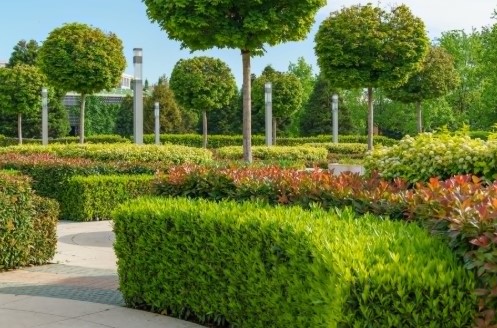
Choosing the right tree for a landscape involves more than considering its appearance. Mature size, foliage density, growing conditions, maintenance needs, and root development can all influence whether a tree is suitable for a particular property. Ficus Nitida, commonly associated with the Indian laurel fig, is valued for its glossy evergreen foliage and dense, rounded canopy. It has become a familiar choice for ornamental landscaping, shade, screening, and urban planting in warm climates. Understanding its characteristics and growing requirements can help gardeners and property owners determine where this tree can work best and how to manage it as it develops.
What is Ficus Nitida?
The name Ficus nitida is commonly used for the Indian laurel fig, while botanical references often classify it under Ficus microcarpa. University of Florida resources list Ficus nitida among the names associated with Ficus microcarpa, while other extension references identify Indian laurel as a common name for the species.
This evergreen member of the Moraceae family originates from tropical and subtropical regions of Asia. The tree develops a dense canopy made up of glossy, leathery leaves and can become substantially larger when grown outdoors in suitable climates. North Carolina State University notes that mature outdoor specimens can reach significant heights and widths, particularly in warm regions.
Appearance and Growth Characteristics
The tree can also develop aerial roots, particularly under suitable warm and humid conditions. These roots are part of the natural growth habit of the species and can become noticeable as the tree matures.
One of the most recognizable features of Ficus Nitida is its dense green foliage. The leaves are generally oval to elliptic, leathery, and glossy, creating a polished appearance throughout the growing season. University of Florida information describes the tree as evergreen, with a rounded, dense crown and smooth gray bark.
Where Can It Be Used in Landscaping?
Its foliage can provide visual privacy when maintained as a screen or hedge, while a mature tree can create substantial shade. The species has also been used historically as an urban and street tree. However, its mature size and extensive root system mean that planting location deserves careful consideration. North Carolina State University notes that aerial roots and extensive root growth can potentially affect pavement when the tree is not appropriately managed.
Because of its dense evergreen canopy, Ficus Nitida can serve several landscaping purposes. It can be used as a shade tree, screening plant, specimen tree, or part of a larger landscape design where warm-climate conditions are appropriate.
Light, Soil, and Water Requirements
- Warm growing conditions generally suit Indian laurel fig best. It can tolerate a range of soil conditions, but good drainage is important. A suitable planting location should provide enough room for the root system while avoiding areas where roots may become severely restricted by pavement or compacted ground.
- Adequate irrigation is also important, particularly while a tree is becoming established. However, watering practices should reflect local climate and soil conditions rather than following a fixed schedule.
- Stress can make Indian laurel fig more susceptible to certain problems. UC Integrated Pest Management notes that stressed trees are more vulnerable to ficus canker, with factors such as inadequate irrigation, excessive pruning, and root-zone problems contributing to tree stress.
Pruning and Maintenance
Regular maintenance can help keep Ficus Nitida within an appropriate shape and size for its landscape setting. Pruning should have a clear purpose, such as removing dead or damaged branches, maintaining clearance, or controlling growth.
Excessive pruning should be avoided because severe canopy reduction can place additional stress on the tree. UC IPM recommends avoiding severe pruning and performing necessary pruning during dry conditions when managing Indian laurel fig.
Conclusion
Nitida can bring dense evergreen foliage, shade, and a distinctive ornamental character to suitable warm-climate landscapes. Its mature size and root development make thoughtful placement, appropriate irrigation, and responsible pruning essential for long-term landscape performance. By understanding its growth habits before planting, homeowners and landscape professionals can make more informed decisions about incorporating this versatile fig into an outdoor setting, with Plant Clearance offering options for those considering this distinctive landscape plant.