
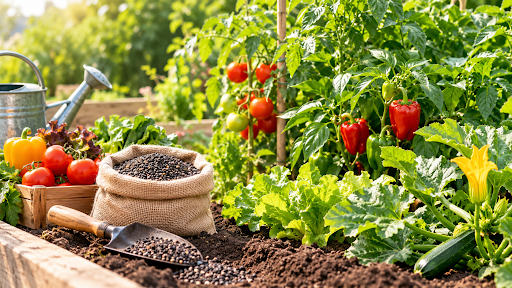
Vegetables grow fast, and they take a lot out of the soil in a single season. Tomatoes, peppers, lettuce, and squash all draw on the same limited supply of nutrients, so even rich garden beds run short by midsummer. A well-chosen vegetable plant fertilizer replaces what the crop removes, supports steady growth, and helps plants produce more fruit and leaves. Across the United States, home gardeners and small growers often struggle with yellowing leaves, slow growth, or poor harvests, and the cause is frequently a nutrient gap rather than pests or disease. Understanding what plants need, how products differ, and when to apply them takes much of the guesswork out of gardening. This article explains the key nutrients, how to read a fertilizer label, how to time and apply feedings, and how to avoid common mistakes.
Understanding Nutrients and Reading the Label
Every fertilizer label shows three numbers, such as 5-5-5, which give the percentages of nitrogen, phosphorus, and potassium. Nitrogen drives leafy growth, so crops like spinach, kale and lettuce respond strongly to it. Phosphorus supports roots, flowers and early development, while potassium helps fruit quality and overall plant health. Fruiting crops such as tomatoes and peppers need balanced feeding, because too much nitrogen produces lush foliage but few fruits. Plants also need secondary nutrients such as calcium and magnesium, plus trace elements like iron and zinc. A soil test, available through many county extension offices, shows what your bed already contains and prevents over-application. Granular products release nutrients slowly, while liquid feeds act quickly and suit plants showing signs of stress. Choosing the right vegetable plant fertilizer begins with knowing your soil and your crop.
Organic Options and Soil Health
Many gardeners prefer natural sources because they feed the soil as well as the plant. Compost, aged manure, bone meal, kelp, fish emulsion, and worm castings release nutrients gradually as soil microbes break them down. This slow release lowers the risk of burning roots and builds structure that holds moisture and air. Soil rich in organic matter also supports earthworms and beneficial fungi, which help plants take up nutrients. Natural products usually have lower nutrient percentages than synthetic ones, so apply them regularly instead of expecting a single large dose to do the job. Mixing compost into the bed before planting gives a strong base, and side-dressing during the season keeps plants fed. Over the years, this approach improves the whole garden rather than just one crop.
Timing, Application, and Common Mistakes
Timing matters as much as the product. Mix fertilizer into the soil at planting, then feed again when plants begin to flower or set fruit. Leafy greens benefit from lighter, more frequent feedings, while heavy feeders such as tomatoes and corn need regular boosts through the season. Always follow the label rate, because more is not better and excess fertilizer can burn roots, pollute runoff, and weaken plants. Water thoroughly after applying so nutrients reach the root zone, and keep granules away from stems. Container plants need extra attention, since frequent watering flushes nutrients out of the pot. Watch the leaves for clues: pale growth often signals low nitrogen, while purple tints can point to a phosphorus shortage. Correct problems early, and avoid feeding during heat waves or drought, when plants are under stress. A steady routine with the right vegetable plant fertilizer keeps growth even from spring to fall.
Conclusion
Good harvests come from healthy soil, balanced feeding, and steady care. Test your soil, match nutrients to each crop, apply at the right times, and keep records of what works. Small adjustments from season to season add up to stronger plants and better yields. Gardeners who want to compare products can look into organic plant fertilizer options made for vegetables and leafy greens, and choose one that suits their soil and growing style. Rotate crops, add compost each year, and water consistently. With patience and attention, a reliable vegetable plant fertilizer routine turns an ordinary bed into a productive, long-lasting garden.