
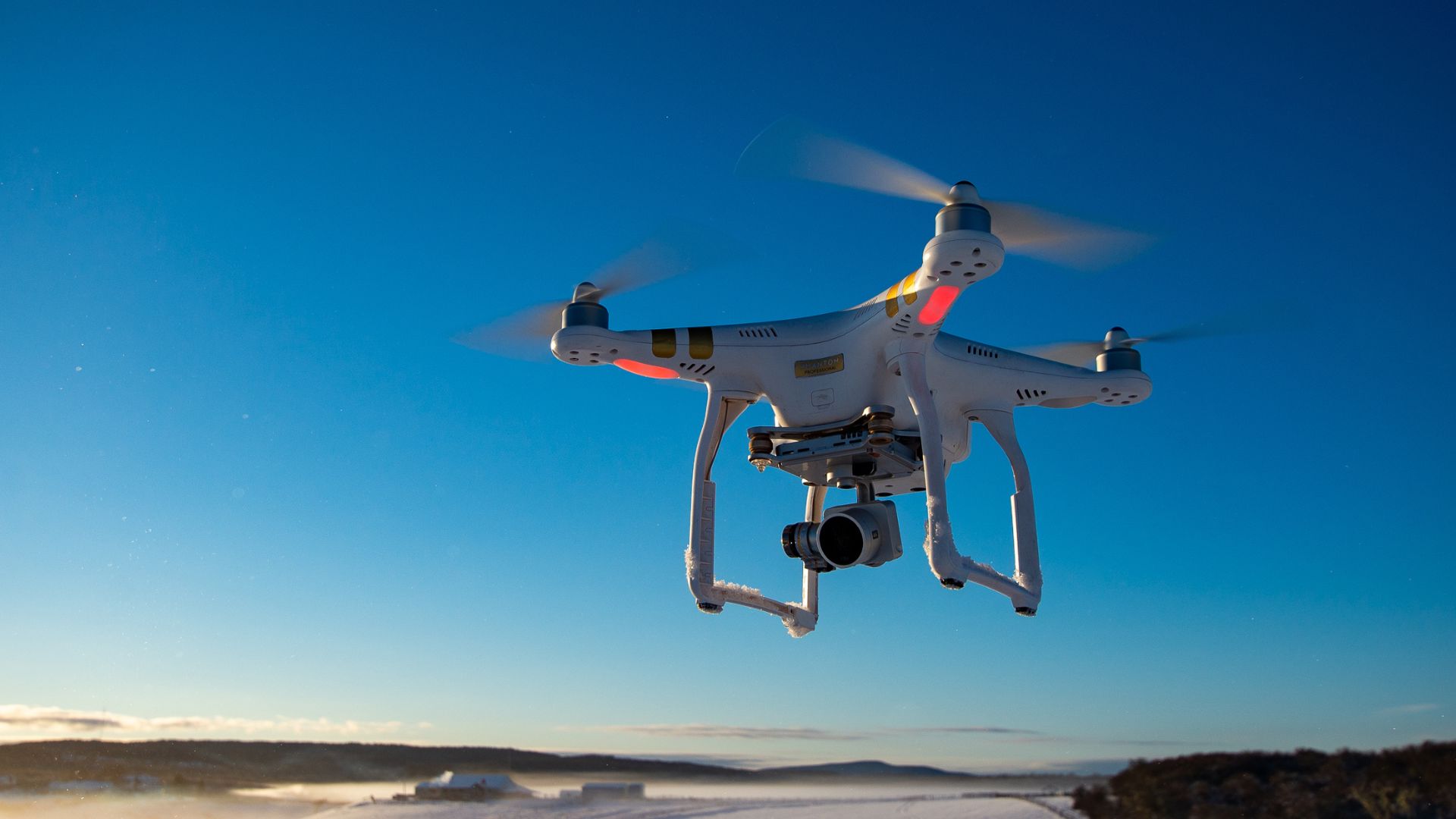
The European commercial drone market is experiencing robust expansion, projected to grow from US$ 9.43 billion in 2025 to US$ 19.02 billion by 2034, registering a Compound Annual Growth Rate (CAGR) of 8.11% during the forecast period of 2026–2034.
Market growth is accelerated by the widespread deployment of unmanned aerial vehicles (UAVs) across sectors such as agriculture, infrastructure inspection, construction, logistics, public safety, and environmental monitoring.
Key Growth Pillars & Market Drivers
- Industrial Digitalization: Driven by the need for real-time data, accurate aerial mapping, and infrastructure monitoring. European initiatives like smart cities and industry modernization heavily encourage digital workflows.
- Sustainable Agriculture: Adoption of multispectral sensors and AI analytics allows European farmers to optimize water, pesticide, and fertilizer usage, cutting costs while meeting environmental standards.
- Supportive Regulatory Frameworks: Unified rules governed by the European Union Aviation Safety Agency (EASA) streamline cross-border operations and provide clear legal structures for commercial flight.
- Surging Investments: European drone funding has scaled drastically over the past decade, jumping from near-zero levels in 2016 to a projected €350 million in 2026, driven by government modernization initiatives and private-sector venture funding.
Market Segmentations at a Glance
| Category | Segments |
| Weight | $<2\text{ kg}$, $2\text{ kg} – 25\text{ kg}$, $25\text{ kg} – 150\text{ kg}$ |
| System | Hardware, Software |
| Product Type | Fixed Wing, Rotary Blade, Hybrid |
| Mode of Operation | Remotely Operated, Semi-Autonomous, Autonomous |
| Primary Applications | Filming & Photography, Inspection & Maintenance, Mapping & Surveying, Precision Agriculture, Surveillance & Monitoring |
| Key End-Use Industries | Agriculture, Delivery & Logistics, Energy, Media & Entertainment, Real Estate & Construction, Security & Law Enforcement |
Major Challenges
- Regulatory Complexity: Despite EASA’s efforts, country-specific interpretations and strict urban/Beyond Visual Line of Sight (BVLOS) requirements complicate cross-border scaling and large-scale deployment.
- Technical Limitations: Battery life, payload capacities, weather resistance, and flight times continue to restrict heavy-duty industrial tasks.
- Public Privacy Concerns: Strict European data protection laws (GDPR) and public concerns regarding noise and data collection require companies to maintain transparency during surveillance and urban inspection operations.
Leading Country Markets
- France: The leading European market supported by strong aerospace expertise, favorable regulations, and active trials in urban air mobility and drone delivery.
- United Kingdom: A highly developed market driven by strong tech ecosystems, industrial adoption in energy and construction, and government-backed drone corridors.
- Germany: Home to major manufacturers (e.g., Quantum Systems, Wingcopter) and a leader in fixed-wing development, AI-enabled mapping, and participation in joint European defense initiatives like Eurodrone.
- Italy & Poland: Expanding rapidly through investments in precision agriculture, cultural heritage mapping, infrastructure inspection, and regional security frameworks (such as the LEAP initiative).