
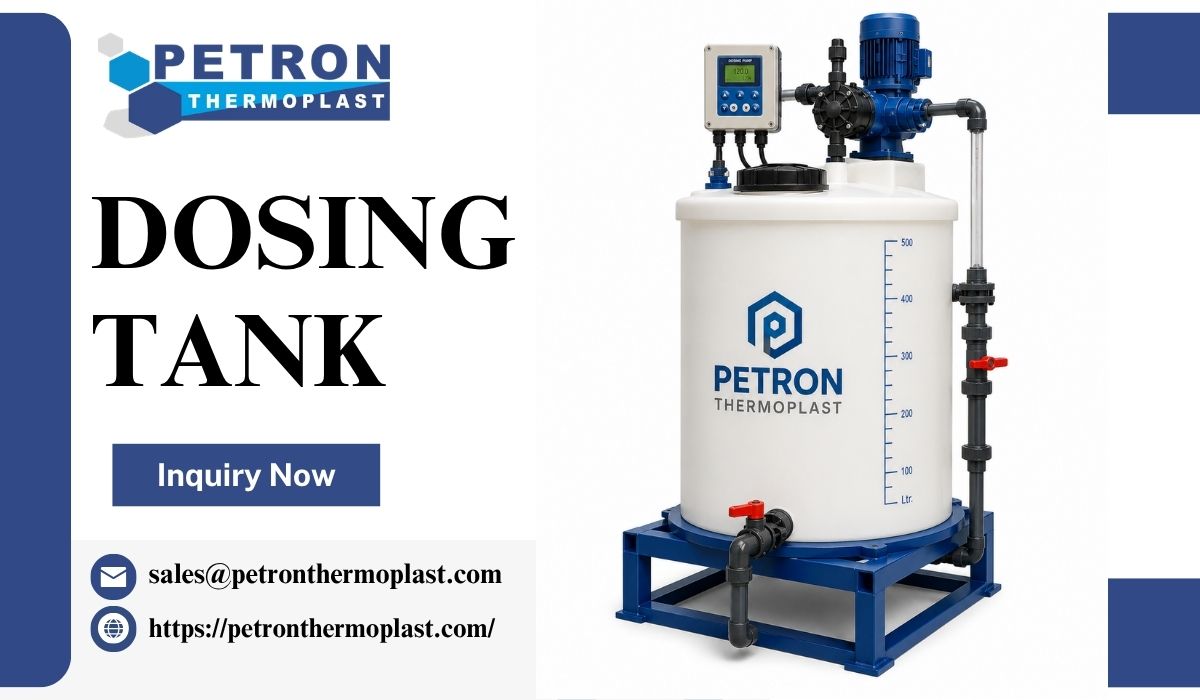
Large industrial projects require reliable equipment for chemical storage, controlled dosing, and process operations. A dosing tank is an important part of many industrial systems because it stores liquids before they are transferred or supplied to a specific process. Selecting the right tank helps businesses improve operational efficiency, simplify chemical handling, and maintain a well-organized production system.
Petron Thermoplast offers industrial thermoplastic solutions for businesses looking for customized dosing tanks. Tank design, material selection, dimensions, fittings, and accessories can be planned according to project requirements, the properties of the stored liquid, and the operating environment.
Whether a facility operates in chemical processing, water treatment, manufacturing, or industrial wastewater management, a properly designed dosing tank can support its process requirements.
What Is a Dosing Tank?
A dosing tank is a container used to hold liquids or chemical solutions before they are introduced into a process. It may form part of a chemical dosing system in which a dosing pump transfers a measured quantity of liquid to another tank, pipeline, treatment unit, or production process.
Dosing tanks are used in applications that require organized chemical storage and a consistent supply of process liquids. Depending on the installation, they may include inlet and outlet connections, drain arrangements, level indicators, inspection openings, and mounting provisions for dosing equipment.
The design of a dosing tank depends on the liquid being handled, required storage capacity, dosing frequency, installation space, and compatibility with connected equipment.
Why Customized Dosing Tanks Are Important for Large Industrial Projects
Large-scale projects often have different operating requirements from smaller installations. A standard tank may not provide the required capacity, dimensions, connection locations, or material compatibility.
Customized dosing tanks allow project teams to select a configuration that suits the actual process.
- Capacity According to Project Requirements
Every industrial facility has its own chemical consumption rate and operating schedule. A suitable tank capacity helps maintain an appropriate supply of liquid for the process.
Tank capacity can be planned according to daily consumption, chemical replenishment frequency, available installation space, and the required operating reserve. The final working capacity should also account for suitable headspace and safe filling requirements.
- Material Selection for Chemical Compatibility
The tank material must be compatible with the stored chemical at the intended concentration and operating temperature. Material selection is particularly important when handling acids, alkalis, treatment chemicals, and other industrial liquids.
Depending on the application, possible material options may include:
- HDPE: Used in many industrial liquid storage applications where its chemical compatibility and temperature limits are suitable.
- PP or PPH: Considered for various industrial chemical handling applications, subject to the chemical and operating conditions.
- PVDF: Used for selected demanding chemical applications where its properties justify the choice.
- FRP: May be suitable for certain industrial storage duties, depending on the resin system and chemical exposure.
No single material is suitable for every chemical. Compatibility should be confirmed for the exact chemical, concentration, temperature, and exposure conditions before finalizing the tank design.
- Customized Dimensions and Installation
Industrial plants may have limited floor space or specific equipment layouts. A customized dosing tank can be designed around the available installation area and the required connection positions.
Depending on the application, project specifications may cover tank height, diameter or length, orientation, support arrangement, access openings, and nozzle locations. These details should be confirmed before manufacturing to simplify installation at the site.
- Integration with Dosing Equipment
A dosing tank often operates alongside pumps, valves, pipelines, and monitoring equipment. Appropriate connections help the tank integrate with the wider process system.
Depending on the project, the design may include pump suction connections, fill connections, drain outlets, overflow arrangements, level measurement provisions, or mounting points for accessories. These features should be selected according to the process design rather than added without assessing their purpose.
Key Features of Customized Industrial Dosing Tanks
A well-planned dosing tank can provide several useful features for industrial operations.
- Application-specific design: Dimensions and connections can be planned around the installation.
- Chemical-compatible construction: Material selection is based on the stored liquid and operating conditions.
- Suitable capacity: Storage volume can be matched to process demand and replenishment schedules.
- Flexible connection arrangements: Inlets, outlets, drains, and accessory connections can be specified as required.
- Inspection and maintenance access: Appropriate openings and accessible fittings can simplify routine checks.
- Integration with process equipment: The tank can be planned for use with compatible pumps, valves, instruments, and pipelines.
- Project-based customization: Design details can be finalized according to approved drawings and technical requirements.
Applications of Dosing Tanks in Industrial Projects
Customized dosing tanks are used across several industries where liquids or chemical solutions must be stored and supplied to a process.
Chemical Processing Plants
Chemical manufacturing facilities may use dosing tanks to hold process chemicals, additives, and treatment solutions. Material compatibility and safe connection arrangements are important when specifying tanks for these applications.
Water and Wastewater Treatment
Water treatment plants use chemical dosing systems for processes such as pH adjustment, disinfection, coagulation, and other treatment stages. The dosing tank must be compatible with the treatment chemical and work with the selected pump and control system.
Pharmaceutical and Specialty Manufacturing
Certain manufacturing processes require controlled handling of liquid ingredients or process chemicals. Tank requirements depend on the chemical, process conditions, hygiene expectations, and applicable facility standards.
Electroplating and Surface Treatment
Surface treatment facilities may use dosing tanks for process chemicals and treatment solutions. Chemical resistance, suitable fittings, and maintenance access should be considered during selection.
General Industrial Manufacturing
Factories may require dosing tanks for additives, cleaning solutions, water-treatment chemicals, or other process liquids. A customized arrangement can help integrate the tank with the existing production setup.
How to Choose the Right Dosing Tank for a Large Project?
Selecting a dosing tank requires more than choosing a storage volume. Buyers should assess the complete application before placing an order.
- Identify the chemical. Provide the chemical name, concentration, temperature range, and any relevant safety data. These details help determine suitable construction materials.
- Calculate the required capacity. Consider consumption rates, replenishment schedules, operating hours, and the reserve needed for uninterrupted operation.
- Confirm the installation space. Share the available floor area, maximum permitted height, access restrictions, and required tank orientation.
- Finalize the connections. Specify pipe sizes, connection types, nozzle locations, drain requirements, and compatibility with the dosing pump.
- Review operating conditions. Confirm liquid density, temperature, outdoor exposure, support conditions, and any pressure or vacuum considerations.
- Agree on drawings and documentation. Review the proposed dimensions, material, fittings, and accessory locations before manufacturing begins.
Following these steps can reduce design changes and help the tank meet the actual needs of the project.
Quality and Maintenance Considerations
Quality checks should reflect the tank material, design, and intended service. Buyers should discuss dimensional inspection, construction quality, connection placement, and suitable inspection or leak-testing procedures with the manufacturer.
The appropriate test method depends on the tank design and applicable requirements. Any testing should follow an agreed procedure and should not expose the tank to conditions beyond its design limits.
After installation, regular maintenance helps identify potential problems before they affect operations. Recommended practices include:
- Inspecting the tank body, joints, supports, and connections.
- Checking valves, pipes, and dosing equipment for leakage or wear.
- Monitoring the tank level and checking level indicators.
- Cleaning the tank using methods compatible with its construction material.
- Reviewing chemical compatibility whenever the stored liquid or operating conditions change.
- Following the manufacturer’s inspection and maintenance recommendations.
Why Choose Petron Thermoplast for Customized Dosing Tanks?
Petron Thermoplast provides industrial thermoplastic solutions for businesses seeking application-specific chemical handling equipment. For large industrial projects, the tank design should be based on the required capacity, chemical compatibility, installation conditions, and integration with the process system.
When discussing a customized dosing tank requirement with Petron Thermoplast, buyers can share their project details to help define the appropriate configuration. These details may include the required capacity, chemical name and concentration, operating temperature, preferred material, connection arrangement, installation location, and any available technical drawings.
Conclusion
Customized dosing tanks are an important component of industrial chemical handling and process systems. Selecting the right capacity, material, dimensions, and connection arrangement helps businesses plan for efficient operation and easier maintenance.
For large-scale projects, a clear technical specification is essential. Chemical compatibility, operating conditions, installation requirements, and integration with dosing equipment should all be reviewed before manufacturing. Petron Thermoplast can be contacted to discuss customized dosing tank requirements for industrial applications. Share your project specifications to begin evaluating a suitable solution for your facility.