
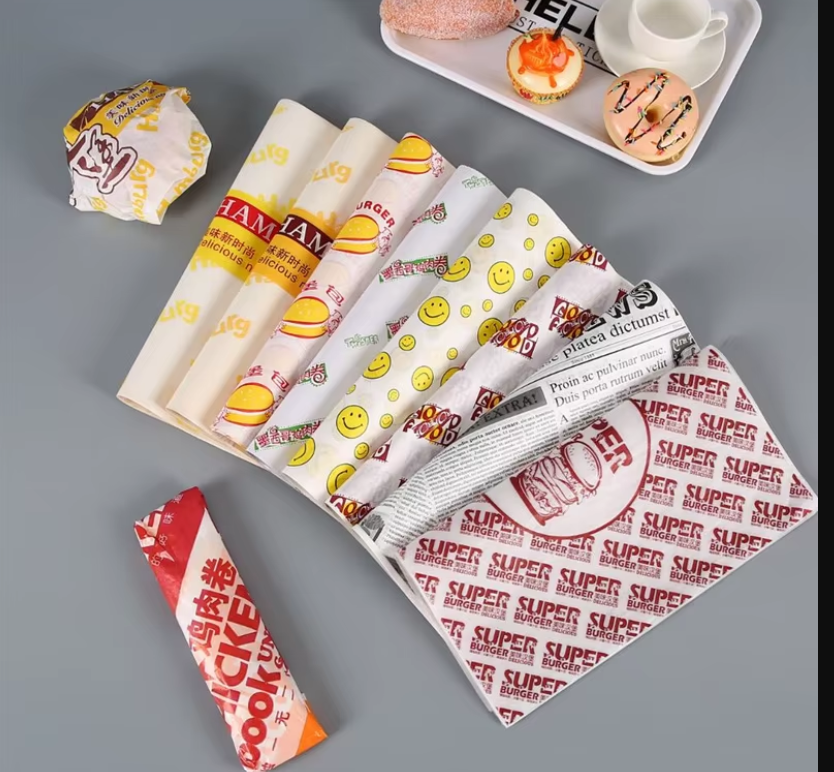
Food packaging plays an important role in how customers experience a restaurant. From the moment an order reaches the table or arrives at someone’s doorstep, its presentation helps communicate the quality and personality of the business. Restaurants need packaging that looks appealing while remaining practical during busy service hours.
Whether a business specializes in burgers, sandwiches, pastries, or takeaway meals, choosing suitable wrapping materials can make everyday operations more efficient. Well-designed food paper helps organize orders, provides a convenient serving surface, and creates a consistent appearance across different menu items.
This is why custom deli paper for restaurants has become a useful packaging option for businesses looking to combine functionality with recognizable branding. By adding logos, patterns, or signature colors to food wrapping, restaurants can turn an ordinary packaging material into part of their customer experience.
1. Why Custom Deli Paper Matters for Restaurants
Deli paper is commonly used to wrap food, separate portions, and line serving trays or baskets. Its versatility makes it suitable for restaurants, cafés, sandwich shops, bakeries, and takeaway businesses.
Unlike generic wrapping, customized deli paper can carry a restaurant’s visual identity. A simple printed logo or repeating pattern helps create a recognizable presentation without requiring elaborate packaging for every order.
Practical benefits are equally important. The appropriate food-grade paper can provide a convenient barrier between food and serving surfaces, help manage light grease or moisture, and make certain menu items easier to handle.
However, restaurants should select paper according to their actual food-contact requirements. Not every deli paper has the same resistance to oil, moisture, or heat.
2. How Branded Food Paper Improves Presentation
Customers notice details when receiving their meals. A neatly wrapped sandwich or a basket lined with coordinated paper can create a more polished impression than an otherwise identical order served with plain packaging.
Custom printing allows restaurants to incorporate their brand identity into everyday service. Popular design choices include:
- Repeating company logos
- Signature brand colors
- Minimalist illustrations or patterns
- Short slogans and promotional messages
- Website addresses or social media handles
The best designs remain recognizable even when the paper is folded around a burger or partially covered by food.
Consistency is particularly valuable for restaurants offering dine-in, takeaway, and delivery services. Using similar branding across paper wraps, bags, cups, and boxes creates a unified appearance that customers can associate with the business.
Branded wrapping may also appear naturally in customer photographs, providing additional opportunities for brand visibility.
3. Choosing the Right Material for Food Packaging
Appearance should never be the only consideration when selecting deli paper. Restaurants must also evaluate the material’s suitability for their menu.
For example, a relatively dry bakery product may have different packaging requirements from a burger containing melted cheese, sauces, and oil. Food temperature, moisture content, holding time, and intended use all influence material selection.
Common options include grease-resistant paper, dry-waxed deli paper, and other specialized food-contact wrapping materials.
When comparing suppliers, restaurant owners should confirm whether the proposed stock is appropriate for direct food contact and ask about its intended temperature and grease-resistance limits.
Printing materials matter as well. Any ink, coating, or treatment used on food-contact packaging should be suitable for the intended application.
Choosing the correct material helps restaurants balance visual presentation with reliable everyday performance.
4. Popular Restaurant Applications for Custom Deli Paper
One advantage of deli paper is its adaptability across different foodservice environments. Restaurants can use the same visual design in several formats while choosing suitable paper specifications for individual menu items.
Burger and sandwich wrapping: Printed paper provides a recognizable outer presentation and helps staff package individual orders consistently.
Basket and tray lining: Branded sheets can make fries, sandwiches, pastries, and snack portions look more organized when served.
Bakery packaging: Appropriate paper can be used to separate or wrap cookies, bread, and selected pastry products.
Takeaway orders: Coordinated wrapping adds another branding element inside delivery bags and food boxes.
Food trucks and casual dining: Lightweight paper is particularly convenient where preparation space is limited and orders need to move quickly.
Restaurants should test sample materials with their actual dishes before committing to a large production order. This makes it easier to identify the most suitable sheet dimensions and wrapping methods.
5. Custom Printing Options That Strengthen Brand Identity
Custom deli paper does not need a complicated design to make an impact. In many cases, a clean repeating logo produces a more effective result than an overcrowded layout.
Businesses can select from different paper colors, print coverage, dimensions, and printing options depending on supplier capabilities.
White paper often provides a bright background for colorful artwork, while natural brown paper creates a more understated appearance. Both can work well when coordinated with the restaurant’s existing identity.
Before approving production, businesses should review a digital proof and check the placement of important design elements. Logos positioned too close to cutting edges or folding points may become difficult to recognize.
It is also useful to consider how the paper looks after wrapping the food rather than judging the design only as a flat sheet.
A thoughtful layout makes branding feel like an intentional part of the meal instead of an afterthought.
6. Benefits of Ordering Restaurant Wrapping Paper in Bulk
Restaurants that use food paper daily may benefit from planning their packaging purchases around expected order volumes.
Bulk purchasing can simplify inventory management, reduce the frequency of reordering, and help maintain a consistent packaging design over time. Depending on the supplier, larger production quantities may also reduce the cost per unit.
However, ordering more paper than the business can reasonably use is not always economical. Storage space, menu changes, branding updates, and seasonal demand should influence purchasing decisions.
Before placing a wholesale order, compare the supplier’s minimum order quantity, material specifications, printing charges, delivery schedule, and available customization options.
Requesting physical samples is particularly helpful. Testing a sample during normal kitchen operations can reveal whether the paper folds easily, fits the serving containers, and performs adequately with the restaurant’s food.
Reliable packaging should support staff rather than introduce unnecessary complications during service.
7. Why Custom Greaseproof Paper Rolls Are Useful for Food Businesses
Alongside individual deli sheets, Custom greaseproof paper rolls offer a flexible packaging solution for restaurants that regularly prepare food in different portion sizes.
Instead of relying entirely on precut sheets, staff can dispense and cut paper according to the wrapping or lining requirements of a particular order. This can be convenient for businesses handling sandwiches, bakery products, takeaway meals, and food trays of varying dimensions.
Greaseproof paper is designed to resist the penetration of oils and fats, making an appropriately specified grade useful for many foodservice applications. Actual performance depends on the paper’s composition, treatment, and intended conditions of use.
Custom printing allows restaurants to carry their logos, patterns, and brand colors across a continuous roll, creating consistent packaging throughout daily operations.
When choosing a roll format, businesses should consider its width, total length, dispenser compatibility, print design, and suitability for the food being packaged.
It is also important to distinguish grease resistance from oven safety. A greaseproof product should not automatically be treated as baking parchment unless the manufacturer explicitly approves it for that purpose.
8. Conclusion: Creating a Better Restaurant Packaging Experience
Effective restaurant packaging combines practical performance, attractive presentation, and consistent branding. Even simple details, such as printed wrapping or coordinated tray liners, can contribute to a more professional customer experience.
The right food paper should suit the menu, support daily kitchen operations, and reflect the restaurant’s visual identity. Material testing, careful design selection, and thoughtful purchasing decisions can help businesses achieve these goals without adding unnecessary complexity.
By treating food wrapping as an essential part of their overall packaging strategy, restaurants can create a consistent presentation that customers recognize across dine-in, takeaway, and delivery orders.