
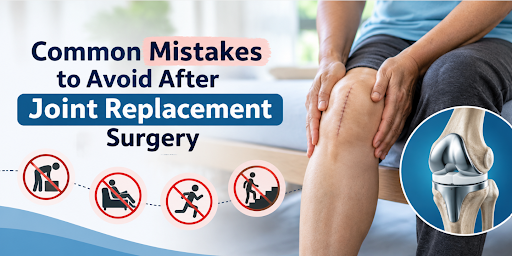
Most common mistakes after joint replacement (knee, hip or shoulder) are skipping physiotherapy, doing too much too soon, ignoring warning signs (like blood clots or infection), not following your surgeon’s rules about movement & neglecting home safety and medicines. Healing will be faster, there will be fewer complications & your new joint will last many years if you avoid these mistakes.
Why Recovery Matters as Much as Surgery?
Joint replacement surgery is the removal of a damaged joint & replacement with an artificial implant . This is only the beginning of the operation. How well your new joint works depends on what you do in the weeks and months afterward.
- Most people begin walking with support one or two days after surgery.
- Many people feel much better by 3 months
- Full recovery can take 6 -12 months.
- Small mistakes during this time can slow healing or cause problems that need more treatment.
This guide explains the most common mistakes in plain language, & what to do instead.
Top Mistakes to Avoid Post Joint Replacement Surgery
1. Skipping/ Delaying Physiotherapy
This is the biggest mistake. After surgery the muscles around the joint are weak & the joint feels stiff. Without exercise, scar tissue can develop and the joint may not bend or straighten completely.
What to do instead:
- Begin exercises when your surgeon or physiotherapist says it is OK.
- Do your home exercises every day, not just when you come to the clinic.
- Even when it feels tiring, continue. Mild soreness is expected. Sharp or severe pain is not.
2. Doing Too Much Too Soon
Feeling better doesn’t necessarily mean the joint has completely healed. The bone & soft tissues around the implant need sufficient time to recover. Walking for long periods, lifting heavy objects, or making sudden twisting movements during the first few weeks may lead to:
- Pain
- Swelling
- Injury
What to do instead:
- Increase activity slowly, a little more each day.
- Rest between activities.
- Take short, frequent walks instead of one long one.
- Ask your surgeon before returning to sports, gym work, or heavy household tasks.
3. Doing Too Little
The opposite mistake is just as harmful. Sitting or lying in bed all day increases the risk of stiffness, muscle loss, & blood clots.
What to do instead
- Move regularly. Get up, walk short distances with your walker or crutches
- Change position often.
- Balance rest with gentle activity.
4. Ignoring Warning Signs of Blood Clots
Blood clots in the leg veins (deep vein thrombosis, or DVT) are a known risk after joint replacement, especially in the first few weeks. A clot can travel to the lungs, which is an emergency.
Watch for:
- Swelling
- Warmth
- Redness
- Pain in the calf or thigh
- Sudden shortness of breath
- Chest pain
- Coughing
What to do:
- Take your blood thinners exactly as prescribed
- Wear compression stockings if advised, & keep moving.
- If you have chest pain or trouble breathing, seek emergency help immediately.
5. Missing Signs of Infection
Infection around an implant is uncommon but serious. Do not wait to see if it gets better on its own.
Call your doctor if you notice:
- Fever or chills
- Increasing redness, warmth, or swelling around the wound
- Pus or fluid leaking from the incision
- Pain that gets worse instead of better
Also remember:
- Keep the wound clean & dry
- Do not apply creams or powders unless your surgeon approves.
- Inform the doctor & dentist that you have an artificial joint, as some procedures may need preventive care.
6. Not Following Movement Precautions
Some surgeons give specific rules, especially after hip replacement, to protect the joint while it heals. These may include:
- Not crossing your legs or ankles
- Not bending the hip beyond a set angle
- Not twisting your body while your foot is planted
Rules vary by surgeon & surgical approach. So follow the ones you were given. Using a raised toilet seat and a high chair can make this easier.
7. Not Preparing a Safe Home
A fall in the early weeks can damage the new joint or even need another surgery.
Simple safety steps:
- Remove loose rugs, wires & clutter.
- Install grab bars in the bath and a non-skid mat.
- Good lighting is important, especially for nighttime.
- Wearing flat shoes with grip. Not slippers or sandals.
- Keep everyday items within reach.
- Use your walker/ cane as long as you are told.
8. Managing Pain & Medicines Incorrectly
Some people avoid pain medicine because they worry abo ut side effects. Others take too much. Both can cause problems.
- Uncontrolled pain makes it hard to do physiotherapy.
- Taking more medicines than prescribed
- Mixing medicines with alcohol can be unsafe.
- Some pain medicines cause constipation. So, drink water & eat fibre-rich foods.
- Do not stop blood thinners or start new medicines or supplements without asking your doctor.
Take medicines on time, as prescribed, & report side effects.
9. Forgetting Swelling Control
Swelling is normal after surgery, but it can last for weeks or even months. Ignoring it can increase pain and stiffness.
What helps:
- Elevate your leg or arm as advised.
- Use ice packs wrapped in a cloth for short periods, if your care team recommends it.
- Do your prescribed exercises.
10. Returning to Driving, Work, or Travel Too Early
Driving needs fast reaction time & good control of your leg. If you drive before you are ready, you put yourself and others at risk. Many people are cleared after several weeks, but the timeline depends on the joint operation, whether it is your driving side, & your medicines.
Ask your surgeon before you drive, return to work, or take long trips. On long journeys, stop to walk & stretch often to reduce clot risk.
11. Poor Nutrition & Unhealthy Habits
Your body needs fuel to heal bone and tissue.
- Eat enough protein (dal, eggs, fish, chicken, paneer, curd, nuts).
- Include fruits, vegetables, & whole grains.
- Drink enough water.
- Avoid smoking- It slows wound & bone healing.
- Limit alcohol, especially while taking pain medicines.
- If you are overweight, gradual weight control reduces stress on your new joint.
12. Skipping Follow-Up Visits
Follow-up appointments let your surgeon check healing, look at X-rays, & catch problems early. Feeling fine is not a reason to skip them. Regular check-ups continue for years, because implants should be monitored over time.
13. Expecting a Perfect Joint Overnight
Recovery is not a straight line. Some days will feel great & others will feel slow. Mood changes, poor sleep, and frustration are common. Talk to your care team, family, or a support group if you feel low. Setting realistic goals & celebrating small wins keeps you motivated.
When to Call Your Doctor Right Away
Contact your surgeon or go to the emergency room if you have:
- Chest pain or sudden trouble breathing
- Fever above your doctor’s advised limit, or chills
- Severe, sudden, or worsening pain
- Calf swelling, warmth, or tenderness
- Wound redness, discharge, or opening of the stitches
- A fall, or a sudden inability to bear weight
- Numbness, or a foot or hand that turns pale, blue, or cold
Frequently Asked Questions
What should you avoid after joint replacement surgery?
Avoid skipping physiotherapy, overdoing activity, ignoring pain or swelling, breaking your surgeon’s movement rules, high-impact activities, & unsafe footwear or home setups.
How long does it take to recover from joint replacement?
Most people return to basic daily activities within a few weeks, feel much better at around 3 months, & reach full recovery in 6 to 12 months. Timelines vary by person and joint.
Is it normal to have swelling months after surgery?
Mild swelling can last for several months & often gets worse after activity. Sudden or one-sided swelling with pain, warmth, or redness should be checked by a doctor.
When can I drive after knee or hip replacement?
It depends on which joint was replaced, your recovery, & your medicines. Many people are cleared after several weeks. But you should get your surgeon’s approval first.
Can I kneel or do yoga after a knee replacement?
Some people can do gentle yoga. But deep kneeling or full squatting may be uncomfortable or restricted. Ask your surgeon which poses are safe for you.
Do I need antibiotics before dental work?
Some patients are advised to take antibiotics before certain dental or surgical procedures. Ask your orthopaedic surgeon & dentist what is right for you.