
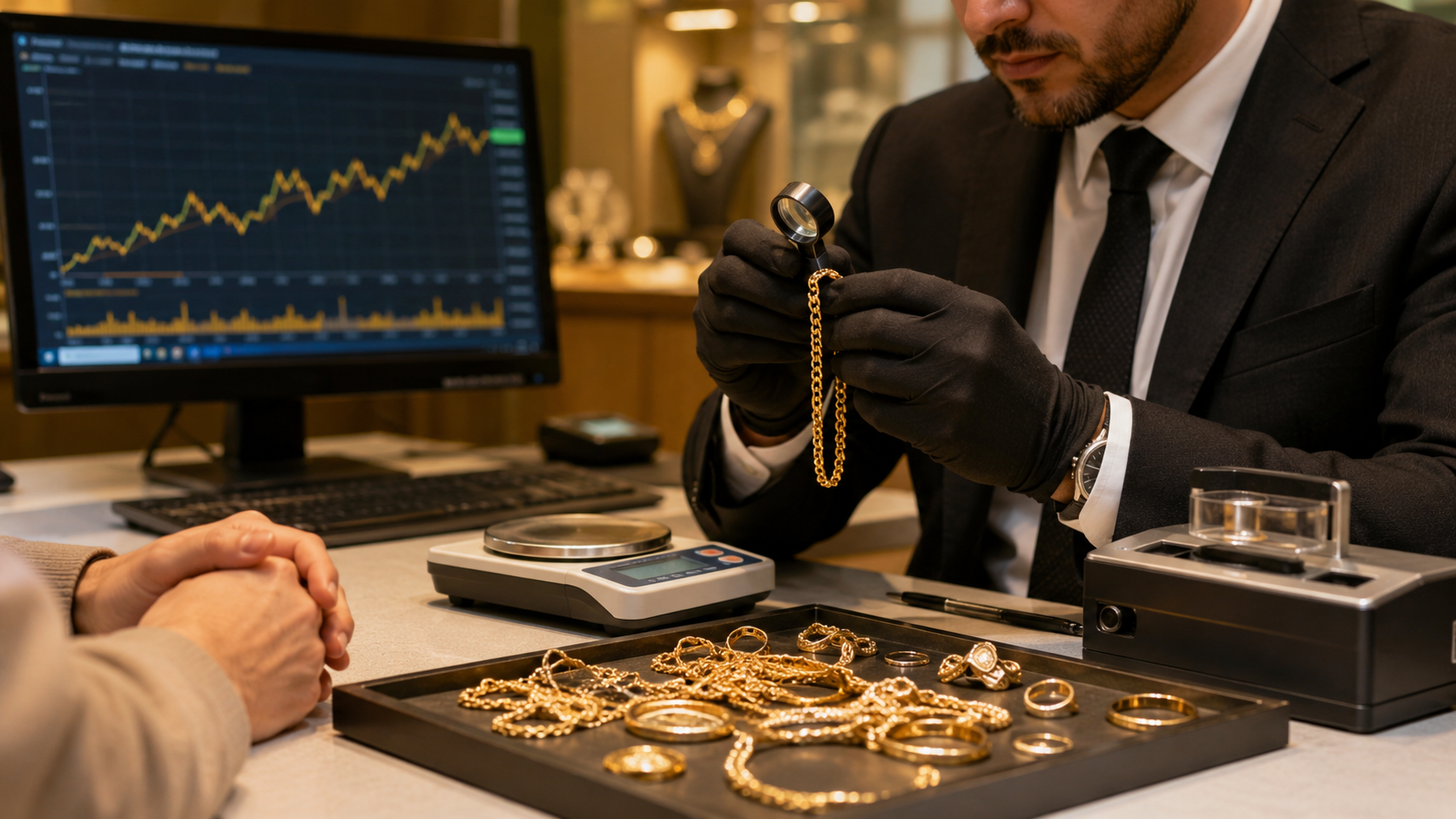
Have you ever looked at old, broken, or unwanted jewelry and wondered how much money it could be worth? Many people have gold items sitting in drawers that they no longer wear. The good news is that you can turn these items into cash for gold quickly and easily. However, many sellers worry about getting a fair deal or being taken advantage of by buyers.
Understanding how the gold-selling process works can help you avoid common mistakes and maximize your payout. This guide explains everything you need to know, from understanding gold purity to choosing the right buyer and avoiding scams.
Understanding Gold Purity and Value
Before selling your jewelry, it is important to understand what determines its value.
Karats vs. Grams
Many first-time sellers confuse karats and grams, but they measure two different things.
- Karats (K) measure gold purity.
- Grams (g) measure weight.
The higher the karat number, the more pure gold your jewelry contains.
Here is a simple breakdown:
- 24K Gold = 99.9% pure gold
- 18K Gold = 75% pure gold
- 14K Gold = 58.5% pure gold
- 10K Gold = 41.7% pure gold
For example, two rings may weigh the same amount, but the 18K ring will generally be worth more because it contains more pure gold than a 10K ring.
Gold buyers calculate value based on both weight and purity. This is why understanding these measurements helps you estimate a fair offer before selling.
Spot Price vs. Payout Price
One of the most important terms in the gold industry is the spot price.
The spot price is the current market value of pure gold. It changes throughout the day based on global supply and demand.
However, gold buyers do not usually pay the full spot price. They must cover expenses such as:
- Business overhead
- Refining costs
- Employee wages
- Operational expenses
- Profit margins
For example, if the gold content in a 14K ring is worth $200 based on the spot price, a buyer may offer between $140 and $160.
This difference is normal. The goal is to find a buyer offering a competitive percentage of the spot value.
Identifying Hallmarks
Most genuine gold jewelry includes a hallmark or stamp that indicates purity.
Common hallmarks include:
- 999 = 24K Gold
- 750 = 18K Gold
- 585 = 14K Gold
- 417 = 10K Gold
These marks are usually found:
- Inside ring bands
- On necklace clasps
- On bracelet links
- Near earring posts
Be cautious if jewelry has no hallmark at all. While some older pieces may lack markings, missing stamps can sometimes indicate gold-plated or counterfeit items.
Choosing the Right Buyer
The buyer you choose can significantly affect your final payout.
Local Pawn Shops and Jewelers
Many people start with local pawn shops or jewelry stores.
Pros
- Immediate payment
- Face-to-face interaction
- Ability to negotiate in person
- Instant appraisal
Cons
- Offers may be lower
- Higher business expenses can reduce payouts
- Some shops specialize more in loans than gold purchasing
Before visiting a local buyer, check online reviews and customer feedback. Positive reviews often indicate fair pricing and transparent business practices.
Expert Tip
Never accept the first offer you receive. Visit multiple buyers to compare prices.
Online Gold Buyers
Online gold buyers have become increasingly popular.
Pros
- Competitive pricing
- Convenient process
- Access to national markets
- Often higher payouts
Cons
- Shipping risks
- Longer waiting periods
- No face-to-face interaction
Many online companies provide prepaid shipping kits. After receiving your items, they evaluate the gold and send an offer.
Case Study
A seller with 50 grams of 14K gold receives:
- Local buyer offer: $850
- Online buyer offer: $950
While the online buyer offers more, the seller must wait several days and trust the shipping process.
Gold Exchanges and Refiners
Refiners operate differently from retail gold buyers.
A retail buyer purchases gold directly from consumers and resells it.
A refiner melts and processes gold into reusable materials.
Refiners often provide better rates for:
- Large gold collections
- Scrap gold
- Jewelry manufacturers
- Estate liquidations
If you are selling only a few pieces of jewelry, a local buyer may be more convenient. For larger quantities, refiners can offer better returns.
The Step-by-Step Selling Process
Understanding the selling process helps you feel more confident and prepared.
Sorting and Cleaning Your Items
Before meeting a buyer, organize your jewelry.
Separate items by:
- Yellow gold
- White gold
- Rose gold
Also identify pieces by purity level if possible.
If jewelry contains removable stones or beads, consider separating them when practical.
Cleaning jewelry does not increase its gold value, but it helps buyers inspect items more easily.
A clean piece often creates a more professional presentation.
The Appraisal and Testing Phase
Professional buyers must verify gold purity before making an offer.
Common testing methods include:
Acid Testing
A small sample is exposed to testing acids to determine purity levels.
XRF Scanning
Modern X-ray fluorescence scanners analyze gold content without damaging the jewelry.
This technology provides fast and accurate results.
Whenever possible, watch the testing process in person.
Common Mistake
Avoid buyers who take your jewelry into a back room without explanation or documentation.
Always request a receipt if your items leave your sight.
Transparency builds trust and protects both parties.
Negotiating the Final Offer
Negotiation can significantly improve your payout.
Before visiting a buyer:
- Check the current gold spot price.
- Know your jewelry’s purity.
- Understand its approximate weight.
These details help you evaluate whether an offer is reasonable.
Actionable Tip
Get at least three quotes before making a final decision.
Even small differences in offers can add up to hundreds of dollars on larger transactions.
Questions to Ask the Buyer
- What purity level did you determine?
- How much does the jewelry weigh?
- What percentage of the spot price are you paying?
- Are there any fees involved?
- Can you provide a written breakdown?
Professional buyers should answer these questions clearly and confidently.
Avoiding Common Scams and Pitfalls
Unfortunately, not every buyer operates fairly.
The “Lowball” Tactic
Some buyers intentionally undervalue gold.
Common tactics include:
- Claiming your jewelry is lower purity than it actually is
- Using inaccurate scales
- Offering prices far below market value
- Adding unexpected fees
Always compare multiple offers to identify unusually low bids.
Shipping Risks for Online Sales
If you choose an online buyer, shipping security is critical.
Protect yourself by:
- Using insured shipping
- Selecting tracking services
- Taking photos before shipment
- Recording item weights
Be cautious of free shipping labels that provide little or no tracking information.
The small cost of insurance can save you significant losses.
Red Flags in Storefronts
Watch for warning signs when visiting a physical location.
Common red flags include:
- No visible calibrated scale
- Pressure to sell immediately
- Lack of transparency during testing
- Refusal to provide written offers
- Poor customer reviews
Trustworthy buyers encourage informed decisions and never rush customers.
Financials and Legal Requirements
Selling gold involves more than simply accepting cash.
Documentation and ID Laws
Many countries require buyers to verify seller identities.
This helps prevent:
- Stolen property sales
- Money laundering
- Fraudulent transactions
Bring a valid government-issued photo ID when selling gold.
Keep records that include:
- Date of sale
- Buyer information
- Items sold
- Sale amount
These records can be useful later for personal accounting or tax purposes.
Tax Implications of Gold Sales
Depending on your location, profits from gold sales may have tax consequences.
If your gold increases in value after purchase, the profit may be considered a capital gain.
Keeping records of:
- Original purchase prices
- Appraisals
- Sale receipts
can help simplify future tax reporting.
If you regularly buy and sell precious metals, consulting a tax professional may be beneficial.
Payment Methods
Most gold buyers offer several payment options.
Cash
Pros:
- Immediate access to funds
Cons:
- Security concerns for large amounts
Check
Pros:
- Easy documentation
Cons:
- Processing delays
Bank Transfer
Pros:
- Secure
- Fast
- Easy to track
Cons:
- May require banking information
For larger transactions, electronic transfers are often the safest choice.
Conclusion
Selling unwanted jewelry for cash for gold can be a smart way to unlock value from items you no longer use. The key to getting a fair payout is understanding gold purity, monitoring the spot price, comparing multiple offers, and choosing a trustworthy buyer.
The more informed you are, the easier it becomes to avoid scams and negotiate confidently.
Final 5-Point Checklist Before Selling Gold
- Check the current spot price of gold.
- Identify your jewelry’s karat rating.
- Obtain at least three quotes.
- Verify the buyer’s reputation and reviews.
- Request a written breakdown of the offer.
Remember, you are never obligated to accept an offer. If something feels wrong, walk away and seek another buyer. A little patience and research can help you secure the best possible price for your gold.