
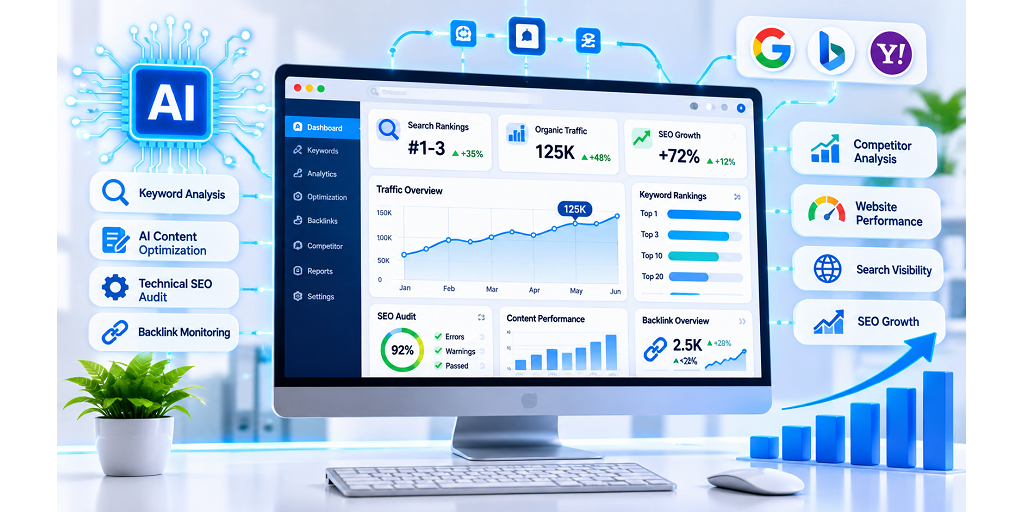
- An AI SEO Website Platform builds the site and optimizes it in the same workflow, so SEO is part of production rather than a later audit.
- Separate builders, CMS tools and SEO plugins create handoff delays and conflicting data.
- Core capabilities: AI site creation, brand-voice content, technical SEO defaults and AI search visibility tracking.
- Agencies and SMBs gain most from fewer tools and faster publishing cycles.
What an AI SEO Website Platform Does
An AI SEO Website Platform is a system that creates, publishes and optimizes a website from one workspace, using AI to handle page structure, content and search signals together. Traditional stacks split these jobs across a builder, a CMS, a writing tool and an SEO suite. Each handoff adds delay and room for error.
The platform approach treats optimization as a property of every page at creation. Titles, headings, schema, internal links and metadata are generated with the page, not patched on after launch.
Why Development and Optimization Belong Together
Most SEO problems originate in how a site was built. Missing structured data, duplicate templates, slow layouts and orphaned pages are development decisions that surface later as ranking issues. Fixing them after launch costs more than preventing them.
Google’s SEO Starter Guide stresses crawlable structure, descriptive titles and helpful content. Those are exactly the elements a unified platform can enforce by default.
AI SEO Website Platform vs Separate Tools
FactorSeparate ToolsAI SEO Website PlatformSite setupBuilder plus manual SEO configurationSEO defaults applied during creationContent productionOutside writing tool, copy-paste into CMSBrand-voice drafting inside the editorOptimization timingPost-publication auditsChecks at the drafting stageAI search trackingOften absent or a separate subscriptionVisibility monitoring in the same dashboardTeam handoffsDeveloper, writer and SEO specialist in sequenceOne shared workflow
Capabilities to Look For in an AI SEO Website Platform
- AI site creation: generates page layouts and navigation that follow clean, crawlable structure.
- Brand-voice content automation: produces blog posts and pages that match established tone, reducing editing time.
- Technical SEO defaults: automatic sitemaps, canonical tags, schema markup and fast-loading templates.
- AI search visibility tracking: shows whether the brand appears in answers from tools such as ChatGPT, Gemini and Perplexity.
- Update workflows: lets teams refresh pages and see optimization changes without a developer ticket.
The fifth item matters more in 2026 than before. Search now spans traditional results and generated answers, so a platform that only tracks blue-link rankings covers half the picture.
Who Benefits Most
Agency owners managing many client sites gain repeatable templates and consistent SEO baselines. Marketing leaders gain one source of reporting instead of reconciling exports from three vendors. SMB operators without in-house developers gain the ability to launch and maintain a search-ready site with a small team.
The trade-off is less freedom to mix specialist tools. Organizations with heavily customized engineering stacks may still prefer modular setups.
Conclusion
Building a site and optimizing it no longer need to be separate projects. WorkspaceCMS.ai – SEO + AI Campaign reflects this direction by combining AI website building, content automation and AI search visibility tracking in one platform.
Beyond Website Building: How an AI SEO Website Platform Brings Development and Optimization Together FAQ
What is an AI SEO Website Platform?
It is a single system that builds websites, generates content and applies search optimization with AI. It replaces the usual chain of builder, CMS and separate SEO tools.
Does it replace an SEO specialist?
No. It automates repeatable tasks such as metadata, schema and drafting checks. Strategy, competitive analysis and editorial judgment still need human oversight.
How does it support AI search visibility?
It structures content with clear headings, factual statements and schema that generative engines can parse, and it tracks whether the brand is cited in AI-generated answers.