
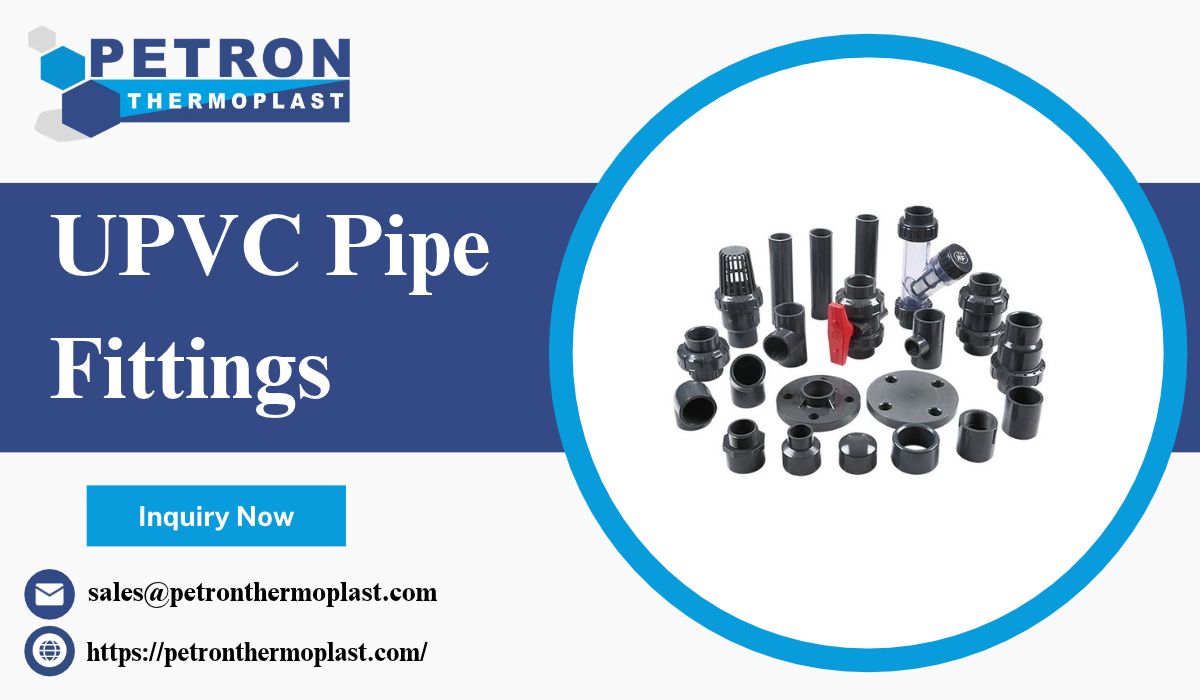
Modern industrial piping systems require reliable connections, suitable materials and carefully planned pipeline layouts. From chemical processing facilities to water treatment plants, every installation has specific requirements related to fluid transportation, pressure, temperature and operating conditions. UPVC Pipe Fittings are widely considered for industrial pipeline engineering because of their lightweight construction, corrosion resistance and versatility in compatible fluid-handling applications.
UPVC, or unplasticized polyvinyl chloride, is a thermoplastic material used in different piping applications. Its properties make it a practical option for selected industrial water distribution, chemical handling and utility systems. Petron Thermoplast offers UPVC piping solutions for customized pipeline requirements, including different fitting configurations and project-based quantities.
What Are UPVC Pipe Fittings?
UPVC pipe fittings are components used to connect, redirect, branch, reduce or terminate sections of a pipeline. They help create a complete piping network according to the layout and operating requirements of an industrial facility.
These fittings are manufactured from unplasticized polyvinyl chloride, which does not contain the plasticizers used in flexible PVC products. UPVC is known for its rigid construction and resistance to many corrosive substances. The correct fitting selection depends on several factors, including pipe dimensions, connection type, fluid compatibility, operating pressure and temperature. Properly selected fittings help maintain the required pipeline arrangement and support dependable system operation.
Different Types of UPVC Pipe Fittings
Industrial piping projects require different fitting designs to achieve the desired pipeline configuration. Common UPVC fitting types include:
- UPVC Elbows
UPVC elbows change the direction of fluid flow within a pipeline. They are available in different angles, including 45-degree and 90-degree configurations, depending on product availability. They are useful for routing pipelines around equipment, walls and other installation obstacles.
- UPVC Tees
UPVC tees create a branch connection from the main pipeline. They are commonly used in distribution networks where fluid needs to move towards multiple process lines or equipment connections.
- UPVC Reducers
Reducers connect pipes of different diameters. They help transition between larger and smaller pipeline sections according to the system design.
- UPVC Couplings
Couplings connect two compatible pipe sections. They are used in straight pipeline arrangements and can support installation, extension and repair requirements.
- UPVC Unions
Unions provide a detachable connection between pipeline sections. They can be useful where equipment or pipeline components may need to be removed for inspection or maintenance.
- UPVC Flanges
Flanges provide bolted connections between compatible pipeline components, valves and equipment. They are useful in installations where detachable connections are required.
The availability of specific designs, dimensions and connection configurations should be confirmed before finalizing a project order.
Why Choose UPVC Pipe Fittings for Industrial Applications?
UPVC fittings offer several material and installation advantages for suitable pipeline systems.
- Corrosion Resistance
UPVC provides resistance to many chemicals and corrosive environments. This makes it suitable for selected industrial applications where metallic components may require additional corrosion protection. Compatibility must be checked against the exact chemical, concentration and operating temperature.
- Lightweight Construction
UPVC fittings are lighter than many conventional metallic alternatives. This can make transportation, handling and installation more convenient.
- Smooth Internal Surface
The smooth internal surface of UPVC components can support fluid movement and help reduce friction-related flow resistance. Actual system performance depends on pipe dimensions, fittings, flow rate and pipeline design.
- Low Maintenance Requirements
UPVC does not rust like conventional iron-based materials. However, regular inspection is still necessary to identify leakage, mechanical damage and changes in operating conditions.
- Flexible Pipeline Design
Different fitting configurations allow engineers to create pipeline routes according to equipment positioning, available space and process requirements.
Technical Considerations for UPVC Pipe Fittings
Selecting fittings based only on nominal pipe size is not sufficient for industrial projects. Engineers and buyers should review the complete technical requirements.
| Technical Parameter | Important Consideration |
| Material | Unplasticized Polyvinyl Chloride (UPVC) |
| Fitting type | Elbow, tee, reducer, coupling, union or flange |
| Size | According to the pipeline design |
| Connection | Solvent cement, threaded or flanged, where available |
| Pressure rating | Based on manufacturer specifications |
| Temperature | Suitable for the operating fluid and service conditions |
| Chemical compatibility | Verified against the actual fluid |
| Installation | Compatible with the selected pipe and joining method |
| Quantity | Based on project drawings and installation requirements |
Applications of Industrial UPVC Pipe Fittings
UPVC fittings are considered for a range of industrial piping applications where their material properties match the process requirements.
Chemical Processing Plants
Chemical processing facilities use interconnected pipelines for fluid transfer, circulation and distribution. Suitable UPVC fittings can be evaluated for compatible chemical lines after checking material resistance and operating conditions.
Water Treatment Plants
Water treatment facilities require piping networks for water movement between filtration, treatment and storage sections. UPVC elbows, tees, reducers and couplings can support different pipeline arrangements.
Wastewater Treatment Systems
Industrial wastewater facilities use piping systems for collection, transfer and treatment processes. UPVC fittings may be considered for compatible applications based on fluid composition and operating conditions.
Electroplating Industries
Electroplating plants handle different process solutions through transfer and circulation lines. Selecting chemically compatible fittings is important for maintaining the reliability of these systems.
Industrial Utility Networks
Manufacturing facilities use utility pipelines for water and other compatible fluids. UPVC fittings can help connect equipment, distribution lines and supporting pipeline sections.
Customized UPVC Pipe Fittings for Pipeline Engineering
Every industrial project has different installation requirements. Standard fitting configurations may not always match the available space, equipment position or pipeline routing.
Customized pipeline engineering involves selecting suitable fitting types, dimensions and connection arrangements according to project drawings and technical specifications.
Important customization considerations include:
- Required fitting type and dimensions.
- Pipeline layout and equipment connection points.
- Pipe material and joining method.
- Fluid type and chemical concentration.
- Operating pressure and temperature.
- Available installation space.
- Required quantity and project schedule.
How to Select the Right UPVC Pipe Fittings?
Before purchasing UPVC fittings, industrial buyers should evaluate the following factors:
- Understand the Application: Identify the fluid being transported and the purpose of the pipeline. Chemical compatibility is especially important for industrial applications.
- Confirm Pipe Dimensions: Check the nominal diameter, outside diameter and relevant dimensional requirements of the connected pipes.
- Select the Correct Fitting Type: Choose elbows, tees, reducers, couplings or flanges according to the pipeline layout.
- Verify Pressure and Temperature: Confirm that the fitting is suitable for the actual operating conditions and manufacturer’s rated limits.
- Check Connection Compatibility: Ensure that the fitting and pipe use compatible connection dimensions and joining methods.
- Review Technical Documentation: Request product drawings and specifications before finalizing large project orders.
- Plan Installation and Maintenance: Consider accessibility, support arrangements and future inspection requirements.
UPVC Pipe Fitting Solutions by Petron Thermoplast
Petron Thermoplast focuses on industrial thermoplastic piping products and customized requirements. Businesses planning new pipeline installations, plant expansions or maintenance projects can discuss their UPVC pipe fitting requirements with the company.
For product evaluation and quotation, buyers can share:
- Required fitting types and sizes.
- Total quantity and project requirements.
- Pipe material and connection details.
- Fluid or chemical name and concentration.
- Operating pressure and temperature.
- Technical drawings or pipeline layout.
- Delivery location and project timeline.
Conclusion
UPVC pipe fittings play an important role in customized industrial pipeline engineering. Their corrosion resistance, lightweight construction and availability in different fitting configurations make them suitable for many compatible water treatment, chemical processing and industrial utility applications.
Choosing the right fittings requires careful evaluation of pipe dimensions, connection type, pressure, temperature and chemical compatibility. Project drawings and verified technical specifications also help ensure that the selected components match the installation requirements. Petron Thermoplast offers industrial UPVC piping solutions for customized projects and bulk requirements. Contact the company to discuss your fitting specifications, quantities and pipeline engineering needs.