
Cities are constantly changing as new housing, businesses, roads, and public spaces emerge with growing populations. But as development moves forward, older buildings and historic sites can end up in the way. Historic building preservation is important because these places connect people to their community’s past.
Finding a balance between protecting that history and meeting modern needs isn’t always easy, but structural moving offers a practical compromise that city planners and developers should consider.
Different Priorities, Competing Interests
One of the biggest challenges is that developers and preservation supporters often have different priorities. Developers must consider construction costs, project schedules, land use, and whether a project will be financially viable. An aging building may require expensive repairs, and keeping it in its original location might limit what can be built around it. From their perspective, removing the structure may seem like the simplest way to move a project forward.
Preservation groups and local residents, however, see more than an old building. A historic home, factory, or storefront can tell the story of the people who lived and worked there. Even an ordinary-looking structure might represent an important part of a neighborhood’s identity. Once it is demolished, photographs and historical markers can record its existence, but they cannot replace the experience of standing inside the original building or seeing it in its historic setting.
These competing interests can create tension, particularly when discussions begin too late. By the time a developer has finalized plans or demolition is approaching, changing the project may be costly and difficult.
City planners and local government officials can help prevent this situation by identifying historically significant buildings early in the planning process. Bringing developers, property owners, historians, preservation societies, and community members into the conversation gives everyone more time to explore alternatives.
Historic Building Preservation Through Structural Moving
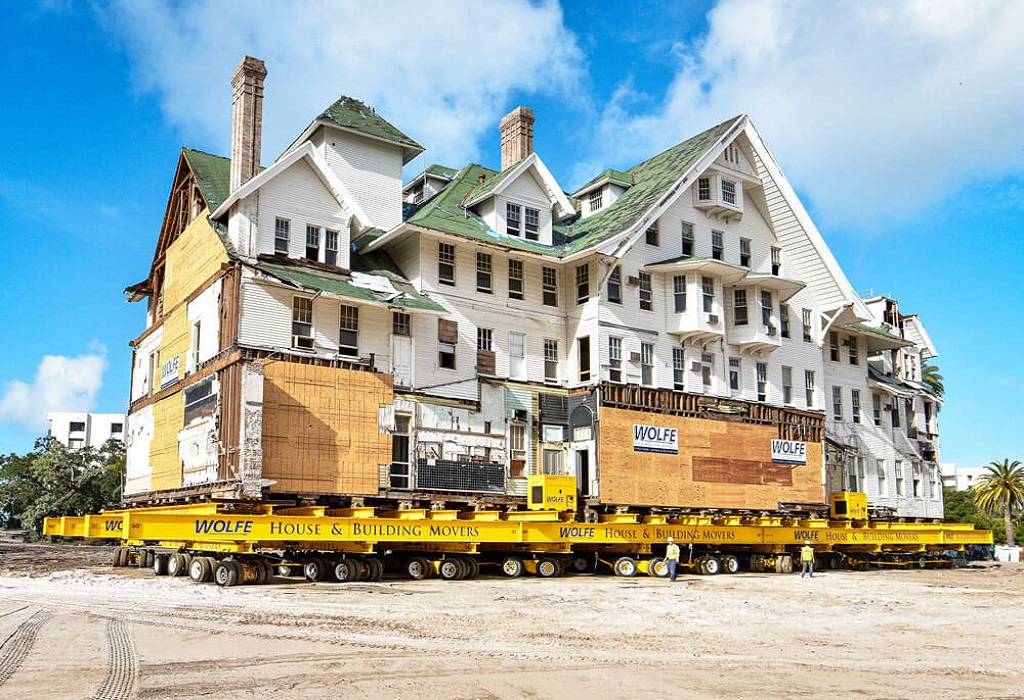
Structural moving is one option that deserves serious consideration. Instead of demolishing a building to clear a development site, experienced building movers can lift the structure, transport it, and place it on a new foundation elsewhere. This approach allows developers to continue using the original property while giving a historic building a chance to survive.
Although moving a large or fragile structure requires specialized equipment, engineering assessments, careful preparation, and a suitable destination, it may be a worthwhile investment when the building has significant historical value.
City governments can support these efforts in several ways. They can help identify potential relocation sites, coordinate permits, and connect preservation organizations with developers willing to cooperate. Depending on local resources and regulations, financial incentives, grants, or partnerships may also help cover relocation costs.
Historic societies can contribute research and documentation, while residents can raise awareness, volunteer, or help secure funding. Developers, meanwhile, can adjust site plans and schedules to make room for a relocation without abandoning the larger project.
When Community Comes First, Preservation is of Prime Importance
Moving a building will not solve every preservation dispute. Some structures are too fragile to transport safely, and relocation can separate a building from the landscape or neighborhood that gives it much of its meaning. For that reason, keeping a historic structure in place should remain the first option when practical. When that is not possible, however, moving it may be better than losing it entirely.
It’s in the best interests of the community that cities should not have to choose between progress and their past every time a development project begins. Early communication, flexible planning, and cooperation can create solutions that respect both needs. Historic building preservation and urban growth can work together when city officials, developers, preservation groups, and residents are willing to look beyond demolition and consider alternatives that give historic buildings a future.
For More Information About House Moving Companies and Building Jacking Please Visit: Wolfe House & Building Movers.