
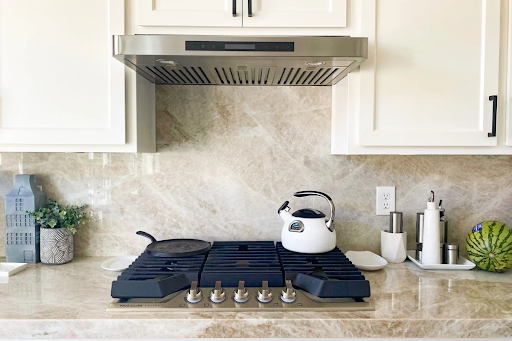
Cooking at home fills the air with steam, grease, and fine particles that linger long after the meal ends. A 36-inch exhaust hood is one of the most common ventilation sizes because it covers a wide cooktop while fitting standard cabinet layouts. Prices, airflow ratings, and construction vary a great deal, so a clear framework helps buyers compare options. This article breaks down mounting styles, airflow, materials, and budget tiers in plain terms.
Mounting Styles and Where They Fit
The mounting style determines how the hood sits in the kitchen and how it connects to ductwork. A 36 inch exhaust hood is available in wall-mount, island, under-cabinet, ceiling, and insert versions.
•Wall-mount hoods hang against a wall above the cooktop and often serve as a visual focal point.
•Island hoods suspend from the ceiling above a freestanding cooktop and need ducting overhead.
•Under-cabinet hoods tuck beneath upper cabinets, which saves space.
•Ceiling models sit flush with the ceiling for a minimal look.
•Insert hoods slide into a custom enclosure built by a cabinet maker.
A common sizing tip is to choose a hood about 6 inches wider than the cooktop, leaving roughly 3 inches of overhang on each side. That margin improves capture of smoke and steam that drifts outward.
Airflow and Blower Options
Airflow is measured in cubic feet per minute (CFM). Many models offer 600 CFM for everyday cooking, while dual-blower versions reach 1,200 CFM for frequent frying or high-heat gas ranges. Some under-cabinet designs advertise motors ranging from 1,000 to 2,000 CFM.
More power is useful only when the duct system can support it. Short, straight duct runs and properly sized ducts let a 36 inch exhaust hood reach its rated performance. High-capacity hoods may also require make-up air, because exhausting a lot of air from a tight home can pull fresh air back through unwanted openings.
Materials, Filters, and Controls
Stainless steel is the standard finish, and two grades appear most often. Grade 430 is common for indoor use, while grade 304 resists corrosion better and is often chosen for outdoor-rated hoods.
Filters matter for upkeep. Stainless steel baffle filters capture grease effectively, and many are dishwasher-safe, which makes monthly cleaning simple.
Controls range from basic push buttons to touch panels with LED or LCD displays, and from knob-and-switch layouts to multi-speed settings. These features affect daily convenience more than headline power figures.
Budget Tiers Explained
One useful way to compare a 36 inch exhaust hood is by price tier. The sample ranges below come from the source material and show how features tend to change.
| Tier | Approximate range | Typical features |
| Budget | $500 to $940 | 600 CFM or dual options, mesh or baffle filters, touch or push controls |
| Mid-tier | $1,170 to $1,620 | 1,200 CFM, adjustable chimneys, quieter operation, LED lighting |
| Premium | $1,400 to $2,450 | Higher durability, 304 steel options, variable speed, extra-deep designs |
A budget 36 inch exhaust hood covers most everyday cooking well, especially in smaller households. Mid-tier models add stronger airflow and refined finishes. Premium options focus on durability, deeper coverage, and design details.
Ducted or Ductless
A ducted 36 inch exhaust hood vents air outdoors and removes heat, moisture, and odours completely. Ductless hoods pass air through charcoal filters and return it to the room, which suits homes where ducting is impractical. Some models convert to ductless operation with a charcoal filter kit or recirculating kit, offering flexibility if renovation plans change.
Charcoal filters wear out and need regular replacement.
Installation and Planning Notes
Mounting height influences performance. Many guides suggest placing a 36 inch exhaust hood about 28 to 36 inches above the cooktop, depending on the model and fuel type. Chimney extensions help adapt wall-mount and island hoods to taller ceilings, and these parts can have special return rules, so confirm policies before ordering.
Before buying, measure the cooktop, ceiling height, and duct path.
Conclusion
The right choice depends on cooking style, kitchen layout, and available ducting. Buyers who compare mounting type, airflow, materials, and filters will find a 36 inch exhaust hood in every price tier. A helpful overview titled From Low-Cost to High-End: 36-Inch Range Hoods Offer Powerful Ventilation And Sleek Design shows how those features shift from entry-level to premium options. Careful measuring and realistic expectations make the final decision much easier.