
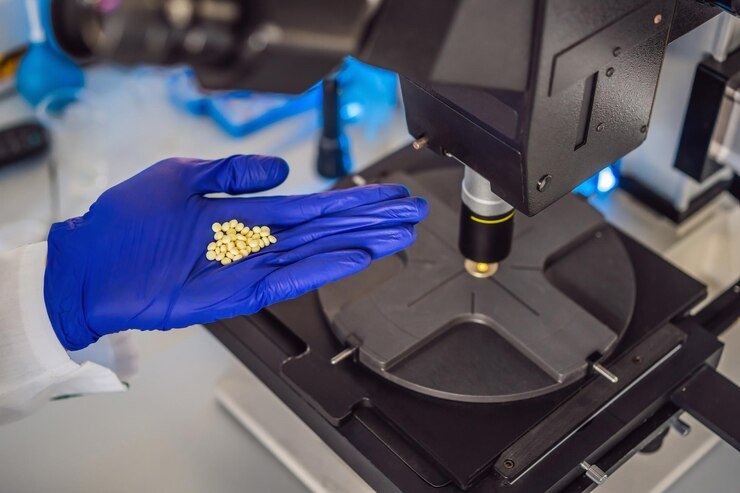
When you work with mixed antibody samples, selecting the right affinity purification material can make a significant difference in antibody recovery, sample purity, and experimental consistency. Your sample may contain immunoglobulins from different species, subclasses, or concentrations, making antibody capture more challenging than purification from a single, well-characterized source. Choosing suitable Protein G magnetic beads requires you to consider antibody-binding characteristics, sample composition, bead handling, and downstream analytical requirements.
With a structured selection process, you can identify a bead system that supports reliable antibody enrichment while reducing unnecessary sample loss and inconsistent purification results.
Understand the Composition of Your Antibody Sample
Before selecting a bead product, determine what your mixed sample contains. Your sample might include antibodies from multiple species, different immunoglobulin G (IgG) subclasses, serum proteins, cell culture components, or other biological contaminants.
Protein G binds the Fc region of many IgG molecules, but its affinity varies among species and subclasses. Therefore, you should not assume that every antibody in a mixed sample will bind equally well.
Start by identifying:
- The species from which your antibodies originate.
- The expected IgG subclasses in the sample.
- The approximate antibody concentration and total sample volume.
- The presence of non-antibody proteins or other interfering substances.
- The purity and recovery requirements of your downstream application.
This information helps you determine whether Protein G offers the binding profile you need or whether another affinity ligand may be more appropriate.
Evaluate Antibody-Binding Specificity
Binding specificity is one of the most important factors when choosing Protein G Magnetic Beads for mixed antibody samples. Protein G recognizes the Fc region of many IgG antibodies, making it useful when you need to enrich immunoglobulins from complex biological mixtures.
However, binding performance depends on the antibody’s species and subclass. Some immunoglobulins bind strongly, while others exhibit weaker interactions or limited compatibility.
If your sample contains antibodies from several species, review the manufacturer’s binding data for each relevant antibody type. Pay particular attention to the weakest-binding component because it may determine your overall recovery.
For demanding applications, perform a small-scale binding test before processing your entire sample. Compare the antibodies present in the starting material, unbound fraction, and recovered eluate to identify differences in capture efficiency.
Match Bead Capacity to Your Sample Load
Bead-binding capacity determines how much antibody a given quantity of beads can capture under specified conditions. If you add too few beads, some antibodies may remain in the supernatant. Using substantially more beads than necessary, however, may increase reagent consumption without delivering a meaningful improvement.
Estimate your total IgG load before choosing the bead quantity. Then compare this estimate with the product’s stated binding capacity and recommended operating conditions.
Remember that a manufacturer’s maximum capacity may not represent the effective capacity of your actual sample. Mixed antibodies, competing proteins, buffer composition, and incubation conditions can all affect binding performance.
For consistent results, test a practical range of bead quantities while keeping the sample volume, mixing conditions, and incubation time constant. Select the lowest quantity that provides the required recovery with acceptable reproducibility.
Choose the Right Magnetic Bead Matrix
The bead matrix affects handling, separation speed, and compatibility with your workflow. Magnetic beads allow you to isolate captured antibodies using a magnetic separator rather than repeated centrifugation or conventional column packing. This can simplify small-volume purification and immunoprecipitation workflows.
When comparing products, examine these features:
Particle characteristics: Confirm that the bead size and suspension properties suit your sample volume and mixing method.
Ligand attachment: Review whether the Protein G ligand is immobilized using a stable coupling method.
Background binding: Consider the matrix’s potential for nonspecific protein interactions.
Separation performance: Ensure the beads can be collected efficiently with your available magnetic rack or automated instrument.
Workflow compatibility: Check whether the product is intended for antibody purification, immunoprecipitation, or another specific application.
A well-matched matrix helps you maintain consistent handling while minimizing bead loss during washing and sample transfer.
Consider Buffer Compatibility and Elution Conditions
Buffer composition influences antibody binding, nonspecific interactions, and recovery. Before purchasing beads, check the manufacturer’s recommendations for binding pH, salt concentration, additives, and storage conditions.
For initial testing, use a compatible binding buffer and keep its composition consistent across experiments. If your sample contains high concentrations of salts, detergents, or other additives, evaluate whether dilution or buffer exchange is necessary.
Washing should remove unbound proteins without causing substantial antibody loss. Begin with the recommended wash buffer and number of washes, then adjust conditions according to your purity requirements.
Elution deserves particular attention when your recovered antibodies must retain their biological activity. Low-pH buffers are commonly used to disrupt Protein G–antibody interactions, but prolonged exposure can affect some antibodies. Collect the eluate promptly and neutralize it when appropriate for your protocol.
If your application requires native antibody activity, compare recovery and functionality after elution rather than relying on protein concentration alone.
Assess Purity and Recovery Across the Antibody Mixture
A high total protein yield does not necessarily mean that your purification is successful. One antibody may bind efficiently while another remains in the unbound fraction.
To assess performance, compare the starting sample, flow-through or unbound fraction, wash fractions, and final eluate. SDS-PAGE, immunoblotting, or antibody-specific assays can help you evaluate the composition of each fraction.
Track three important measurements:
Capture efficiency: How much of each target antibody binds to the beads?
Recovery: How much of each antibody is recovered after elution?
Purity: How much unwanted protein remains in the final preparation?
These measurements help you identify whether poor results arise from insufficient bead capacity, weak antibody affinity, excessive washing, or unsuitable elution conditions.
For mixed samples, evaluate individual antibody components whenever possible. Total IgG measurements alone may conceal selective losses.
Match the Beads to Your Downstream Application
Your final application should influence the bead selection process. For example, immunoprecipitation may prioritize efficient target capture and low background, whereas preparative antibody purification may require higher capacity, scalable handling, and reliable recovery.
If you plan to automate purification, confirm that the beads work with your instrument’s magnetic separation system and liquid-handling format. For manual workflows, consider how easily the beads resuspend and separate during repeated washing steps.
Review the manufacturer’s instructions for intended use, reuse limitations, and storage requirements before finalizing your selection.
For additional guidance, review the Protein G Magnetic Beads available from Lytic Solutions, LLC. Compare the product specifications with your antibody species, sample volume, and experimental goals before choosing a purification system.
Use a Small-Scale Test Before Full Processing
A preliminary experiment helps you avoid wasting valuable mixed antibody samples. Test a few bead quantities while maintaining consistent buffer conditions, incubation times, and mixing methods.
Measure the amount of each antibody in the starting material and recovered fractions. If binding is incomplete, investigate bead capacity, antibody compatibility, and sample conditions before simply increasing the bead quantity.
If purity is inadequate, assess whether additional washing or a different buffer is needed. If recovery is low, examine antibody binding and elution efficiency separately.
Document the conditions that produce the best balance of recovery, purity, and reproducibility. This creates a practical starting protocol that you can refine as sample composition changes.
For technical guidance on selecting a suitable purification approach, contact Lytic Solutions, LLC to discuss your application requirements.
Frequently Asked Questions
1. Why are Protein G Magnetic Beads suitable for mixed antibody samples?
Protein G Magnetic Beads bind the Fc region of many IgG antibodies, supporting antibody enrichment from complex mixtures. Their suitability depends on the species, IgG subclass, and binding affinity of each antibody.
2. How do you determine the correct bead quantity?
Estimate the total IgG concentration, compare it with the manufacturer’s stated binding capacity, and conduct a small-scale test. Confirm capture efficiency by measuring antibodies remaining in the unbound fraction.
3. Can Protein G Magnetic Beads capture antibodies from different species?
Yes, Protein G can capture IgG from multiple species, but binding strength varies. Check the compatibility data for every antibody species and subclass in your sample before beginning purification.
4. How can you improve antibody recovery from mixed samples?
Use compatible binding conditions, adequate bead capacity, consistent mixing, and controlled washing. Measure individual antibody recovery where possible to identify selective losses during binding or elution.
5. Are Protein G Magnetic Beads suitable for immunoprecipitation?
Many Protein G magnetic bead products are designed for immunoprecipitation, but not every product is suitable for this application. Check the manufacturer’s intended use and confirm compatibility with your experimental workflow.
Conclusion
Selecting Protein G Magnetic Beads for mixed antibody samples requires more than comparing binding capacity. You should evaluate antibody species and subclasses, matrix characteristics, buffer compatibility, purification goals, and individual antibody recovery. A small-scale validation experiment helps you identify the most suitable conditions before processing valuable samples.
By combining product specifications with measurable performance data, you can establish a reproducible purification workflow that supports reliable antibody capture, improved sample quality, and consistent downstream analysis.