
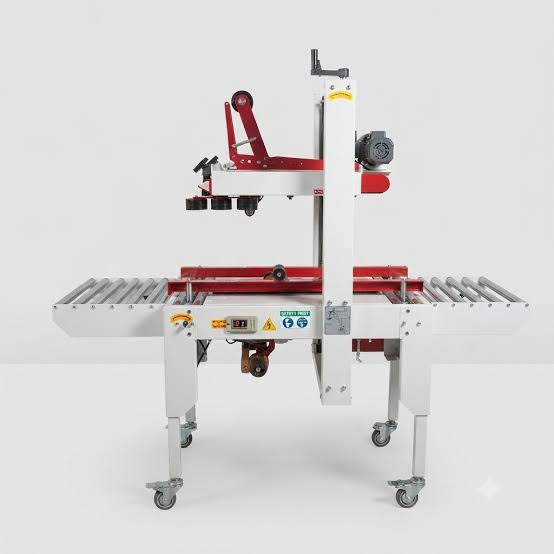
A carton sealer can work reliably for months before a small mechanical problem disrupts production. Tape may begin folding, cartons may move unevenly, or cutting blades may stop producing clean results. These symptoms often develop gradually, making early inspection more valuable than emergency repairs.
Understanding Durable packaging equipment and its replacement components helps maintenance teams recognize potential problems before they affect entire production lines. The important question is not simply which part has failed, but how that component interacts with the rest of the machine.
Inside a Carton Sealing System
Carton sealers perform several coordinated operations. Conveyor belts move boxes through the equipment, guides maintain alignment, and tape heads apply adhesive tape to the carton flaps.
Within the tape head, rollers maintain contact with the carton while cutting mechanisms separate the tape after application.
Springs, bearings, shafts, and brackets support these movements.
If one component becomes worn or incorrectly adjusted, the machine may continue operating while producing inconsistent results.
For facilities using Durable packaging components, understanding these relationships makes troubleshooting more systematic.
The Components Behind Consistent Sealing
Different components influence different stages of carton sealing.
Tape Heads
Tape heads control tape application and cutting. They must accommodate the intended tape width and match the machine configuration.
The Durable parts catalogue includes assemblies associated with CP-39, CP-40, and CT-9 configurations.
Cutting Blades
Blades separate adhesive tape during the sealing cycle. Worn or damaged cutting edges can contribute to incomplete cuts or irregular tape ends.
Pressure Rollers
Pressure rollers help maintain tape contact with carton surfaces. Surface wear, contamination, or mechanical damage may affect application consistency.
Conveyor Belts
Belts transport cartons through the machine. Tracking problems, surface deterioration, and incorrect tension can interfere with movement.
Springs and Bearings
Springs support controlled mechanical actions, while bearings help moving assemblies operate smoothly.
These components should be inspected according to manufacturer guidance rather than replaced solely because of age.
A Troubleshooting Scenario: Tape Will Not Cut Cleanly
Imagine a packaging line where cartons leave the sealer with partially attached tape.
The immediate assumption might be that the blade requires replacement.
However, several possibilities deserve investigation.
The blade may be dull, but the cutting mechanism could also be contaminated, incorrectly positioned, or affected by another worn component.
A technician should examine the complete assembly using the applicable service documentation.
For Durable packaging equipment, identifying the actual cause helps prevent unnecessary replacement purchases.
Maintenance must follow appropriate energy isolation procedures because tape heads contain sharp cutting elements and moving mechanisms.
How to Verify Replacement Compatibility
A replacement component should match more than the general appearance of the original.
Before ordering, confirm:
- Equipment manufacturer and model.
- Machine serial number.
- Original component reference.
- Relevant dimensions and mounting details.
- Required operating specifications.
- Documented equipment modifications.
For example, Durable catalogue listings distinguish standard cutting blades, heavy-duty blades, pressure rollers, and complete tape head assemblies.
Similar names do not guarantee interchangeability.
When information is incomplete, supplier confirmation can help prevent ordering errors.
Why Maintenance Records Matter
Maintenance records provide context that individual inspections cannot.
Recording recurring faults, component replacements, and operating conditions can reveal patterns.
If the same belt repeatedly wears along one edge, alignment may deserve investigation.
If cutting problems return shortly after blade replacement, another part of the mechanism may require attention.
Teams should document findings consistently and review them during scheduled maintenance.
This supports more informed decisions about repair priorities and spare inventory.
Conclusion: Look Beyond the Failed Component
Reliable carton sealing depends on the relationship between moving assemblies, product handling, and routine inspection. A replacement should solve the underlying problem rather than temporarily hide its symptoms. Before selecting a machine part, maintenance teams should verify compatibility, examine surrounding mechanisms, and review previous repair records. With Durable packaging systems, careful troubleshooting can turn an unexpected stoppage into an opportunity to improve maintenance practices. The most useful result is not merely restarting production, but understanding what will help the equipment operate consistently during the next shift.