
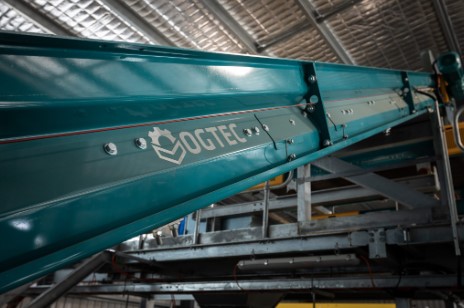
Efficient material separation is a fundamental part of modern recycling and waste processing. Mixed materials often contain different sizes, shapes, and compositions, making it difficult to process everything through a single method. Screening equipment helps overcome this challenge by separating material into more manageable fractions before further processing. Among the available technologies, a trommel screen uses a rotating cylindrical drum to classify materials according to size. This simple operating principle makes it useful across recycling, composting, construction, and waste-processing applications where consistent separation is essential.
How Trommel Screening Works
The basic operation relies on rotation, gravity, and appropriately sized openings. Material enters one end of a rotating cylindrical drum, where internal movement continuously tumbles and exposes it to the screening surface. Smaller particles pass through the openings, while larger pieces continue moving along the drum before exiting separately.
The size of the openings plays a major role in determining the resulting material fractions. Drum diameter, length, rotational speed, feed rate, and screening requirements can also influence overall performance. These factors need to be considered together because an unsuitable combination can reduce separation efficiency or affect throughput.
Why Rotating Screening Is Useful for Waste Processing
One advantage of rotary screening is its ability to handle materials that may be difficult for some flat screening systems. The tumbling action can help loosen clumps and expose individual particles to the screening surface. This is particularly useful when processing moist, organic, irregular, or mixed materials.
A vibrating screen, by comparison, uses vibration to move material across a screening deck and separate particles through openings. Both technologies can be effective, but their operating characteristics make them suitable for different processing conditions. Trommels are often advantageous when the feed contains sticky or damp material that could interfere with other screening methods.
Applications Across Recycling Industries
Screening equipment can support numerous material streams. In organic processing, it can separate compost, green waste, mulch, and other materials into different size ranges. In construction and demolition processing, screening can help classify mixed material and separate finer fractions from larger debris.
Municipal solid waste and commercial waste streams can also benefit from size-based separation. Other applications include co-mingled recyclables, paper and cardboard, glass, and various industrial materials. The appropriate configuration depends on the characteristics of the incoming material and the desired output.
This versatility is important because recycling facilities rarely process only one consistent material. Feed composition can change throughout the day, and equipment needs to maintain reliable separation despite these variations.
Factors to Consider When Selecting Screening Equipment
Choosing screening equipment should begin with the material rather than the machine alone. Operators should assess the expected throughput, moisture content, particle-size distribution, contamination levels, and required output fractions.
For a trommel screen, drum length and diameter, aperture size, rotational speed, and duty cycle can be selected according to these requirements. Cleaning mechanisms can also be useful where material buildup could interfere with screening performance. Brushes and drum scrapers, for example, can help reduce the need for frequent manual cleaning.
Maintenance requirements should also be considered. Equipment with straightforward mechanical designs can be easier to inspect and maintain, helping processing operations reduce unnecessary interruptions.
Supporting More Efficient Resource Recovery
Effective screening does more than separate material by size. It can prepare different fractions for subsequent stages such as sorting, shredding, crushing, washing, or further recovery. By creating more consistent material streams, screening can make downstream equipment easier to operate and improve the overall organisation of a processing line.
The broader goal is to recover as much useful material as possible while reducing unnecessary disposal. As recycling facilities process increasingly diverse waste streams, reliable separation technology will remain an important part of efficient resource recovery.
Conclusion
Selecting the right screening method depends on the material being processed, the required capacity, and the desired separation results. For facilities evaluating screening solutions, OGTEC can be considered alongside the specific technical requirements of the application, material stream, and processing objectives. A well-designed system can improve consistency while supporting smoother downstream processing.