
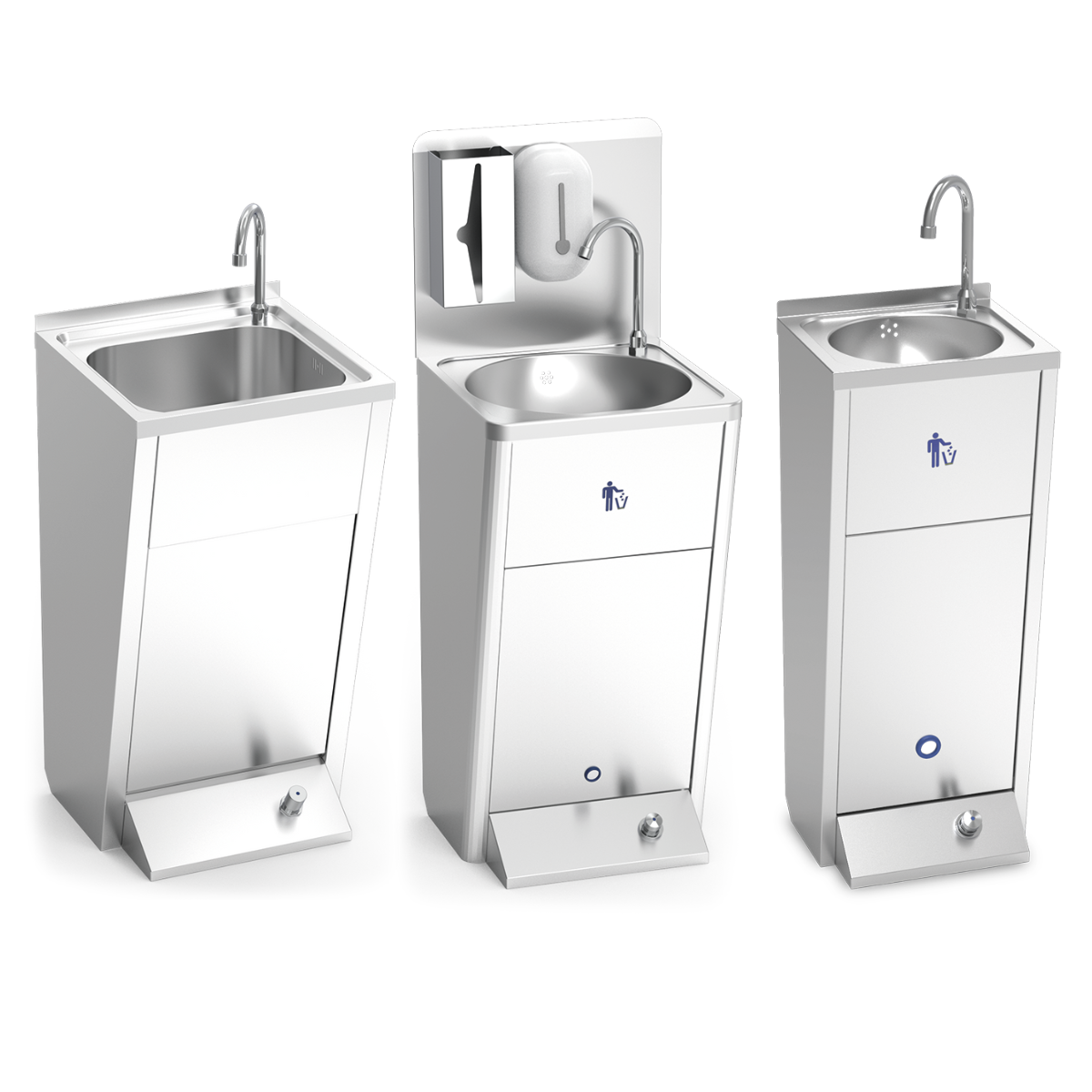
A standard tap requires touching a surface that other, possibly unwashed, hands have already touched – which quietly undermines the entire point of handwashing in the first place. A knee operated hand wash sink solves this directly, letting staff control water flow without their hands touching anything except soap and water itself.
How Knee Operation Actually Works
The mechanism is simple enough – a panel or lever positioned at knee height controls water flow, activated by a gentle push rather than requiring hands or fingers at all. This keeps the entire handwashing process genuinely hands-free from start to finish, since staff never need to touch a tap handle before or after washing.
Why This Matters More in Commercial Settings
In a busy commercial kitchen or food processing facility, a single tap gets touched by dozens of different hands across a shift. If even one of those hands hasn’t been properly washed, a standard manual tap becomes a point of cross-contamination that undoes the purpose of the wash station entirely. A genuinely hands-free hand washing station removes this risk structurally, rather than relying on staff remembering to wash the tap handle too.
Where Knee-Operated Sinks Make the Most Sense
A few settings benefit from this design more than others:
- Commercial kitchens, where raw meat, poultry, and seafood handling carry high contamination risk
- Food processing facilities, where cross-contamination between raw and finished product is a serious compliance concern
- Healthcare and clinical settings, where hand hygiene compliance is closely monitored
- Any high-traffic wash station where staff cycle through washing hands dozens of times a shift
Knee-Operated Hand Wash Sinks for Commercial Kitchens Specifically
A knee operated hand wash sink for commercial kitchens needs to hold up to far heavier daily use than a station in a lower-traffic setting. Kitchen environments involve constant task switching — raw prep, cooked food handling, and plating, and each transition ideally involves a proper hand wash. That means the mechanism itself needs to be built for hundreds of activations a day without sticking, loosening, or failing under repeated pressure.
What Separates a Well-Built Unit From a Poor One
A few things worth checking before choosing equipment:
- Smooth, reliable knee panel operation that doesn’t require excessive force to activate
- Consistent water flow and temperature regardless of how the unit is activated
- Basin depth sufficient to prevent splashing during regular use
- Durable construction that withstands hundreds of daily activations without mechanical failure
Why Stainless Steel Construction Matters Here
There’s a reason stainless steel keeps showing up as the material of choice here. It doesn’t corrode the way cheaper metals do, it doesn’t hold onto odour after months of use, and it shrugs off the constant sanitising a wash station gets put through every single day. Cheaper finishes might look fine on install day, but give it a year of that same treatment, and they start showing it – pitting, staining, a smell that won’t scrub out. Stainless steel just doesn’t get there as fast, which is really the whole argument for paying more upfront.
Supporting a Complete Hand Wash Setup
A knee-operated sink is most efficient when set up as part of a full system rather than as a standalone fixture. Soap dispensers, paper towel dispensers, and easily accessible hot water should all be present as part of an installation that works as it should and is not just presentable but a functional part of ensuring proper hand washes are being done by those using the sink.
A Genuinely Hands-Free Solution From Lioninox
Lioninox designs hands-free sanitation sinks that work on knee contact for industrial purposes. The sink is designed with a knee-operated panel that is sturdy and made of stainless steel to withstand heavy daily usage. It is really helpful in places such as kitchens where it is necessary to maintain hygiene. The station ensures that all users of the sink stay hygienic without letting forgetfulness get in the way.