
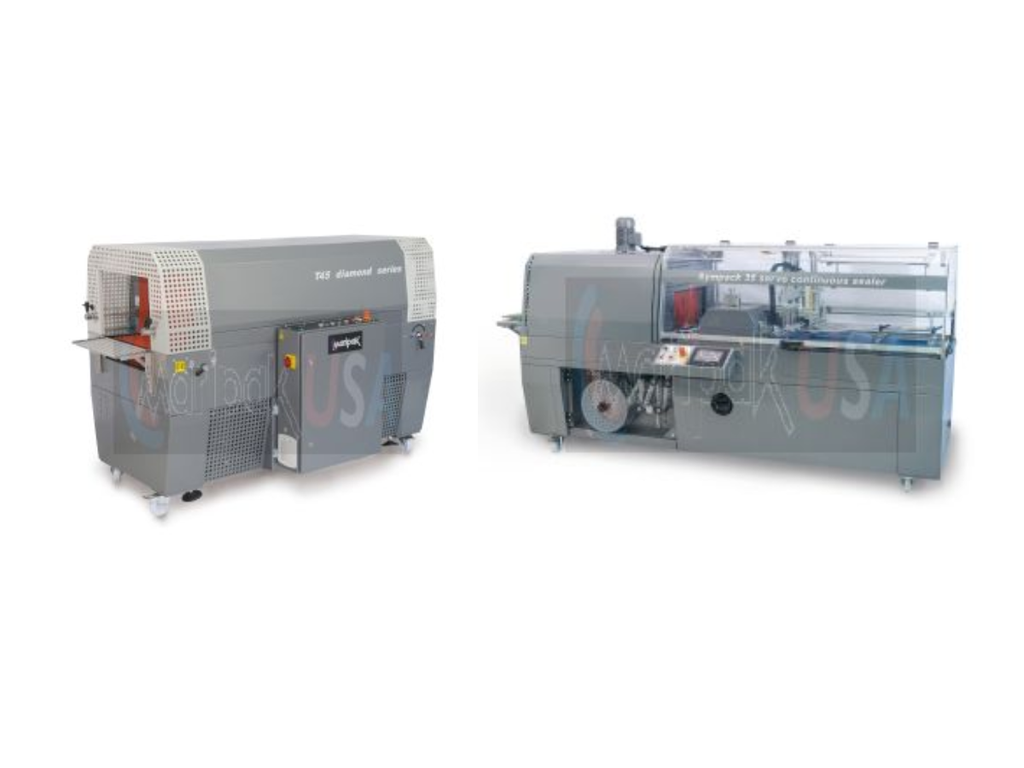
Modern packaging operations often involve much more than placing a product inside a package. Products must be positioned, grouped, wrapped, sealed, transferred, labeled, and sometimes prepared for additional processing. The equipment used for these steps can significantly influence throughput, consistency, labor requirements, and finished-package quality. Wrapping equipment can include conveyors, feeders, product groupers, film-handling systems, sealers, and other peripheral machines that work together as part of a packaging line. At Maripak USA, we recognize that understanding how these components interact is essential when planning an efficient industrial packaging operation.
What Is Wrapping Equipment?
Wrapping equipment refers to machinery designed to apply packaging material around products or product groups. Depending on the application, the system may use shrink film, polyethylene film, or other flexible packaging materials. Maripak’s Wrapping equipment portfolio includes manual, semi-automatic, and automatic packaging solutions designed for different production requirements.
What Are the Main Types of Wrapping Equipment?
Conveyors
Conveyors move products between different stages of a packaging line. They can provide controlled product spacing, maintain consistent flow, and reduce the need for manual transfer.
In an automated line, conveyors may connect feeders, sealers, shrink tunnels, labelers, and discharge areas. Proper conveyor configuration is particularly important when multiple machines need to operate at synchronized speeds.
Feeders
Feeders introduce products into the packaging process at a controlled rate. Depending on the application, they can help orient products, maintain spacing, or deliver individual items to another machine.
Automated feeding becomes increasingly useful as production volume increases because inconsistent manual feeding can create interruptions and affect overall line efficiency.
Product Groupers and Collators
Some products need to be packaged individually, while others must be grouped into multipacks or bundles. Grouping equipment arranges products into a predetermined configuration before wrapping.
This can be particularly useful for retail multipacks, industrial bundles, and products that need to remain together during transportation.
Heat Shrink Tunnels
A heat shrink tunnel is often used after a product has been enclosed and sealed in shrink film. Controlled heat causes the film to contract around the product.
Tunnel performance depends on factors such as temperature, airflow, conveyor speed, film characteristics, and product dimensions. Modern tunnels may use different airflow configurations and insulation designs to provide consistent shrinking while managing energy consumption.
How Does Automation Affect Packaging Efficiency?
Automation can reduce repetitive manual tasks and create more consistent product movement. However, adding automation does not automatically guarantee better performance.
TMaripak’s broader equipment range includes L-sealers, side sealers, industrial polyethylene wrapping systems, heat tunnels, and peripheral equipment, allowing packaging lines to be configured according to different production needs.
Where Is Wrapping Equipment Used?
Wrapping systems can serve many industries because equipment can be configured around different products and production requirements. Applications can include retail products, food-related packaging, commercial laundry, textiles, insulation materials, industrial goods, and multipack products. Wrapping equipment encompasses a broad range of machines that can work together to move, group, wrap, seal, shrink, label, and discharge products efficiently. Conveyors and peripheral systems are especially important because they connect individual packaging stages and help create a coordinated production flow.
Conclusion
When evaluating a packaging line, businesses should consider product dimensions, film type, production volume, automation level, facility space, maintenance requirements, and future expansion. At Maripak USA, we understand that effective packaging depends on how individual components work together rather than on one machine alone. By selecting compatible equipment and maintaining proper synchronization between each stage, manufacturers can build packaging processes that are more consistent, scalable, and suited to their operational requirements.