
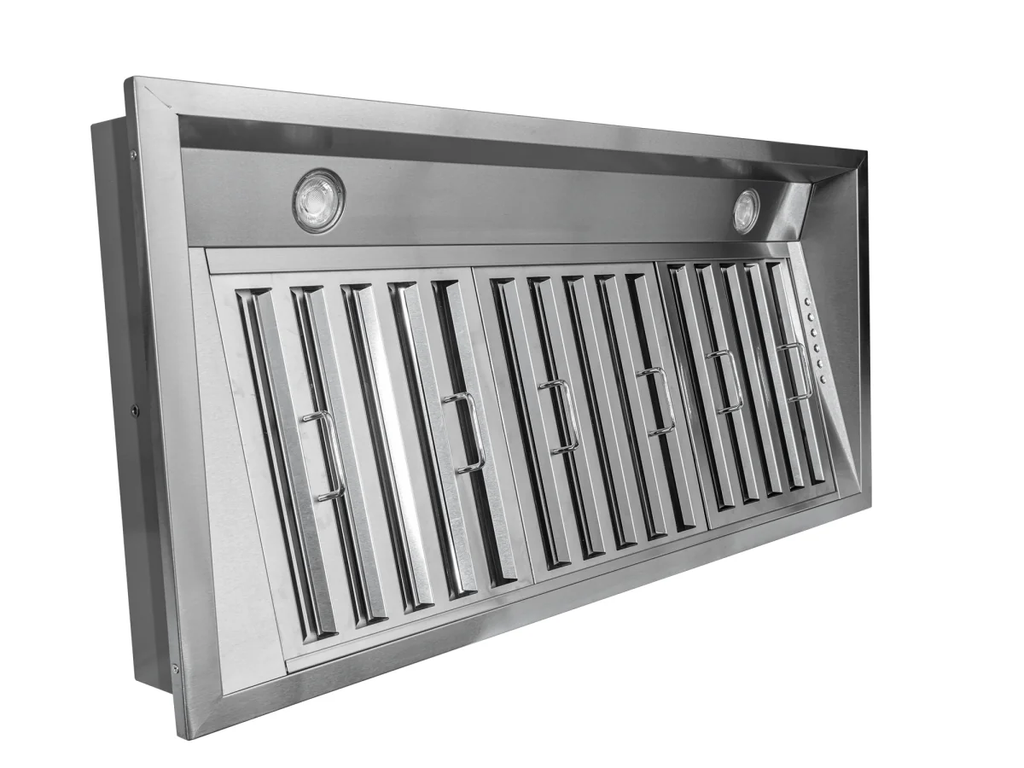
A kitchen range hood does more than remove visible smoke. It helps exhaust cooking odors, grease, moisture, heat, and airborne contaminants from the cooking area. Choosing the right hood therefore requires more than matching the appliance to the available cabinet space. A 30 inch vented range hood must also be evaluated according to airflow capacity, duct design, installation height, cooking habits, and the type of range beneath it.
Vented or ducted hoods exhaust air outside the home rather than simply filtering and recirculating it. Manufacturer installation guidance commonly recommends keeping duct routes short and straight because excessive bends can reduce airflow efficiency and increase noise.
What Is a 30 Inch Vented Range Hood?
A 30 inch vented range hood is a ventilation hood designed for installation above a cooking surface approximately 30 inches wide, with an exhaust system that carries air outside the building.
The 30-inch measurement generally refers to the hood’s nominal width. However, homeowners should not assume that a 30-inch hood is automatically the correct size for every 30-inch cooktop. The hood’s depth, mounting position, cooking equipment, and manufacturer’s specifications also influence performance.
A ducted configuration normally requires a planned route through a wall or roof. Unlike a recirculating hood, it does not return filtered air to the kitchen.
Why Choose a Vented Range Hood?
A ducted hood can remove cooking air from the home instead of relying exclusively on filters. This makes external ventilation particularly useful for cooking methods that generate substantial heat, grease, smoke, or steam.
Properly installed ductwork is important. Fisher & Paykel’s installation guidance, for example, recommends exhausting air outside and using the shortest, straightest duct route possible. It also warns against exhausting air into walls, ceilings, attics, crawl spaces, or garages.
For households that frequently fry, grill, sear, or cook at high temperatures, effective ventilation can be especially valuable.
How Much CFM Does a 30 Inch Range Hood Need?
CFM, or cubic feet per minute, measures the volume of air a hood can move. A higher CFM rating can provide greater exhaust capacity, but choosing the highest possible number is not always the best approach.
The appropriate airflow depends on factors such as:
- Type of cooking
- Fuel source
- Burner or range output
- Hood design
- Duct length
- Number of bends
- Local building requirements
Some professional-style cooking equipment can require substantially more ventilation than a standard electric cooktop. Older manufacturer guidance, for example, has recommended around 600 CFM for certain 30-inch ranges, illustrating why the cooking appliance’s specifications should be considered alongside hood capacity.
Local regulations may also impose requirements for make-up air when ventilation systems exceed specified airflow levels.
What Duct Size Is Appropriate?
Duct size should correspond to the hood’s specifications and airflow requirements. Reducing the duct below the manufacturer’s recommended size can restrict ventilation performance.
Broan notes that most range hoods require metal ductwork and that more powerful models may require larger ducts, potentially reaching 10 inches in diameter. It also warns that reducing duct size can restrict ventilator performance.
The duct route matters just as much as its diameter. A short, relatively straight route generally creates fewer airflow restrictions than one containing numerous elbows and transitions.
For this reason, duct planning should ideally happen before installation rather than after the hood has already been selected.
How High Should a Range Hood Be Mounted?
Mounting height affects ventilation performance and safety. The exact distance should always follow the hood and cooking appliance manufacturer’s instructions.
Different products have different recommended clearances. For example, some manufacturers specify ranges around the mid-to-high 20-inch area, while professional-style equipment may require different positioning.
Installing a hood too high can make it less effective at capturing cooking vapors. Installing it too low can create clearance and heat-related concerns.
Before installation, homeowners should compare the hood’s instructions with the range or cooktop manufacturer’s required clearance.
Does Hood Width Need to Match the Cooking Surface?
Width is an important consideration, but it is not the only measurement.
A hood should provide sufficient coverage over the cooking surface so that rising cooking vapors can be captured effectively. Some installation guidance recommends that the hood extend beyond the cooking surface, while specific manufacturers may provide different requirements based on hood design.
This is why buyers should compare:
- Hood width
- Hood depth
- Cooktop width
- Burner layout
- Mounting height
- Cabinet dimensions
- Manufacturer clearance requirements
A larger cooking surface may require a wider hood. For example, someone moving from a 30-inch range to a wider cooking appliance may need to consider a larger ventilation system rather than simply keeping the existing hood.
What Is the Difference Between a 30-Inch and 36-Inch Hood?
The primary difference is width, but the choice should reflect the cooking equipment and available installation space.
A 30-inch model is commonly suited to a standard 30-inch cooking surface when the manufacturer’s specifications support that configuration. A wider hood can provide additional capture area when used with a wider range or when the installation design calls for more coverage.
For comparison, a 36 in stove hood is wider and may be appropriate for larger cooking surfaces or kitchens where additional capture coverage is desired. However, homeowners should always check the manufacturer’s sizing and clearance recommendations rather than selecting a hood based solely on width.
Why Does Duct Design Matter?
Even a powerful hood can perform poorly if its duct system is restrictive.
Efficient duct design generally involves:
- A short route
- Minimal bends
- Properly sized ductwork
- Smooth interior surfaces
- Securely sealed connections
- An appropriate exterior termination
Vent-A-Hood specifically recommends smooth-walled ductwork and warns that corrugated or flexible ducting can restrict airflow. It also recommends keeping the duct route short and straight and using an appropriately sized exterior opening.
These factors can affect both ventilation effectiveness and operating noise.
How Should You Maintain a Vented Range Hood?
Regular maintenance helps keep ventilation equipment functioning effectively.
Grease filters should be cleaned according to the manufacturer’s instructions. Accumulated grease can interfere with airflow and create an avoidable fire concern.
Homeowners should also periodically inspect accessible duct connections, filters, dampers, and exterior termination points. If airflow noticeably decreases, unusual noise develops, or the damper does not operate correctly, professional inspection may be appropriate.
Cleaning schedules depend on cooking frequency and the type of food prepared. Heavy cooking generally requires more frequent filter cleaning than occasional light cooking.
What Should You Check Before Buying?
Before purchasing a 30 inch vented range hood, consider the following checklist:
- Cooking surface: Confirm the hood is appropriate for the width and type of range.
- CFM: Match airflow capacity to cooking equipment and usage.
- Duct size: Follow the manufacturer’s specified duct diameter.
- Duct route: Plan the shortest practical path outdoors.
- Mounting height: Follow the hood and range manufacturer’s clearance requirements.
- Noise: Compare sound ratings if quiet operation is important.
- Filters: Check the filter design and cleaning requirements.
- Electrical requirements: Confirm the installation matches the appliance specifications.
- Local codes: Check applicable building and ventilation requirements.
- Installation support: Use a qualified professional where electrical or structural work is required.
Conclusion
A 30 inch vented range hood can provide effective kitchen ventilation when its airflow, dimensions, ductwork, and installation position are properly matched to the cooking equipment. The most important consideration is not simply the hood’s appearance or maximum CFM rating, but how well the complete ventilation system works together. For households comparing standard and wider ventilation options, a 36 in stove hood may provide greater coverage for larger cooking surfaces, while a 30-inch model can be suitable for many standard ranges when the specifications align. Careful measurement and attention to manufacturer requirements are ultimately the best ways to select an effective kitchen ventilation system.