
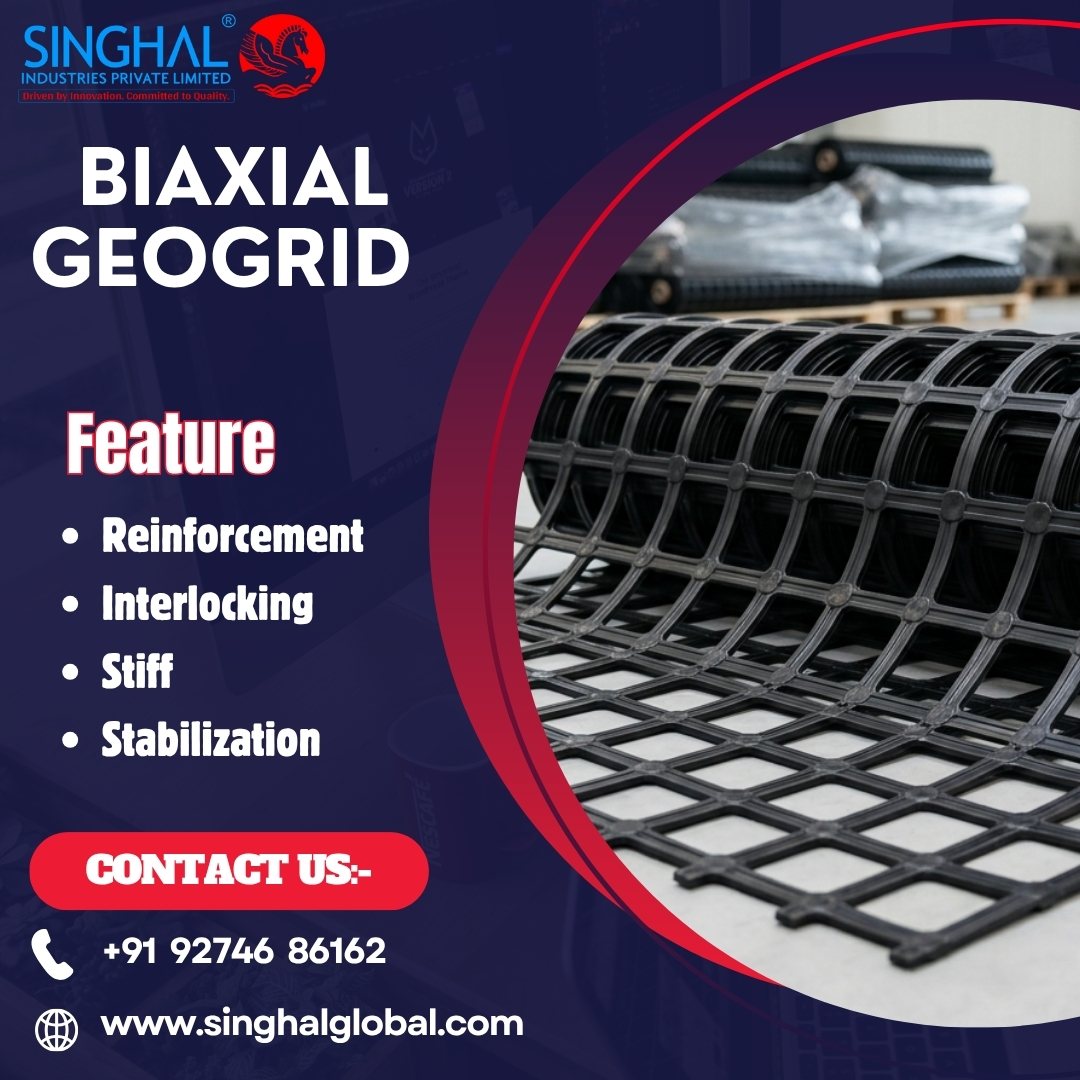
Currently, biaxial geogrids represent one of the main types of geosynthetic materials being applied in modern civil engineering projects. With an integrated network of ribs and apertures, these geogrids provide reinforcement both along the longitudinal and transversal axes. Therefore, it is possible to provide equal distribution of loads and ensure the stability of soil even in places that are difficult to reach. Today, biaxial geogrids are widely employed in road, railway, retaining wall, embankment, and other constructions due to their efficiency. Contemporary infrastructure construction projects require efficient, reliable, and sustainable engineering solutions, and the use of biaxial geogrids enables civil engineers to do this. Previously, civil engineers had to use thick aggregate layers to reinforce soil. This method worked well but required significant resources. Biaxial geogrids allow for optimizing the interrelation between soil and aggregate layers effectively
Improved Structural Design Ensures Soil Stabilization
It is the improved engineering design that ensures the success of the biaxial geogrid technology. Being mostly manufactured from high molecular weight polymers like polypropylene, these geogrids establish an efficient interlocking system with the surrounding aggregate material. The geogrid transfers the applied load to the larger surface area, thus reducing the pressure on poor quality subgrade soils. It increases the load-bearing capacity without increasing settlement and deformation. In comparison with other reinforcement technologies which ensure strength only in one direction, the biaxial geogrids provide equal strength in both directions. This ensures the efficiency of the material in case of multidirectional loads. Some people think that soil stabilization is a simple addition of more stones or compaction of the earth. Weak soils need structural reinforcement instead of material, but biaxial geogrids offer the opportunity to reinforce the composite layer that will be able to take heavy loads.
Road Building Projects See Improvements from Better Performance
The other use of biaxial geogrids is in road building. Traffic keeps on using the roads and highways, and there will be rutting and cracking on the pavements. Using biaxial geogrids will help in reinforcing the aggregate sub-base, which helps in improving load distribution and reduce lateral movement of materials. This will make sure that the life of the pavement is increased and it will also decrease maintenance. One of the things contractors love about the use of biaxial geogrids in roads is the reduction in the requirement for aggregate. This makes sure that the costs of projects are decreased. It may surprise you to hear that a polymer material can improve the performance of roads, but engineering studies have shown that it can do just that. The other advantage of biaxial geogrids in roads is improved pavement stability and road safety.
Railway Infrastructure Becomes More Stable
The railway needs a highly stable base that can withstand very large loads. The least amount of settlement may influence the track profile. Biaxial geogrids reinforce ballast and subgrade layers to become more stable. This makes the use of such reinforcement systems an excellent way to ensure track geometry while keeping maintenance works low. Geogrids are becoming increasingly popular in the railway industry since there are both technical and economical benefits in their application. Moreover, biaxial geogrids are applied in such critical locations as airports, ports, container yards, and logistics facilities where high load-carrying capacities are needed. Such environments demand very reliable foundation reinforcement systems that will operate in a stressed mode all the time.
Retaining Walls and Embankments Get Reinforced
In cases where retaining walls, slopes, and embankments are required to have extra support for holding up against soil pressure, they usually need some kind of reinforcement. Geogrids serve as excellent materials for improving the interaction of soil layers and load distribution in such structures, creating mechanically stabilized earth structures that can withstand considerable loads without posing any threat to safety. The reason why engineers prefer using geogrids instead of other materials for constructing retaining walls is because they provide an affordable way of building such constructions. Besides being flexible enough to work under different site conditions, they make possible building on those sites which were initially considered inappropriate.
Reliable Supply Chains Facilitate Infrastructure Development
The growing need for geosynthetics has generated an enormous demand for good-quality geogrids. A reliable Biaxial Geogrid Exporter India is a key player in the development of infrastructure projects owing to its provision of reliable geogrids meeting stringent engineering standards. Good suppliers ensure that geogrids have uniform tensile strength, stability, and durability. Additionally, they give their clients technical advice on the right geogrid to use. The importance of reliable supply chains is seen in the fact that infrastructure projects are usually time bound and thus require reliable supplies.
Export Prospects Abroad Widens Market Scope
India has proved to be one of the leading producers of geosynthetics, including biaxial geogrids. There is an established Biaxial Geogrid Exporter India, which offers its goods to infrastructure construction projects in Asia, Africa, Europe, and the Middle East. The growing demand for these goods is connected with the increased recognition of the geogrid technology as an efficient method for soil reinforcement and stabilization. Exporters of the products pay special attention to using advanced manufacturing technologies and developing new innovative products, which results in high quality. That is why Indian manufacturers have proved themselves on the global market.
Innovation and Sustainability Drive Future Progress
The future of the biaxial geogrid sector is tied to innovation and sustainability. Innovations include the creation of better materials, designs, and manufacturing processes to increase performance while being environmentally friendly. The biaxial geogrid helps build sustainable structures through the reduction of aggregate usage, minimal transportation needs, and extension of the lifespan of infrastructure structures. It forms a strange paradox since a synthetic material can be used to protect natural resources.
Conclusion
You need to find a reliable biaxial geogrid supplier India and a good Biaxial Geogrid Supplier India in order to purchase biaxial geogrids that would be able to satisfy your demands. The role of biaxial geogrids in modern constructions has been very significant since it allows reinforcing soils, loading distribution, and structure stability. There are many applications of biaxial geogrids for road construction, railroad, retaining walls, embankment construction, etc.
Frequently Asked Questions (FAQs)
Q1: What is the use of a biaxial geogrid ?
Applications of biaxial geogrid include soil stabilization, road constructions, reinforcing railway tracks, retaining walls, embankments, and ground improvement projects.
Q2: How biaxial geogrid improves the performance of the soil ?
It helps to improve the interlocking capacity of soil and aggregate and also improves load transfer and reduces lateral movement of loads.
Q3: Can we use biaxial geogrid in road construction ?
Yes, we can, as it improves the performance of the pavement, prevents rut formation and also increases the life of roads and highways.
Q4: Can biaxial geogrids reduce construction cost ?
Yes, it reduces the requirement of aggregate, maintenance cost, and enhances the performance of infrastructure over the long period.
Q5: Who is the largest exporter of Biaxial Geogrid ?
Singhal Industries Pvt Ltd is known to be one of the best exporters of biaxial geogrid in India.