
In today’s connected world, fiber optic networks are the backbone of high-speed internet, business communications, cloud services, and data centers. They provide faster speeds, higher bandwidth, and greater reliability than traditional copper cables. However, like any network infrastructure, fiber optic systems can experience problems that affect performance and connectivity.
Understanding how fiber optic troubleshooting works is essential for maintaining a stable network. Whether you are managing an office network, a commercial facility, or a large enterprise, identifying and resolving fiber optic issues quickly can reduce downtime and improve overall efficiency.
At Ring and Ping, Inc., we specialize in diagnosing, repairing, installing, testing, and maintaining fiber optic networks. Our experienced technicians use industry-standard tools and proven methods to ensure every fiber connection performs at its best.
Common Fiber Optic Problems
Fiber optic cables are designed to be durable, but they are still vulnerable to damage and environmental conditions. Some of the most common issues include:
Broken or Damaged Fiber Cables
Physical damage is one of the leading causes of fiber optic failures. Construction work, accidental cuts, excessive pulling during installation, or improper cable handling can break the fiber strands inside the cable.
When this happens, data transmission may slow down significantly or stop completely.
Dirty Connectors
Even a tiny amount of dust, dirt, or oil on a fiber connector can interfere with the light signal. Dirty connectors often cause signal loss, increased attenuation, or intermittent network performance.
Cleaning connectors with professional fiber optic cleaning tools before making a connection is one of the simplest ways to prevent future issues.
Excessive Signal Loss
Signal loss, also known as attenuation, occurs when too much light is lost while traveling through the fiber cable. This may result from damaged cables, poor-quality connectors, incorrect splicing, or long cable distances.
High attenuation can reduce network speed and cause communication failures.
Faulty Splices
Fiber optic splicing joins two fiber cables together. If the splice is poorly completed, light cannot pass efficiently through the connection, leading to increased signal loss.
Professional fusion splicing minimizes these losses and improves long-term network reliability.
Bend Radius Problems
Fiber optic cables have a minimum bend radius. Bending the cable too tightly can restrict the flow of light and reduce signal strength. Proper cable management during installation helps avoid this issue.
How Fiber Optic Troubleshooting Is Performed
Successful troubleshooting follows a systematic process. Instead of replacing equipment immediately, technicians first identify the actual source of the problem.
Step 1: Visual Inspection
The first step involves inspecting cables, connectors, patch panels, and network equipment for visible damage.
Technicians check for:
- Broken cables
- Loose connections
- Sharp bends
- Damaged connectors
- Signs of moisture or contamination
Many network problems can be identified during this initial inspection.
Step 2: Connector Cleaning
Before performing advanced testing, technicians clean all fiber connectors using approved cleaning tools. Since microscopic dust particles can affect signal quality, proper cleaning is an important part of every troubleshooting process.
Step 3: Signal Testing
Fiber optic testing equipment measures the strength and quality of the optical signal. This helps determine whether the cable is operating within acceptable performance levels.
Testing can identify:
- High signal loss
- Weak optical power
- Faulty connectors
- Poor splice quality
Step 4: Fault Location
When the source of the problem is not immediately visible, technicians use specialized equipment to locate the exact point of failure. This reduces repair time and prevents unnecessary cable replacement.
Step 5: Repair and Verification
After repairing the damaged section, technicians perform another round of testing to verify that the network is operating correctly and meets performance standards.
The Importance of Professional Fiber Testing
Many fiber optic problems cannot be seen with the naked eye. Professional testing allows technicians to identify hidden issues before they become major network failures.
Routine testing provides several benefits:
- Improved network reliability
- Faster troubleshooting
- Reduced downtime
- Better signal performance
- Longer equipment lifespan
- Lower maintenance costs
Regular inspections and preventive maintenance also help organizations avoid unexpected service interruptions.
Fiber Installation Matters
Proper installation is the foundation of a reliable fiber optic network. Even the highest-quality cable can experience problems if it is installed incorrectly.
Professional installation includes:
- Proper cable routing
- Correct bend radius management
- Secure cable protection
- Accurate fiber termination
- High-quality fusion splicing
- Complete performance testing
A professionally installed network performs better and requires fewer repairs over time.
Network Cabling Solutions
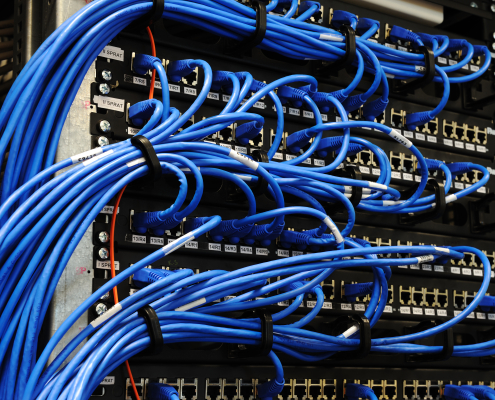
Modern businesses rely on structured network cabling to support internet access, servers, VoIP systems, security cameras, wireless access points, and cloud applications.
A well-designed cabling system makes troubleshooting easier, simplifies future upgrades, and improves overall network performance.
At Ring and Ping, Inc., we provide complete network cabling solutions that are designed to meet the needs of businesses of all sizes.
Preventive Maintenance Saves Time and Money
Waiting until a network fails can be expensive. Preventive maintenance helps identify small issues before they become major problems.
Maintenance services typically include:
- Fiber inspection
- Connector cleaning
- Performance testing
- Cable organization
- Equipment verification
- Network documentation
Regular maintenance reduces emergency repairs and keeps networks operating efficiently.
Why Choose Ring and Ping, Inc.?
Choosing the right fiber optic service provider makes a significant difference in network performance and long-term reliability.
Ring and Ping, Inc. is committed to delivering dependable fiber optic solutions with a focus on quality workmanship and customer satisfaction. Our experienced technicians work with commercial, industrial, and enterprise clients to provide professional services tailored to each project’s requirements.
Our services include:
- Fiber optic installation
- Fiber optic troubleshooting
- Fiber testing and maintenance
- Network cabling
- Fiber repairs
- Preventive maintenance
- Network performance optimization
We understand that every minute of network downtime affects productivity. That’s why we respond quickly, diagnose problems accurately, and provide effective solutions that restore reliable connectivity.
Conclusion
Fiber optic technology delivers exceptional speed and reliability, but maintaining peak performance requires proper installation, routine testing, and expert troubleshooting. Identifying issues early helps reduce downtime, improve network efficiency, and extend the life of your infrastructure.
Whether you need a new fiber optic installation, professional testing, ongoing maintenance, network cabling, or expert troubleshooting, Ring and Ping, Inc. has the knowledge and experience to help. Our team is dedicated to providing dependable solutions that keep your network running smoothly, allowing your business to stay connected and productive.