
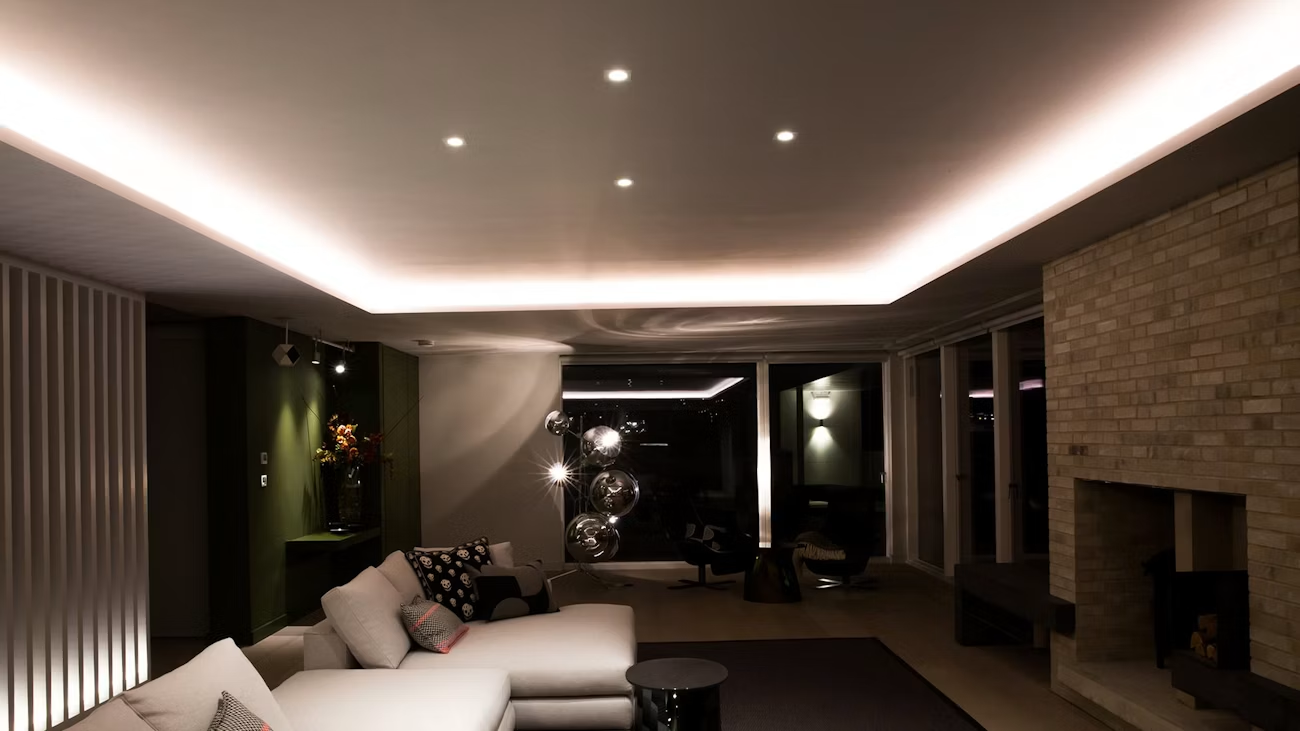
Walk into any well-lit room and you probably won’t notice the lighting at all — you’ll just feel like the space works. Walk into a badly lit one, and you’ll know immediately, even if you can’t say why. More often than not, the culprit is downlight placement. Fixtures dropped into a grid without much thought create harsh pools of light in some spots and dead zones in others. This matters whether you’re planning a living room renovation or working through IHG Hotel lighting standards across dozens of guest rooms. And it’s worth thinking about even around the holidays, since your permanent fixtures need to play nicely with whatever holiday lights you’re stringing up each December. Here’s how to actually plan it out.
Why Placement Is the Whole Game
Downlights carry a lot of the weight in most rooms, so getting the spacing wrong shows. Too tight, and you get a runway effect down hallways or a harsh, overlift feel. Too sparse, and you’re left with shadowy gaps between fixtures that make the room feel unfinished. The fix isn’t more lights — it’s smarter placement.
A Practical Planning Process
Start With What the Room Actually Does
Before you touch a fixture layout, figure out what each part of the room is for:
- Task zones — kitchen counters, desks, bathroom vanities — need direct, focused light
- Ambient zones — living rooms, hotel lobbies — do better with softer, wider spread
- Accent zones — artwork, architectural details — want a narrow beam aimed with intent
Use the Height-to-Spacing Rule (Loosely)
A decent starting point is spacing your downlights at about 1 to 1.5 times the ceiling height. So an 8-foot ceiling generally wants fixtures roughly 8–10 feet apart. It’s not a law, but it keeps you from ending up with hot spots and dark patches next to each other.
Don’t Just Grid the Ceiling
This is probably the most common mistake: laying out downlights in a perfect grid without looking at where the furniture actually sits. Plan around your sofa, your dining table, the wall you’re hanging art on — not the room’s bare geometry.
Layer In Other Light Sources
Downlights work best as part of a team, not a solo act. Pair them with sconces, table lamps, and — this time of year especially — holiday lights along a mantel or staircase. That layering softens the shadows downlights tend to create on their own and gives a room more depth.
Think About Beam Angle and Color Temperature
- Narrow (15°–25°): good for spotlighting artwork or architectural features
- Medium (25°–40°): works for general ambient lighting
- Wide (40°+): better for functional, open spaces like kitchens
Color temperature makes a bigger difference than people expect. Warmer tones, around 2700K–3000K, tend to feel more residential and comfortable — it’s part of why IHG Hotel lighting guidelines lean warm in guest rooms and lobbies rather than going with something colder and more clinical.
A Few Things That Actually Help
- Sketch your layout on graph paper or a layout app before you commit to drilling holes
- Put everything on dimmers — you’ll want different brightness for morning versus evening
- In hotels, consistency across rooms matters almost as much as the design itself; guests notice when things feel uniform
- During the holidays, dim your downlights a bit so your holiday lights actually get to shine
Mistakes Worth Avoiding
- Spacing fixtures too close and creating an unintentional spotlight effect
- Laying out lights based on the ceiling instead of the furniture below it
- Sticking to one color temperature throughout, which flattens the whole room
- Skipping dimmers, which cost you flexibility down the line
Conclusion
Good downlight placement isn’t about cramming more fixtures into the ceiling — it’s about being deliberate. Figure out what each zone is for, respect reasonable spacing, layer in other light sources, and pick beam angles and color temperatures that match the mood you’re going for. Do that well, whether you’re lighting a home, working through IHG Hotel lighting standards, or just making sure your holiday lights get their moment, and the result won’t look like “lighting design” at all. It’ll just look right.