
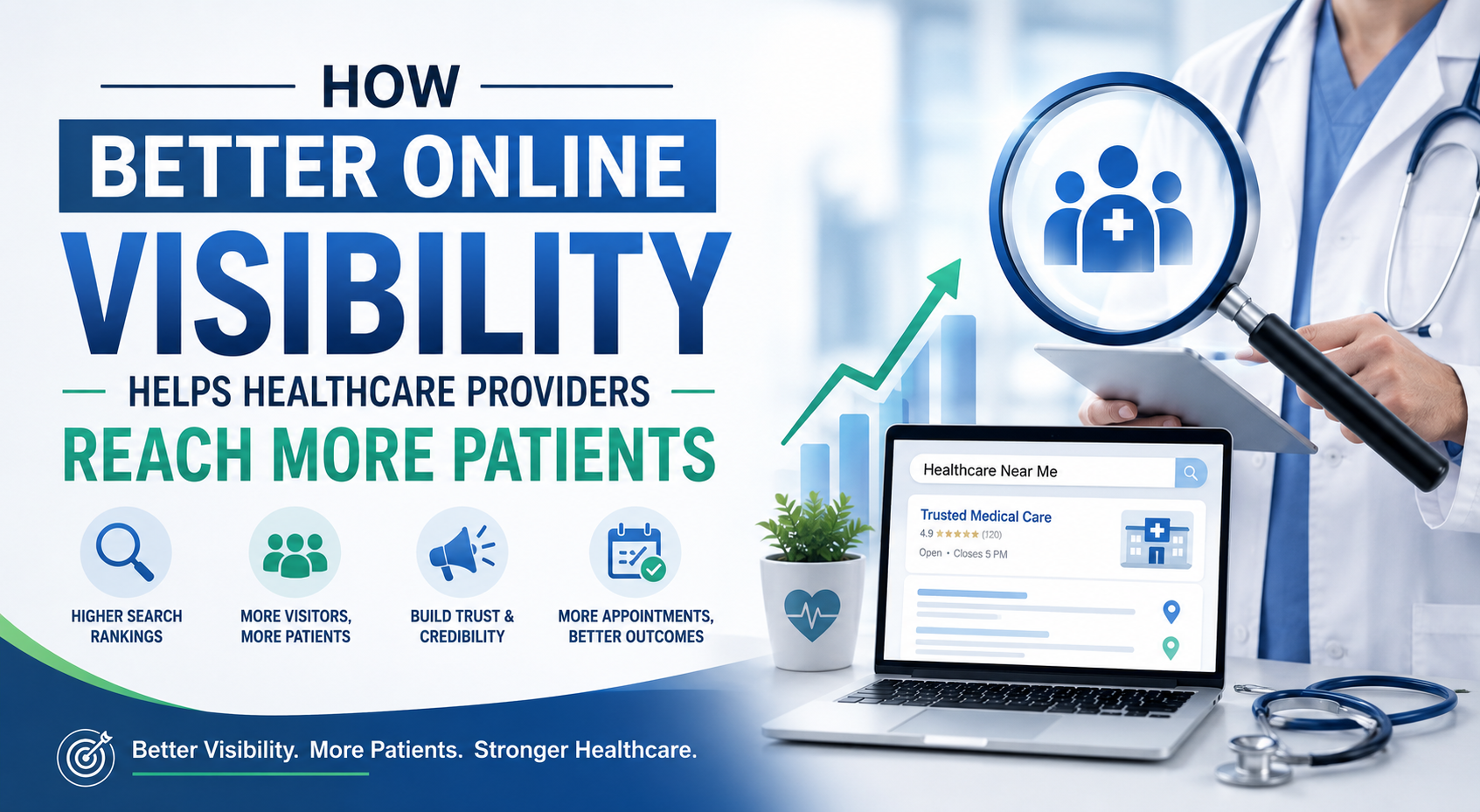
The healthcare industry has experienced a significant transformation in recent years. Patients no longer rely solely on word-of-mouth recommendations or traditional advertising when searching for medical services. Instead, they turn to search engines, online reviews, healthcare directories, and social media platforms to find trustworthy healthcare providers. In this digital-first environment, online visibility has become one of the most important factors influencing patient acquisition and practice growth.
Whether it is a small private clinic, a specialty medical center, a dental practice, or a large hospital network, maintaining a strong online presence can directly impact the number of patients a healthcare provider attracts. When potential patients can easily find accurate information about a healthcare practice online, they are more likely to schedule appointments and engage with healthcare services.
This article explores how better online visibility helps healthcare providers reach more patients, strengthen their reputation, improve patient trust, and achieve long-term success in an increasingly competitive healthcare market.
Understanding Online Visibility in Healthcare
Online visibility refers to how easily people can find a healthcare provider through digital channels. It encompasses a provider’s presence across search engines, healthcare directories, websites, social media platforms, online reviews, and local business listings.
When someone searches for terms such as “family doctor near me,” “best pediatrician in my city,” or “urgent care clinic nearby,” healthcare providers with strong online visibility are more likely to appear in search results. This increased exposure creates more opportunities to attract prospective patients.
Online visibility is not simply about appearing online; it is about being present in the right places with accurate, trustworthy, and engaging information that encourages patients to take action.
The Modern Patient Journey Begins Online
Today’s patients are more informed and proactive than ever before. Before booking an appointment, many individuals conduct extensive online research to evaluate healthcare providers.
Patients often look for:
- Provider credentials and experience
- Clinic locations and operating hours
- Services offered
- Patient reviews and testimonials
- Insurance information
- Appointment availability
- Educational content related to their health concerns
If a healthcare provider has limited online visibility, potential patients may never discover their services. On the other hand, a strong digital presence ensures that patients can easily find relevant information when they need medical assistance.
This shift in patient behavior highlights why online visibility has become an essential component of healthcare marketing and patient engagement strategies.
Increased Search Engine Exposure Leads to More Patients
Search engines serve as the primary gateway for healthcare information. Millions of healthcare-related searches occur every day, ranging from symptom research to provider selection.
When healthcare providers optimize their online presence, they increase the likelihood of appearing in search engine results pages. Higher rankings can significantly improve website traffic and patient inquiries.
For example, if a dental clinic ranks among the top results for local searches related to dental services, it gains greater exposure to potential patients actively seeking care. These individuals already have intent, making them more likely to convert into actual appointments.
Search engine visibility creates a continuous stream of opportunities to connect with people who need healthcare services, ultimately expanding the patient base.
Building Trust Through Online Presence
Trust is one of the most critical factors in healthcare decision-making. Patients want confidence that they are choosing qualified professionals who can provide safe and effective care. This is where seo for healthcare plays an important role, helping reputable providers appear prominently in search results and making it easier for patients to find trustworthy medical professionals online.
A strong online presence helps establish credibility in several ways:
Professional Website
A well-designed healthcare website serves as a digital front door. It provides patients with essential information while demonstrating professionalism and reliability.
An effective healthcare website typically includes:
- Provider biographies
- Medical specialties
- Contact information
- Appointment scheduling options
- Patient resources
- Frequently asked questions
A modern, informative website reassures visitors that the practice is legitimate and patient-focused.
Consistent Information
Patients expect accurate information across all online platforms. Consistency in clinic addresses, phone numbers, business hours, and service descriptions enhances trust and reduces confusion.
Educational Content
Healthcare providers who publish valuable educational content position themselves as experts in their field. Informative articles, blogs, videos, and health guides demonstrate knowledge while helping patients make informed decisions.
When patients perceive a provider as knowledgeable and trustworthy, they are more likely to schedule appointments.
Online Reviews Influence Patient Decisions
Patient reviews have become one of the most influential factors affecting healthcare choices.
Before selecting a provider, many patients read reviews to understand the experiences of others. Positive feedback can significantly increase confidence and encourage appointment bookings.
Benefits of strong online reviews include:
Enhanced Credibility
Authentic reviews provide social proof that patients have received quality care.
Improved Search Rankings
Many search engines consider reviews when determining local search rankings. Providers with more positive reviews often enjoy greater visibility.
Increased Patient Conversion
Positive reviews help prospective patients overcome uncertainty and move forward with scheduling appointments.
Healthcare providers should actively encourage satisfied patients to leave reviews while responding professionally to feedback. This demonstrates commitment to patient satisfaction and continuous improvement.
Local Search Optimization Expands Community Reach
Most healthcare services are location-based. Patients generally prefer providers who are conveniently located near their homes or workplaces.
Local search optimization helps healthcare providers connect with nearby patients searching for medical services.
Key local visibility factors include:
Local Listings
Accurate business listings improve discoverability in local search results.
Location-Specific Content
Publishing content related to local communities helps attract geographically relevant traffic.
Mobile Accessibility
Many healthcare searches occur on smartphones. Mobile-friendly websites ensure patients can easily access information while on the go.
Improved local visibility allows healthcare providers to become more accessible to individuals seeking immediate medical assistance within their area.
Social Media Increases Patient Engagement
Social media has become a valuable communication channel for healthcare organizations.
Platforms enable providers to:
- Share health tips
- Announce new services
- Promote wellness initiatives
- Highlight community involvement
- Answer general questions
- Educate the public
Consistent social media activity helps healthcare providers remain visible and relevant in patients’ daily lives.
Unlike traditional advertising, social media encourages two-way communication. This interaction strengthens relationships and helps build a loyal patient community.
Additionally, social media content can extend the reach of healthcare providers beyond existing patients, introducing services to new audiences through shares, comments, and recommendations.
Content Marketing Supports Patient Education
Healthcare decisions can be complex and intimidating. Patients often seek reliable information before consulting a medical professional.
Content marketing allows healthcare providers to address common concerns while improving online visibility.
Examples include:
- Blog articles
- Health guides
- Videos
- Webinars
- Infographics
- Frequently asked questions
Educational content offers several benefits:
Attracting Organic Traffic
Search engines reward valuable content that answers user questions.
Demonstrating Expertise
High-quality content showcases medical knowledge and professional competence.
Building Patient Relationships
Helpful information establishes trust before patients even schedule an appointment.
When healthcare providers consistently publish useful content, they become trusted resources for both existing and prospective patients.
Online Visibility Improves Patient Accessibility
Convenience plays a major role in modern healthcare experiences.
Patients increasingly expect digital solutions that simplify interactions with providers.
A visible online presence often includes:
- Online appointment booking
- Virtual consultations
- Patient portals
- Digital forms
- Secure messaging systems
These features make healthcare services more accessible and user-friendly.
By reducing barriers to communication and scheduling, healthcare providers can improve patient satisfaction while attracting individuals who prefer digital convenience.
Competitive Advantage in a Crowded Market
The healthcare industry is highly competitive. Many providers offer similar services, making differentiation increasingly important.
Strong online visibility creates a competitive advantage by:
- Increasing brand awareness
- Enhancing reputation
- Improving patient trust
- Generating more inquiries
- Supporting patient retention
Providers with limited online presence risk losing potential patients to competitors who are easier to find and engage with online.
Investing in digital visibility allows healthcare organizations to remain competitive while positioning themselves as leaders within their specialties and communities.
Mobile Search Continues to Drive Growth
Mobile devices have fundamentally changed how patients search for healthcare services.
Many individuals search for providers while:
- Traveling
- Experiencing symptoms
- Seeking urgent care
- Comparing treatment options
A mobile-optimized online presence ensures that healthcare information is accessible whenever and wherever patients need it.
Fast-loading websites, responsive design, and easy navigation contribute to a positive user experience, increasing the likelihood of appointment conversions.
As mobile usage continues to grow, healthcare providers who prioritize mobile visibility will be better positioned to attract new patients.
Data Insights Help Refine Patient Outreach
One of the greatest advantages of digital visibility is access to measurable data.
Healthcare providers can analyze:
- Website traffic
- Search performance
- Patient inquiries
- Appointment requests
- Content engagement
- Review trends
These insights help organizations understand patient behavior and identify opportunities for improvement.
Rather than relying on assumptions, providers can make data-driven decisions that enhance marketing effectiveness and patient acquisition efforts.
Continuous monitoring and optimization ensure long-term growth and visibility.
Supporting Telehealth and Virtual Care Expansion
Telehealth services have become increasingly important in modern healthcare delivery.
Patients are now more comfortable seeking medical advice through virtual consultations, particularly for routine care, follow-up visits, and specialist consultations.
Online visibility plays a crucial role in telehealth success by helping patients discover available virtual care options.
Healthcare providers can use digital platforms to:
- Promote telehealth services
- Explain virtual appointment procedures
- Educate patients about benefits
- Streamline appointment scheduling
Greater visibility ensures that patients understand available care options and can access services conveniently.
Strengthening Long-Term Patient Relationships
Online visibility is not only about attracting new patients; it also helps maintain relationships with existing ones.
Regular communication through websites, email newsletters, social media, and educational content keeps patients informed and engaged.
Ongoing engagement can:
- Encourage preventive care
- Improve treatment adherence
- Increase appointment attendance
- Foster patient loyalty
- Enhance overall satisfaction
When patients feel connected to their healthcare providers, they are more likely to return for future care and recommend services to others.
The Future of Healthcare Visibility
Digital healthcare adoption continues to accelerate. Emerging technologies such as artificial intelligence, voice search, personalized healthcare experiences, and advanced patient engagement tools are reshaping how patients find and interact with providers.
Healthcare organizations that invest in online visibility today will be better prepared for future changes in patient behavior and technology.
As competition increases and digital expectations evolve, maintaining strong online visibility will remain a fundamental requirement for healthcare success.
Providers who embrace digital strategies can continue reaching larger audiences, improving patient experiences, and expanding access to quality care.
Conclusion
Better online visibility has become an essential driver of growth for healthcare providers. In an era where patients rely heavily on digital channels to research, evaluate, and select medical services, a strong online presence directly influences patient acquisition and engagement.
From search engine exposure and local visibility to online reviews, educational content, and social media engagement, every aspect of digital visibility contributes to helping healthcare providers reach more patients. Improved visibility not only increases awareness but also builds trust, strengthens reputation, and enhances accessibility.
Healthcare organizations that prioritize their online presence are better positioned to connect with patients, compete effectively, and deliver valuable healthcare services in an increasingly digital world. As technology continues to shape patient expectations, investing in online visibility will remain one of the most effective ways for healthcare providers to grow their practice and serve their communities.