
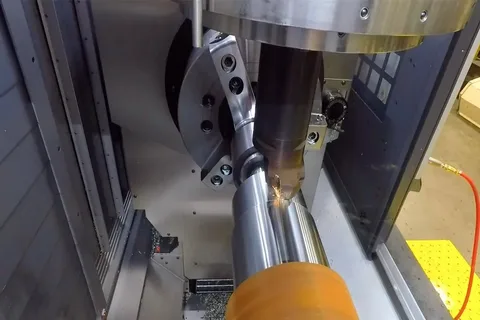
Multi axis CNC machining has transformed modern manufacturing by enabling highly precise, complex, and efficient production processes. Unlike traditional 3-axis machines, multi-axis systems can move tools and parts across several directions simultaneously, reducing errors and improving productivity. Understanding how these systems work is essential for engineers, machinists, and industries aiming for high-precision components.
Below is a detailed guide explaining the fundamentals of multi axis cnc machining systems, their working principles, benefits, and applications.
Introduction to Multi Axis CNC Machining Systems
Multi axis cnc machining refers to computer-controlled machining systems that operate on more than three axes. These machines can move along X, Y, and Z axes while also rotating around one or more additional axes (A, B, or C). This added flexibility allows for machining complex geometries in a single setup.
In modern manufacturing, this technology has become essential for producing high-precision components used in aerospace, automotive, medical, and defense industries. It reduces the need for multiple setups, which improves accuracy and saves production time.
Key points:
- Works on 4-axis, 5-axis, or even more advanced configurations
- Allows simultaneous movement in multiple directions
- Reduces manual intervention and setup time
- Ideal for complex and precision-based manufacturing
The introduction of multi axis cnc machining has significantly improved how industries approach complex part production, making it a cornerstone of advanced engineering.
How Multi Axis CNC Machines Work
The working principle of multi axis cnc machining systems is based on computerized instructions (G-code) that control tool movement. The machine interprets digital designs created in CAD/CAM software and converts them into precise machining operations.
Unlike traditional machines, multi-axis systems allow the cutting tool or workpiece to rotate and tilt, enabling access to difficult angles without repositioning the part. This continuous movement ensures smoother surface finishes and higher accuracy.
Key points:
- Uses CAD/CAM software for programming
- Controlled by advanced CNC controllers
- Enables simultaneous multi-directional movement
- Reduces repositioning errors and manual handling
By using multi axis cnc machining, manufacturers can achieve intricate shapes in a single operation, improving both speed and precision in production workflows.
Types of Multi Axis CNC Machining Systems
There are several types of multi axis cnc machining systems, each designed for specific levels of complexity and industrial needs. The most common are 4-axis, 5-axis, and 6-axis machines, with each additional axis increasing flexibility and capability.
A 4-axis machine typically adds rotation around one axis, while a 5-axis machine allows two additional rotational movements. This enables machining of highly complex parts like turbine blades and medical implants.
Key points:
- 4-axis CNC: Adds rotational movement for cylindrical parts
- 5-axis CNC: Allows full 3D machining in one setup
- 6-axis CNC: Offers advanced robotics-level precision
- Different types suit different industrial applications
With multi axis cnc machining systems, industries can choose the level of complexity they need based on production requirements and design challenges.
Advantages of Multi Axis CNC Machining
One of the biggest advantages of multi axis cnc machining is its ability to produce complex parts with high accuracy in fewer setups. This reduces production time and minimizes human error, leading to consistent quality.
Additionally, these systems improve surface finishing and allow machining of undercuts and complex curves that are impossible with traditional machines. This makes them highly valuable in industries requiring tight tolerances.
Key points:
- Higher precision and tighter tolerances
- Reduced setup and production time
- Ability to create complex geometries
- Improved surface finish quality
- Lower risk of human error
The adoption of multi axis cnc machining has helped manufacturers increase efficiency while maintaining superior product quality across various industries.
Applications of Multi Axis CNC Machining
Multi axis cnc machining is widely used in industries where precision and complexity are critical. Aerospace manufacturers use it for turbine blades and structural components, while the automotive industry relies on it for engine parts and transmission systems.
In the medical field, it is used to produce surgical instruments, implants, and prosthetics that require extremely high accuracy. It is also widely used in defense, electronics, and mold-making industries.
Key points:
- Aerospace: turbine blades, engine components
- Automotive: engine blocks, gear systems
- Medical: implants, surgical tools
- Defense: precision weapon components
- Electronics: complex housings and parts
The versatility of multi axis cnc machining makes it a vital technology across many high-performance industries.
Conclusion
Multi axis cnc machining systems represent a major advancement in modern manufacturing technology. By enabling movement across multiple axes, these machines provide unmatched precision, flexibility, and efficiency in producing complex parts.
From aerospace engineering to medical device manufacturing, the demand for multi axis cnc machining continues to grow as industries seek faster production and higher accuracy. Understanding its basics helps engineers and manufacturers make better decisions when choosing machining solutions for advanced applications.
As technology continues to evolve, multi axis systems will remain at the forefront of innovation, shaping the future of precision engineering and industrial manufacturing.