
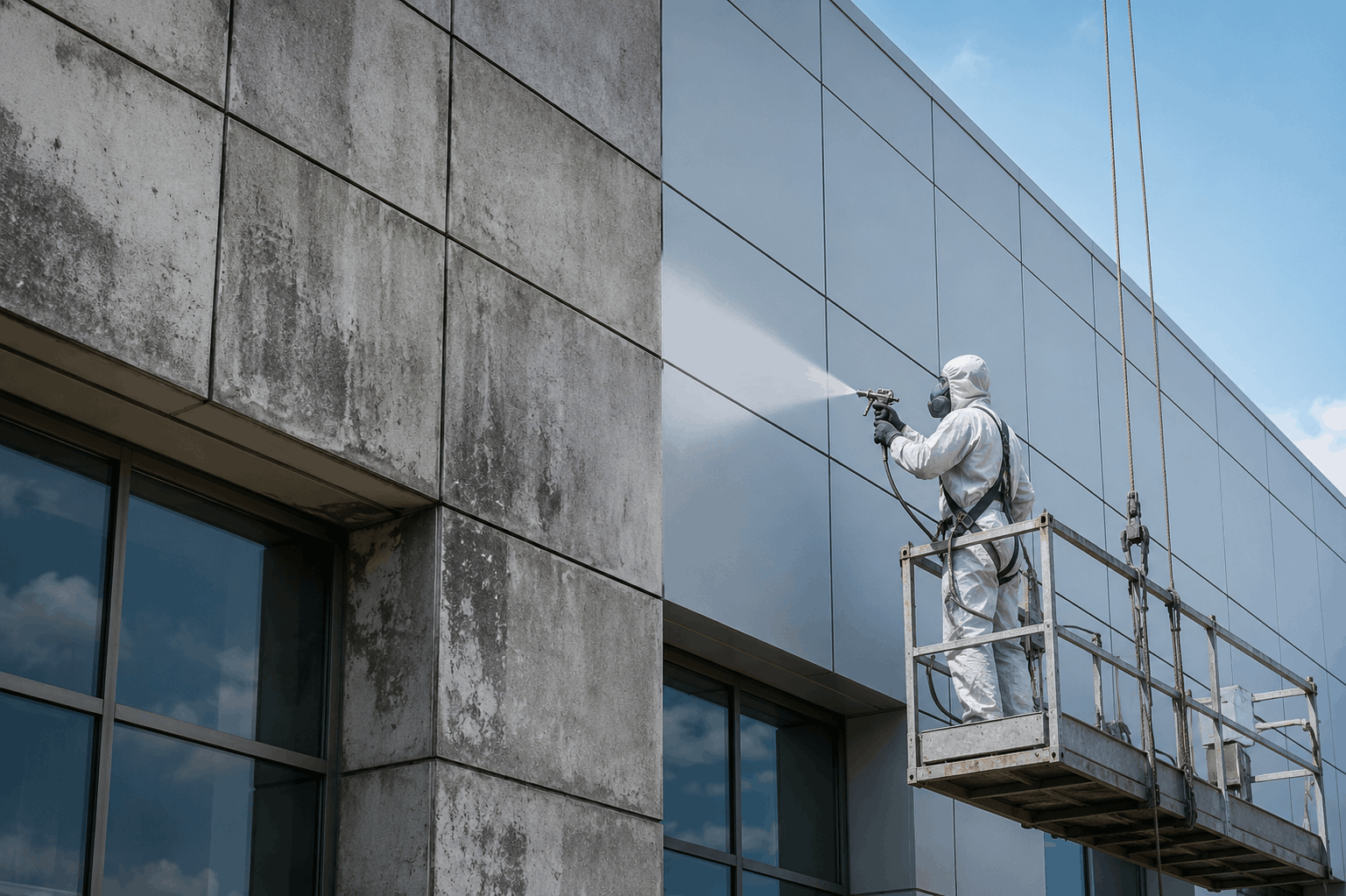
When a commercial building starts looking a bit dated, swapping the entire façade can seem like the clean answer. But does a worn outside always mean new panels, frames, or glazing are required every time? Not always.
More recent advances in architectural coatings, plus careful professional application techniques, have opened up a practical alternative: respraying the existing surfaces. For example, PVF2 spraying on suitable metal areas is one route, while curtain wall spraying, glass spraying, and on-site spray painting cover other situations. In many cases, façade renovation can be more about reworking what is already there rather than tearing it out and starting again.
This method can give property owners extra control over colour, visual character, maintenance routines, and even how the timing of the project is planned. Still, what is it that’s making respraying feel like a more and more attractive option lately?
Why Is Respraying Becoming an Alternative to Façade Replacement?
A facade replacement can come with heavy material costs, a lot of labour, access equipment, waste removal, and general disruption for building occupants. And it often needs a lot of planning and coordination, which can feel endless.
Respraying, on the other hand, is a different approach. If the existing substrate is still suitable and it gets properly prepared, a professional coating system can refresh the façade’s look without needing to swap out the underlying elements completely. It’s a practical way, because the structure can stay in place while the appearance gets revived, rather than starting again from scratch.
So the outcome can be a more efficient renovation route, especially when the current building is fundamentally sound, but the colour or finish has aged, faded, or simply tired over time.
What Is PVF₂ Spraying, and Where Can It Be Used?
The use of a PVDF/PVF₂-based architectural coating system, PVF₂ spraying, which is basically most often paired with aluminium or other compatible architectural metal surfaces. It’s a coating that you apply to get that finished look while still making it tougher for everyday weather.
In architecture, these coatings tend to be liked because they’re durable, they keep their colour for longer, and they’re resistant to harsh exterior exposure. Still, none of that really works well if the surface isn’t prepped properly and if the spraying isn’t done in a controlled way. You need a consistent method, or the final coat may not last as expected, even if the product itself is good.
So for property owners thinking about changing a façade colour, PVF₂ spraying can be a practical option to refresh the existing architectural look. That way you might update the appearance without necessarily swapping out the underlying aluminium components.
How Can Curtain Wall Spraying Transform an Existing Building?
Curtain walls are one of those defining features you see on plenty of modern commercial buildings. But over time, their colour can fade, the finishes might get a bit weathered, and an older colour approach may just not match the company branding anymore.
The practical approach of curtain wall spraying is a way to refresh the right existing curtain wall frames, plus the related surfaces. Instead of stripping off huge parts of the façade, professional applicators can get everything ready and then refinish the suitable parts right where they are.
It’s especially handy for commercial sites that are in the middle of refurbishment, rebranding, switching ownership, or pushing through architectural modernisation.
Can Glass Spraying Really Change the Look of a Building?
Glass isn’t just about being clear anymore. Specialist glass spraying methods can bring in colour, add privacy effects, create decorative textures, or deliver broader architectural visual treatments depending on the exact glass type and the coating system that gets used.
Because of that, there are more interesting options for offices, retail buildings, hotels, showrooms, and other commercial spaces that need a fresher, more nuanced appearance.
That said, glass coating isn’t something you just wing. It takes real specialist know-how. You have to factor in things like glass composition, surface preparation, coating compatibility, curing times, and what the finished purpose is meant to be. All of that should be assessed before any work starts; otherwise, you can end up with the wrong effect or reduced performance.
When Does On-Site Spray Painting Make More Sense Than Replacement?
One of the most notable perks of on-site spray painting is that it often lets renovation happen without having to remove every single façade component from the building. That matters especially if moving big panels or metal frames to some off-site workshop would be awkward, time-consuming, or just downright disruptive. Doing the coating on location can also help a lot for projects tied to older buildings, where taking things apart is simply impractical.
That said, whether on-site spraying really makes sense depends on more than one thing, like the building itself, the substrate condition, how easy it is to reach the surfaces, and the environmental conditions during the works. You also need to consider the coating specification and the actual project requirements. A professional evaluation should come first before deciding on this approach or going for replacement.
How Can Respraying Support a Building’s New Brand Identity?
Most of the time, a building’s outside look becomes like its public face. If the colour scheme feels dated, even a property that is otherwise pretty modern can start looking behind.
Respraying gives owners and designers the freedom to play with new colour palettes without immediately signing off on a full façade replacement. This is really handy during a corporate rebrand or when an older commercial space is being adapted for a new tenant, and everyone wants it to feel current.
Also, a well-chosen finish can deliver a more contemporary look while still keeping a lot of the original architectural character, so it doesn’t feel like everything was swapped out at once.
Frequently Asked Questions
Is PVF₂ spraying suitable for every façade?
Not really. It depends on the substrate, existing coating, how the surface looks and holds up, the surroundings and exposure level, plus what the coating specification actually says. Usually a professional check is the smart step before anything starts.
What is curtain wall spraying?
It’s basically the professional application of an architectural coating that works with compatible curtain wall components. The idea is that you can refresh the look or update the appearance without automatically replacing the whole system.
Can glass be spray-painted?
Yes, with specialist glass spraying systems for certain architectural tasks. The coating has to match the exact glass type and the intended use, and you still need proper preparation and careful application; otherwise, it won’t behave the way it should.
What are the advantages of on-site spray painting?
On-site spray painting can limit the need to detach, remove, and transport huge façade parts. It also gives flexibility for renovating existing buildings, but only if the site conditions are right for professional work.
How long does a sprayed façade finish last?
That lifespan varies a lot. It follows the substrate and coating system, the preparation quality, how it was applied, the exposure, ongoing maintenance, and general environmental conditions. A qualified coating specialist can suggest a system based on what the building really needs.
Can respraying change the colour of a commercial building?
Yes, when the substrate and coating system match properly, respraying can bring in a new colour and finish option. So it can be used for refurbishment, modernisation, and corporate rebranding projects.
Can Respraying Give an Old Façade a New Future?
Honestly, the biggest shift in façade refurbishment thinking is pretty straightforward: replacement is not always the only way to transform things.
When the existing parts are still sound, structurally as well as technically, professional PVF₂ spraying, curtain wall spraying, glass spraying, and even on-site spray painting can provide a different route to modernise the building, maybe more efficiently too.
The real point is, it’s not just about throwing on some new colour and calling it done. A successful façade makeover usually relies on choosing the correct coating system, surface prep that’s done properly, controlling how the material is applied, and then making sure the final appearance really fits what the building needs.
So, for property owners, architects, facilities managers, and developers, it might be smart to look at respraying first, before automatically going for full replacement.